Show Up For SGNP
First published on
December 05, 2025
By Rithwik Sundar
On the northern fringes of Mumbai, Maharashtra, a forested tract of land about 20 sq. km. was designated as the Krishnagiri National Park in 1945, marking one of the earliest conservation efforts in the region. In 1969, the park’s boundaries were expanded and it was renamed the Borivali National Park, bringing its total area to about 103 sq. km. In the early 1980s, it took on the name we know today – Sanjay Gandhi National Park (SGNP) – Mumbai’s great green lung. Home to extraordinary biodiversity, it has also served as the alma mater forest for many of India’s naturalists and conservationists. Mumbai partly relies on SGNP for its water, drawn from the Tulsi and Vihar lakes nestled within the park’s green expanse. This remarkable refuge shelters close to 1,400 species of plants, over 280 kinds of birds, about 40 mammals, more than 60 reptiles, around 150 butterflies, and a dozen-odd amphibians – a living catalogue of biodiversity thriving in the heart of a megacity. The park has long struggled to survive amid intense urban pressures from large-scale encroachments, illegal settlements, deforestation, pollution, human-wildlife conflict, and infrastructure projects. Despite these challenges, activists and conservation groups such as the Bombay Environment Action Group (BEAG), led by the late Shyam Chainani, have been vigilant. Debi Goenka played a pivotal role in protecting this city forest down the decades as part of the BEAG through a successful court battle to prevent encroachments. He continues to fight for its protection and sustainable coexistence with the city around it. However, the future of the park faces new uncertainty following the release of the Brihanmumbai Municipal Corporation’s draft zonal master plan that threatens to weaken its Eco-Sensitive Zone, which has drawn significant concern from environmental experts.

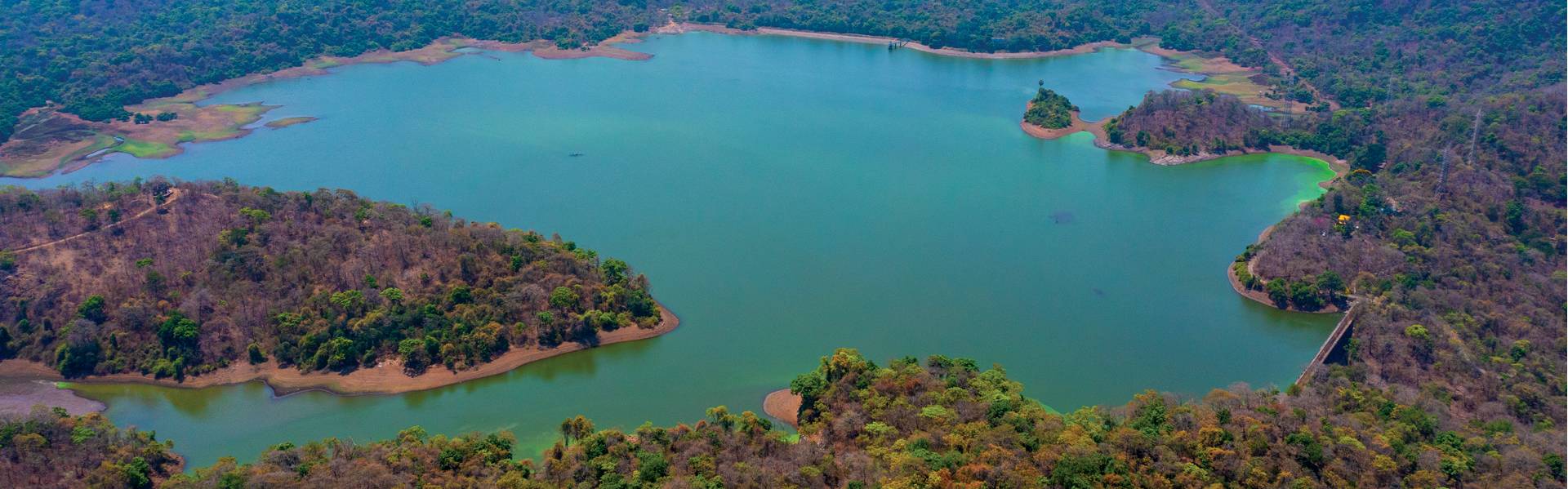
A bird’s-eye view of Tulsi Lake and the surrounding core forest of SGNP reveals a classic stretch of southern moist mixed deciduous forest. In the distance, the smog-laden city looms seemingly ready to swallow this fragile patch of green that we must safeguard for generations to come. Photo: Nayan Khanolkar.
Faulty Delineation
The Eco-Sensitive Zone (ESZ) around SGNP covers nearly 60 sq. km. The zonal plan divides it into three sub-zones based on ecological vulnerability: ESZ-1 (Settlement Zone), ESZ-2 (Regulated Development Zone), and ESZ-3 (Ecologically Fragile Zone). This classification relies on a vulnerability index, which scores areas according to factors such as wildlife movement, flood risk, and flora and fauna. ESZ-3 encompasses the most fragile areas, where strict restrictions limit human activity to safeguard biodiversity. ESZ-1 includes urbanised areas and permits full-scale development – residential, commercial, institutional, and industrial projects. ESZ-2, more ecologically sensitive, is supposed to have stricter controls, but in this draft plan, all activities allowed in ESZ-1 are permitted in ESZ-2 unless prohibited. This raises concern as it could allow urban-style development to encroach on areas meant to act as a protective buffer around the park.
The ecological assessment of the zoning relied largely on remote sensing data rather than thorough ground-level surveys, suggesting that a more rigorous, on-the-ground evaluation could have provided a clearer picture of the ecological value of these zones. There are also no clear guidelines on how the critical ecosystems and habitats that exist within ESZ-1 and ESZ-2 will be protected. For example, certain areas in Aarey have been classified as ESZ-1, which allows high-intensity development, despite their significance as important catchments and hydrological zones.
Tribal Communities Overlooked
Local communities have said they were not consulted on the draft plan, which they regard as an attempt at erasure. The 400-page zonal plan was published only in English, leaving Marathi speakers at a disadvantage. Activists also point out that the draft undercounts the tribal population, recording just 3,626, and contains mapping errors – a non-tribal settlement is included as a tribal hamlet, while several genuine tribal hamlets are omitted.
Tribal residents in Aarey have opposed the proposed new development, demanded immediate recognition of their forest rights, and urged the BMC to release the draft in Marathi with an extended period for submitting their responses. The limited consultation period of 30 days and the language barrier effectively excluded many tribal and Marathi-speaking residents from meaningful participation.
Readers concerned about Sanjay Gandhi National Park can help by raising public awareness and advocating for a revision of the current zonal plan. It should also consult the tribal communities of SGNP and make sure their demands are represented. Use hashtags such as #SaveSGNP in your social media posts and tweets, and highlight the park’s vital role in sustaining Mumbai and protecting its vulnerable flora and fauna.
Draft an objection letter stating the following points to the Chief Engineer (DP) of Town Planning, Municipal Corporation of Greater Mumbai. Use the contacts and addresses below:
Chief Engineer (Development Plan), 5th floor, Municipal Head Office, Extn. Bldg., Mahapalika Marg, Fort, Mumbai 400 001, Tel.: 022 2620251
Email: che.dp@mcgm.gov.in
We, the undersigned citizens, conservationists, and concerned individuals, write to express our strong reservations about the proposed Sanjay Gandhi National Park Zonal Plan for ESZ by BMC. The public has been given insufficient time to submit responses, and the draft is available only in English, effectively excluding many Marathi-speaking and tribal residents. Moreover, it raises serious ecological concerns by permitting development in sensitive and vulnerable habitats of SGNP.
1. The plan should prioritise land uses that are compatible with conservation and do not threaten biodiversity.
2. Please call for public hearings and independent scientific review. Form expert committees, and ensure ecologists and local communities are consulted.
3. Tribal communities have been excluded from the decision-making process, their population figures in the plan contain inaccuracies, and some of their hamlets have been incorrectly classified as slums. It is essential that their rights and heritage are recognised and safeguarded.
Now or Never
Environmental organisations such as the Aarey Conservation Group, Let India Breathe, and local activists are raising the alarm about the threats of the draft plan, which would open large swathes of the city’s remaining forests to development. Their cause deserves public support, particularly as Mumbai already faces floods, rising temperatures, and polluted air. Destroying the city’s last significant green cover – its lifeline – would have serious consequences. Tribal communities, who have lived in these forests for generations, also fear displacement and the erasure of their heritage. From the leopards to the butterflies, SGNP has given Mumbai so much to celebrate; now it is time for the city to give back and protect it.
Rithwik Sundar is an Assistant Editor at Sanctuary Asia, an avid birdwatcher, and an active contributor to citizen science initiatives. His curiosity extends to forgotten wildlife histories tucked away in archives.