The Aravalli Misadventure
First published on
February 02, 2026
By Rithwik Sundar
My introduction to the wild did not take place in the Western Ghats, although they are my home. Instead, it was in the Aravalli ranges that I first entered the ‘field’ as a complete novice, carrying the naïve assumption that little could survive in such dusty, arid, rocky hills. What life could possibly exist here, I wondered. That impression, however, was dismantled rather quickly. In the revered groves of Mangar Bani, along the trails of the Asola-Bhatti Wildlife Sanctuary, and across many folds of these ancient hills, the Aravallis revealed to me a rich and resilient tapestry of life. Hyenas moved through the night, leopards left signatures of their presence, Rock Eagle-owls occupied their age-old roosts, and antelopes traversed open scrub. Even at a smaller scale, the landscape teemed with life: leopard geckos clung to stone walls, insects pulsed with the seasons, and the scrub told stories of survival.
These hills have long been revered by local communities. Beyond their biodiversity, the Aravallis provide invaluable ecosystem services: they act as groundwater recharge zones, moderate local climates, stabilise soils, and serve as ecological corridors in an increasingly fragmented region. Yet despite their significance, these ranges have been persistently subjected to scrutiny, reclassification, and reinterpretation. Through bureaucratic definitions and repeated legal and administrative iterations, the landscape is often reduced to categories that serve vested interests rather than ecological realities.
In November 2025, the Supreme Court endorsed a standardised interpretation of what constitutes the Aravalli hills across Haryana, Delhi, Rajasthan and Gujarat, adopting a definition centred on a 100 m. elevation criterion proposed by a government-led committee comprising the Forest Survey of India, the Geological Survey of India, and the Supreme Court’s Central Empowered Committee. Under this framework, any landform within the Aravalli districts rising 100 m. or more above local relief is classified as an Aravalli hill, while an Aravalli range is defined as two or more such hills situated within 500 m. of each other, measured from the outer boundary of the lowest contour line. The rationale, as stated, was to address persistent ambiguities that had complicated the regulation of mining across states. However, by excluding all landforms below the 100 m. threshold, this definition would open extensive areas to mining, disrupt the continuity of the ranges, and undermine the ecological and geological integrity of the Aravallis by removing large tracts from protective oversight.
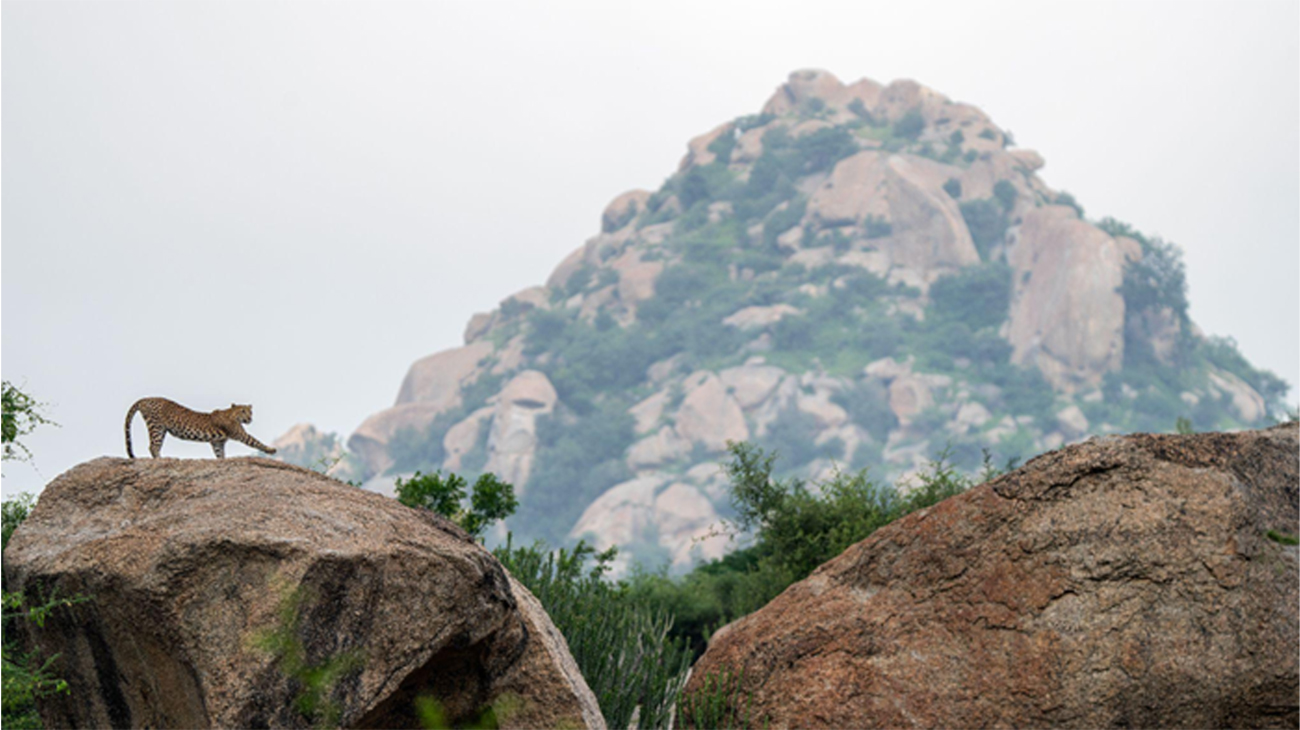
The Aravallis are a rich and resilient tapestry of life, hiding incredible flora and fauna amongst their many folds spreading across India’s states. Photo: Shailza Singhal/Sanctuary Photolibrary.
However, this attempt to resolve long-standing definitional inconsistencies surrounding the Aravalli ranges was met with widespread public outcry. Communities and environmentalists voiced strong opposition, with protests erupting on the ground and the issue gaining significant traction across social media platforms. On December 29, 2025, only weeks after adopting the definition, the Supreme Court placed the contentious interpretation in abeyance. The Court observed that there was a pressing need for further examination and clarification to prevent regulatory gaps that could undermine the ecological integrity of the Aravalli region, and to avoid the risk of misinterpretation or improper implementation of the newly adopted definition and its own directions. The Court has recommended that a fair, impartial and independent expert opinion be obtained. In doing so, it acknowledged the seriousness of the concerns raised and sought clarification on whether widely circulated claims were accurate, particularly the assertion that the new definition would safeguard only 1,048 of Rajasthan’s 12,081 hills. To this end, the Court called for a panel of domain experts to critically examine the government-led proposal. Their mandate includes clearly identifying the regions that would fall within the definition and those that would be excluded, assessing whether mining deemed ‘sustainable’ within the covered areas could nevertheless result in ecological harm, and evaluating both the immediate and long term environmental consequences of adopting such a definition.
Basing the definition of the Aravallis largely on elevation represents a serious misunderstanding of the landscape. This is not a youthful mountain system where height alone reflects ecological importance. The Aravallis are among the oldest ranges on the planet, worn down, discontinuous and shaped by deep time, with their true value residing less in their visible form than in the subtle ecological processes they sustain. To confine such a complex system to a single numerical criterion is a serious misjudgement. The lower lying formations that the Committee’s definition fails to recognise as Aravalli hills are far from ecologically insignificant. They function as windbreaks, groundwater catchments and wildlife habitats. That such fundamental ecological roles could be overlooked by defining the Aravallis solely through elevation rather than landscape character is deeply concerning.
The Aravallis have endured for billions of years, displaying extraordinary resilience through geological time. Today, however, their future appears to hinge on how narrowly or generously we choose to define them, and on our willingness to prioritise short-term extractive gains over long-term ecological security. It is undeniable that some livelihoods in the region depend on mineral extraction, but these benefits come with costs that are often deferred and unevenly borne. For years, people have rallied to protect the Aravallis from illegal mining, unchecked real estate projects, and rampant garbage dumping. They also face a contentious plan to convert 10,000 acres of the range into a zoo-safari and tourism complex. Despite relentless pressure from development and powerful lobbies, the Aravallis remain safeguarded by a long-standing citizen movement, led by groups such as the Aravalli Bachao Citizens’ Movement, dedicated to preserving this natural heritage.
Readers concerned about the future of the Aravallis can play a meaningful role by raising public awareness and advocating for a more ecologically grounded review of existing policies and land use plans affecting the range. By using hashtags such as #SaveAravallis on social media, readers can help draw attention to the range’s vital role in groundwater security, climate regulation and biodiversity, and to its importance in sustaining both human and non-human life across the region.
Draft an objection letter stating the following points to Shri. Bhupender Yadav, Honourable Minister of Environment, Forest and Climate Change. Use the contacts and addresses below:
Shri Bhupender Yadav
Ministry of Environment, Forest and Climate Change (MoEFCC)
Indira Paryavaran Bhawan Jorbagh Road, New Delhi – 110 003.
Tel.: 011-20819265, 011-20819277 Email: mefcc@gov.in
We, the undersigned citizens and concerned individuals, wish to express our strong objection to the recent elevation-based definition of the Aravalli hills. This approach ignores the ecological importance of lower-lying formations, which serve as groundwater catchments, wildlife habitats, and windbreaks. By focusing solely on height, the proposed definition risks opening large areas to mining and development, undermining the continuity and resilience of this ancient and fragile landscape, while excluding the voices of local communities who depend on and protect the Aravallis.
1. Reconsider the operational definition of the Aravalli hills to account for ecological functions, continuity, and landscape character, rather than relying solely on elevation.
2. Conduct an independent expert assessment of the proposed mining regulations to fully evaluate their long-term ecological consequences.
3. It is essential that local communities with deep ties to the Aravalli landscape are meaningfully consulted, and that their voices and concerns are reflected in decision making.
We must ask ourselves whether we are prepared to trade clean air, groundwater, biodiversity and climatic stability for unsustainable development, and whether, by treating the Aravallis as an obstacle rather than a protective barrier and a life supporting system, we are inadvertently inviting the desert to advance ever further.
Rithwik Sundar is an Assistant Editor at Sanctuary Asia, an avid birdwatcher, and an active contributor to citizen science initiatives. His curiosity extends to forgotten wildlife histories tucked away in archives.