Africa To The Aravallis
First published in Sanctuary Asia,
Vol. 46
No. 2,
February 2026
By Soham Kacker
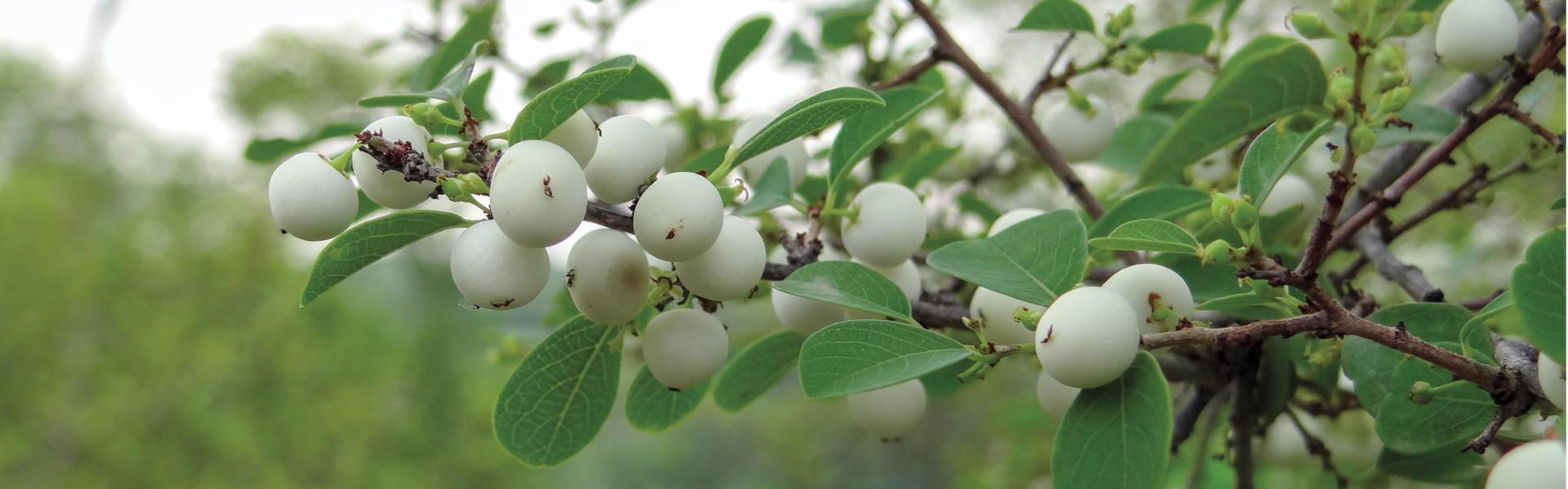
Over the years, and over innumerable walks in the Aravalli mountains around Delhi, encounters with a few specific plants remain fresh in my memory. The grey-skied post-monsoon excursion on which I encountered the arrestingly beautiful Indian snowberry Flueggea leucopyrus, with its small wedge-shaped leaves and its tough, spiny branches, decked up in the most delicate white berries imaginable. The day of my 18th birthday, which I chose to spend on the ridge with a dear friend, and our accidental discovery of a wizened and enchanting jaal tree Salvadora persica, which I returned to many times to observe in full flower, and then in a few weeks in fruit, which looked like perfectly carved ruby beads. Over the years, I have made many visits to a giant cuboid granite boulder, atop which, in shallow furrows in the rock, grew a dependable population of ray ferns Actiniopteris radiata – lying in wait each year for the monsoon to revive them from the brink of demise. Other trips were made to collect seeds from the wild mehendi bushes Lawsonia inermis in particular, in attempts to grow them in our garden – though they always seemed happier in the seemingly inhospitable rocky soils of the Aravallis.
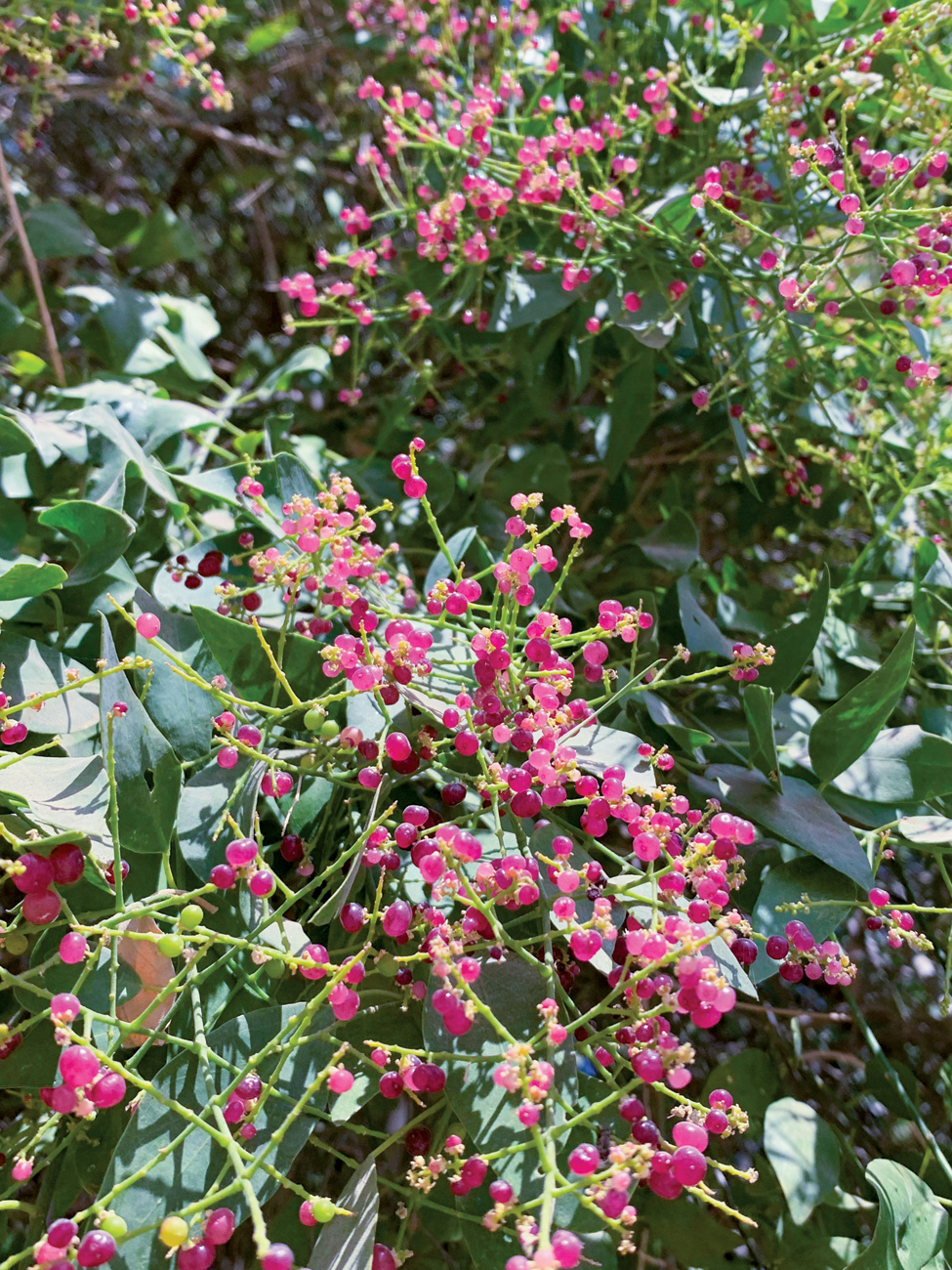
A key ingredient in many Ayurvedic toothpastes, meswak or the toothbrush tree Salvadora persica has been traditionally valued for its natural antibacterial properties and role in oral health. Photo: Soham Kacker.
While each of these species hold personal sentiments, they also tell a story much older than me, or even human habitation in the region! Comparing the distribution of each of these species shows a unique pattern – most of them occur both in the Indian peninsula as well as in East Africa, but are mostly, if not entirely, absent from Central and Western Asia. The ray fern and the jaal are native to large parts of Africa, Arabia and India, both belonging to similar rocky and arid habitats. Mehendi or henna is native to North India, the Arabian Peninsula, and the Horn of Africa; similar to the snowberry’s range, which extends further east into Indo-China. These distributions are particularly interesting because they serve as living illustrations of the fact that India and Africa were once part of the same continent – Gondwana.
Given their native distributions, these four plants likely evolved and dispersed sometime around 130 million years ago, on the common supercontinent. Their existence in North India, and in particular in the Aravallis, is testament to an ancient biogeographical history that has shaped the landscapes and lifeforms that exist here today. As remarkable as this is, the landmasses of the Aravallis themselves are much older – an astonishing three billion years in the oldest rock formations, while the ‘younger’ formations around Delhi are around 1.1 billion to 750 million years old. The habitats and species of the present-day Aravalli range are the result of quite literally billions of years of geological, biological, and evolutionary processes – hints of which can be read in the rocks and plants, for those who know how to read them.
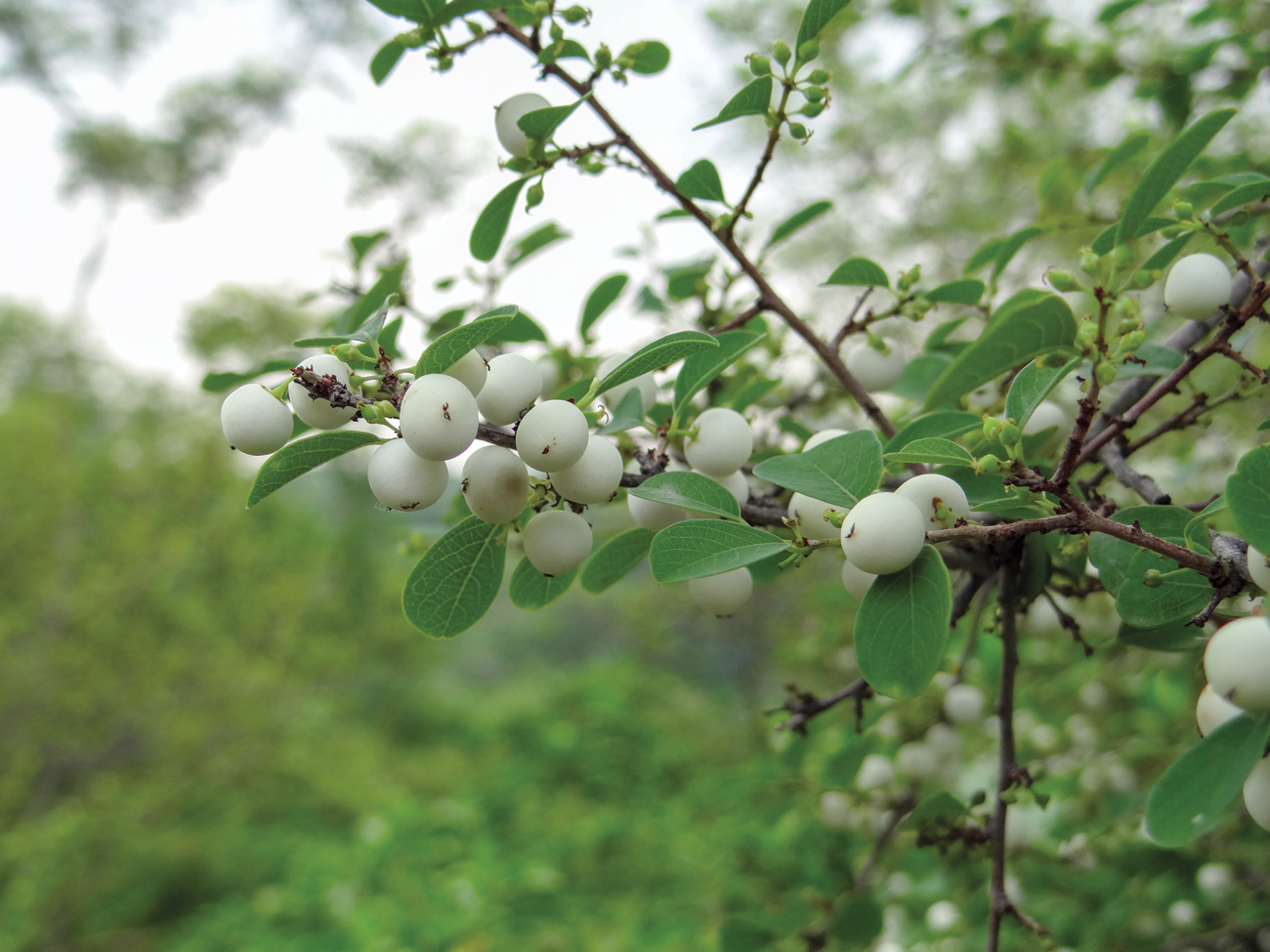
The arrestingly beautiful Indian snowberry Flueggea leucopyrus has small, wedge-shaped leaves, tough spiny branches, and displays exquisitely delicate white berries. Photo: Soham Kacker.
However, under the present threats that this ancient landscape faces, we run the risk of irreparably harming its geo-ecologically significant ecosystems. Opening this landscape to mining and ecologically ill-advised development may mean that species that survived their geological migration saga from Africa several million years ago could vanish in a few short years. We may not even know what we are losing – a new species of succulent described from the Aravallis in June 2025 is endemic to a single known location, and there are doubtless many more species like it. As beneficiaries and stewards of these mountains, we must assume the mantle of their protection – and that of the diverse species they harbour, including us humans.
Further reading:
‘New flowering plant species discovered in Aravali hills landscape near Jaipur’, The Hindu, 16th June 2025. Accessed 6th January 2026: https://www.thehindu.com/news/national/other-states/new-flowering-plant-species-discovered-in-aravali-hills-landscape-near-jaipur/article69701655.ece
Pranay Lal, ‘The Mismeasure of a Mountain’, Down to Earth, 1st January 2026. Accessed 6th January 2026: https://www.downtoearth.org.in/environment/mismeasure-of-a-mountain
Soham Kacker is a plant ecologist and horticulturist from New Delhi. His research looks at plant conservation and ethnobotanical landscapes in the Indian Himalaya and beyond.