An Unseen Battle At The Forest’s Edge
First published in Sanctuary Asia,
Vol. 46
No. 2,
February 2026
By Raza Kazmi
Muscular. Powerful. Strong. These are some of the adjectives that immediately come to mind when one thinks of the gaur. But these are not the adjectives that Dr. Himanshu Joshi, an experienced wildlife veterinarian, attributes to a particular gaur he encountered. “Scrawny, extremely weak, ribs sticking out, his entire body wasting away. That is how I found him. We knew it was too late to save him. Yet we hoped that his suffering would at least be a catalyst towards saving others,” Himanshu recounts.
But what was it that caused such suffering for this gaur? “This gaur was suffering from tuberculosis; a disease transmitted between wild and domestic bovines. Such transmission primarily occurs in forests adjoining villages, which are utilised by both domestic animals and wildlife,” explains Dr. Joshi, Senior Programme Manager with the Wildlife Conservation Trust’s Human Wildlife Interface Management (HWIM) team.
Violent death of wildlife, be it through poaching, road and train collisions, electrocution, or poisoning often makes news. On one hand, such deaths cause anguish among those interested in the well-being of our wildlife; on the other hand, they are the focal points of conservation efforts by governmental and non-governmental organisations. However, the silent suffering of wild animals afflicted by diseases transmitted by domestic animals rarely touches the consciousness of nature enthusiasts, conservationists, and policy-makers. With most deaths occurring ‘out of sight’, this entire issue often is consequently ‘out of mind’ for most conservationists. However, slowly but surely, this hitherto neglected issue is beginning to grab attention. The little-known Sanjay Tiger Reserve (STR) in Madhya Pradesh is an excellent case in point.
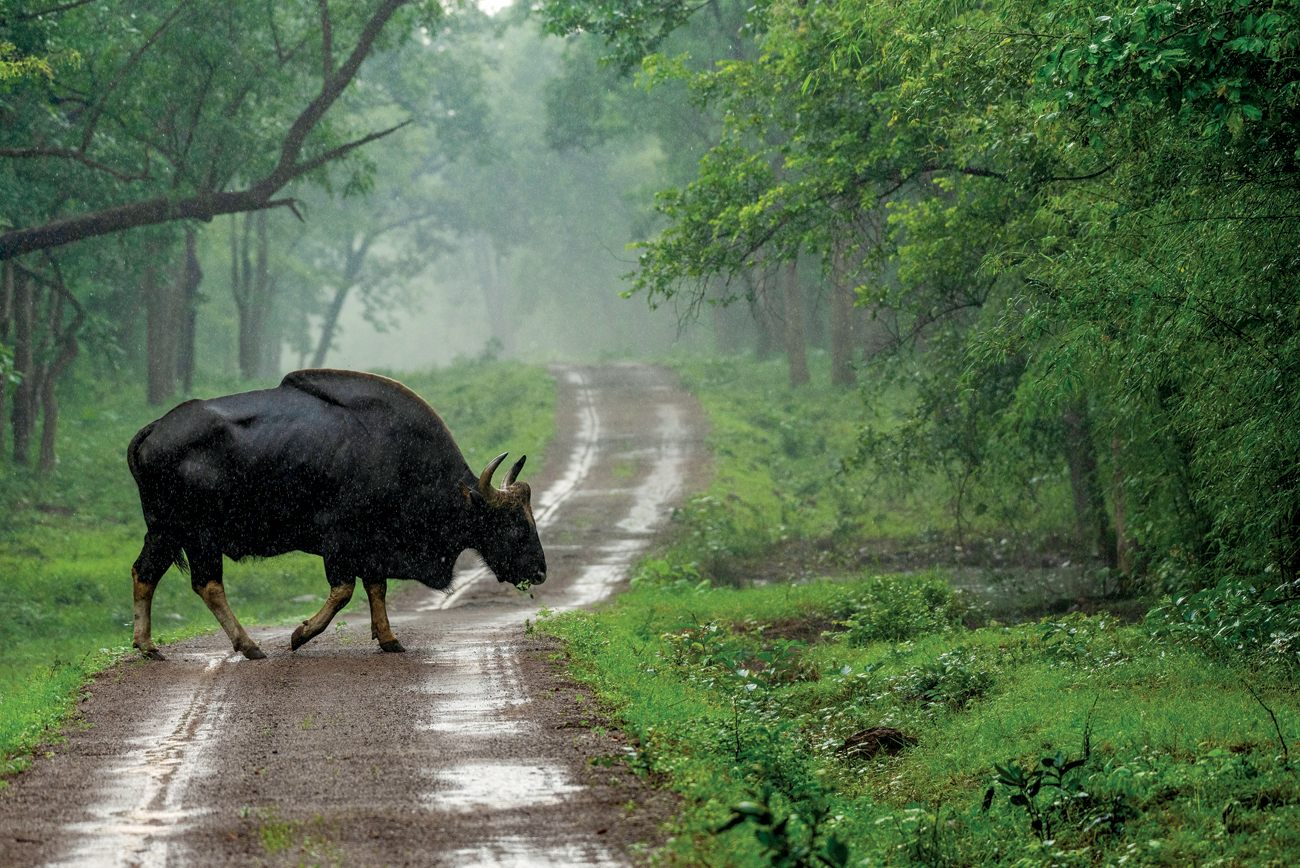
The Indian gaur Bos gaurus – muscular, majestic, and seemingly invincible, yet increasingly vulnerable to invisible threats such as disease at the wildlife–livestock interface. Photo: Dr. Anish Andheria.
A Tiger Reserve Leads The Way
Spread over an area of 1,674.50 sq. km., STR lies in northeastern Madhya Pradesh, along the Madhya Pradesh-Chhattisgarh border. Comprising Sanjay National Park and Dubri Wildlife Sanctuary, along with some buffer areas, the tiger reserve is located primarily in the state’s Sidhi district with some parts extending into Shahdol and Singrauli districts. Across the southern border of STR, in Chhattisgarh, lies the Guru Ghasidas National Park, which was a part of STR before the birth of Chhattisgarh in 2000. The forests of STR were once the famed hunting grounds of the princely state of Rewa, which lost hundreds of the tigers to the gun. They later gained international fame when a ‘white tiger’, subsequently christened Mohan, was captured as a cub in 1951 by Maharaja Martand Singh of Rewa. Mohan is widely regarded as the progenitor of all white tigers in captivity throughout the world. The forests of STR were most recently in the news when the gaur was reintroduced here in 2023-24 after going locally extinct around 1998. However, STR is now scripting yet another milestone, and this time around it is in the annals of conservation policy-making, by bringing disease surveillance to the fore as a critical component of wildlife management.
The Wildlife-Livestock Disease Interface Management programme was introduced in STR in 2020-21 to survey the landscape for endemic and emerging diseases such as Foot-and-Mouth Disease (FMD), bovine tuberculosis, Peste de petits ruminants virus (PPR) and Lumpy Skin Disease (LSD), which can be easily transmitted between livestock and wild herbivores, and pose a threat to wildlife. For the first time, multiple departments and institutions – Forest Department, Animal Husbandry Department, ICAR-National Institute of Foot and Mouth Disease – that had earlier been working in silos and limiting their work to their respective domains began actively collaborating to identify disease prevalence and circulation of pathogens, and improve herd immunity in livestock.
From Surveillance To Safeguarding The Future
A couple of years later, in 2022-23, the gaur reintroduction plan was initiated at Sanjay. It had been suggested by experts that an outbreak of disease could have been one of the factors that led to the extinction of the Protected Area’s original gaur population in the 1990s. Thus, this time around, the collaborative effort between the Forest Department, Animal Husbandry Department and Wildlife Conservation Trust (WCT) to both identify disease prevalence through intensive disease surveillance in villages and wildlife-livestock interface zones, as well as institution of remedial measures through large-scale livestock vaccination drives, helped provide the incoming gaurs of Sanjay a safer habitat.
“It was quite tough initially,” recalls Dr. Joshi. “It was particularly difficult to convince the villagers when we first went in, though we had more or less gotten used to that, especially from our experience in Bandhavgarh, where this programme was first introduced. Cattle, especially buffaloes, are invaluable to the community, and so they are extremely circumspect about letting us draw blood from them or administer vaccines,” he adds. The common myth among villagers is that their cattle will either die or stop being productive if veterinarians touch them. Such beliefs are ironic since ill cattle, especially those afflicted with diseases, end up becoming unproductive and infertile, and in worst-case scenarios, perish. Unfortunately, the cattle usually continue to remain unproductive for their remaining lives even if they recover after medical interventions. “One has to be patient and careful at making their case convincingly,” smiles Dr. Joshi, when I ask him what it takes for them to gain the trust of the cattle owners. “There have been times when people nearly got violent over this issue, and later the same men not only came around but also encouraged others to get their cattle checked and vaccinated. It takes time, but there is no other way,” he adds.
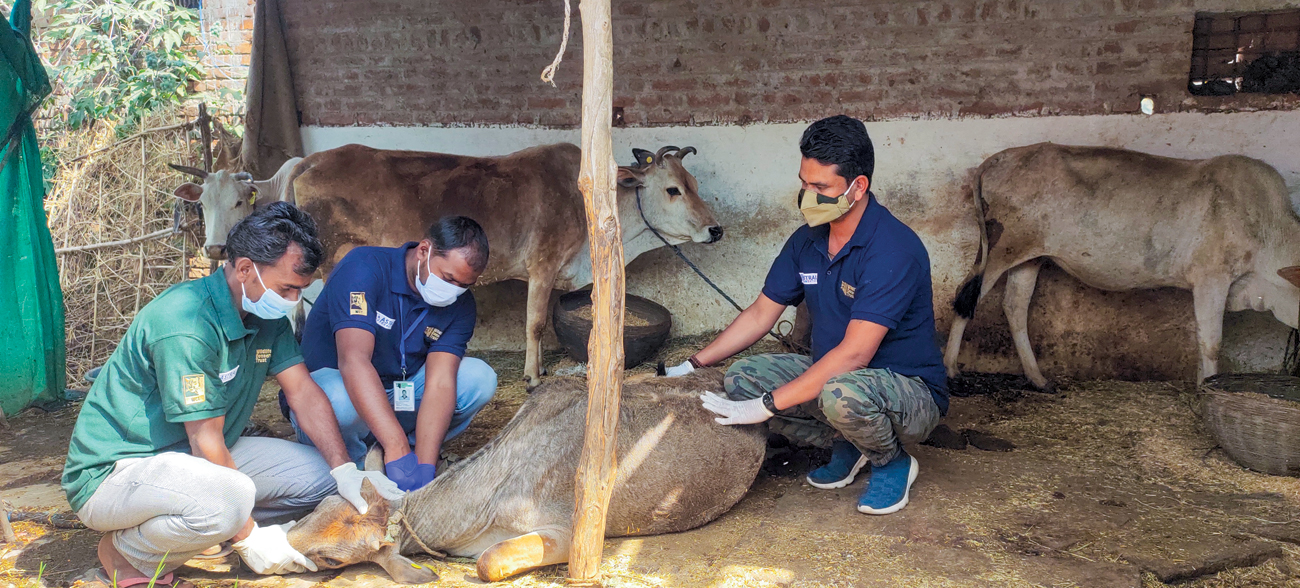
Members of WCT’s Wildlife-Livestock Disease Interface Management Team collect blood samples for bovine tuberculosis surveillance, an essential step in detecting disease early and preventing its spread between livestock and wildlife. Photo: WCT.
A network of volunteer Gosewaks (friends of cattle) from each village play a key role in surveillance and vaccination drives in their respective villages, along with the Forest Department staff and animal husbandry teams. The threats, however, are not just limited to herbivores. Rabies poses a significant mortality risk to wild carnivores. Similarly, Canine Distemper Virus (CDV), transmitted into wild predators primarily through free ranging dogs in villages, can wipe out large numbers of wolves, hyenas, dhole, tigers and other predators. An outbreak of CDV killed 28 lions in Gir within two weeks in September 2018, while the virus was detected in the Panna Tiger Reserve in Madhya Pradesh in 2016. The disease-surveillance efforts are thus not just limited to herbivores and cattle but also give equal importance to surveillance in free-ranging dogs and wild carnivores for disease prevalence. STR, over the years, has now managed to institutionalise this entire programme as an integral part of their annual management plans.
“Joint vaccination drives between STR management, Animal Husbandry Department, and WCT have covered pretty much all the 170 villages within the core and buffer of the tiger reserve. What gladdens my heart the most is how, over the years, STR has institutionalised the programme. Every senior officer at STR gives as much importance to the threat of disease as it does to poaching or forest fire,” says Dr. Joshi.
Interestingly, as I found out, the Sanjay Tiger Reserve is also utilising wildlife tracking tools and methods to guide the reserve’s wildlife health. For instance, radio tracking of wildlife is a common tool employed in many Protected Areas of India. “We don't just track where the animal is; we use their movement data to decide where we need to be,” explains Dr. Prashant Deshmukh, who heads the HWIF programme.
“By analysing telemetry data, we can see exactly which villages lie within a predator's movement path. We then prioritise those specific locations for sample collection and vaccination. Conversely, if we detect a disease hotspot, the telemetry data acts as an early warning system, telling us instantly if our wild predators are moving dangerously close to the infection source,” explains Dr. Abhay Sengar, a veterinarian with the Forest Department at STR.
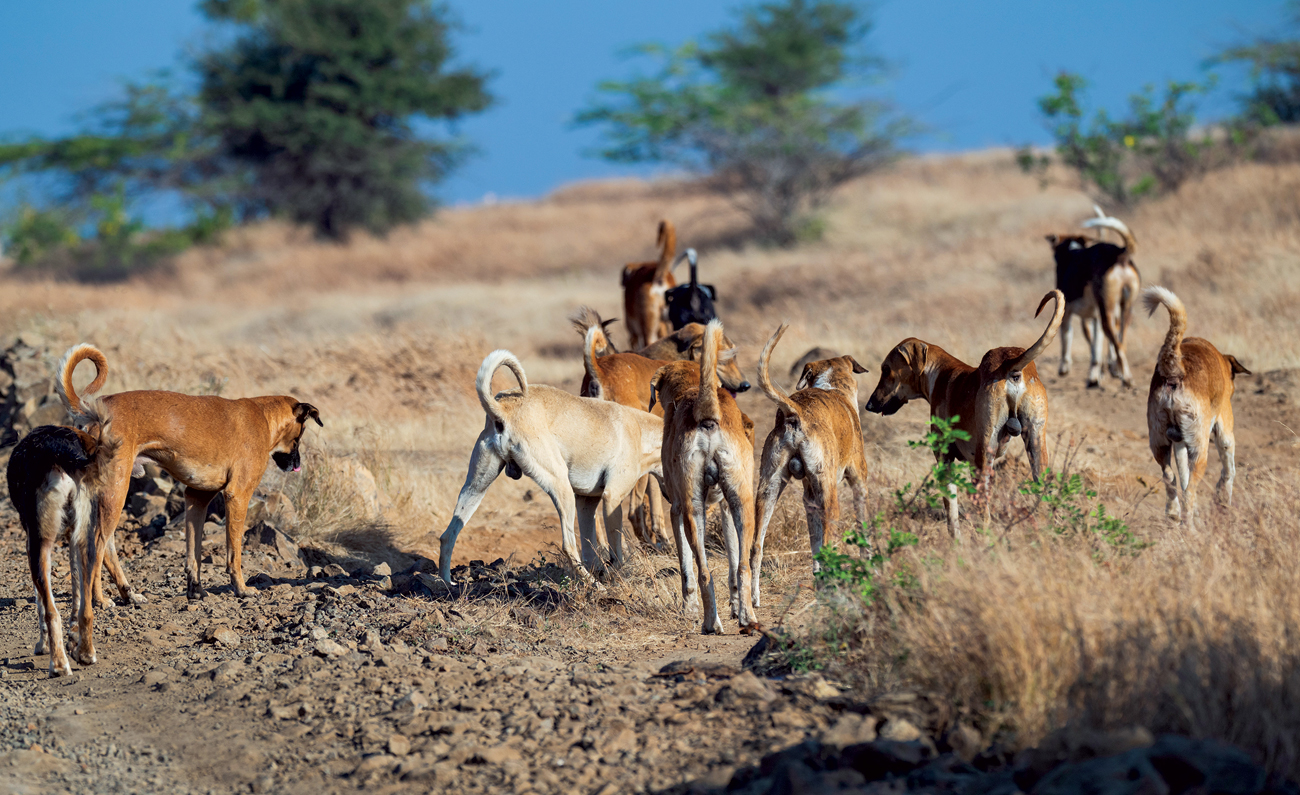
Free ranging dogs, in recent times, have emerged as one of the deadliest threats to all manner of wildlife, from snow leopards and brown bears in the Himalaya to wolves and foxes in grasslands, and tigers and lions in forest habitats. Photo: Dr. Anish Andheria.
A Catalyst For Change
The results of this discipline and hard work have borne fruit. There has been a sharp decline in the prevalence of FMD with no outbreaks in the past five years, and a massive rise in herd-immunity over the past four years! “You can imagine how big an achievement it is for us; we are talking of no detected outbreaks of FMD in both wild herbivores and nearly 1.5 to 2 lakh cattle across 170 odd villages and across a nearly 1,700 sq. km. area,” says Dr. Vinay Pandey, another experienced wildlife veterinarian working in the HWIM team, with a sense of pride. STR’s reintroduced gaurs are thriving in a healthy environment that is constantly monitored for disease, whereas the learnings from years of work in STR and Bandhavgarh have led to the signing of a Memorandum of Understanding (MoU) between various state departments and national institutions to establish a Cooperative for Infectious Disease Surveillance at the Wildlife-Livestock Interface in Madhya Pradesh, which aims to scale up the disease-surveillance programme to all other tiger reserves across the state.
“I still think of that emaciated gaur from all those years ago, but now I take solace that his suffering and death was not in vain. We might have failed to save him, but he in many ways acted as a catalyst in saving the lives of countless others,” says Dr. Himanshu Joshi as he signs off.~
Writer and wildlife historian, Raza Kazmi is a Conservation Communicator with the Wildlife Conservation Trust, Mumbai. His field of expertise includes the wildlife history of India, conservation policy, and issues unfolding in India’s ‘Red Corridor’ landscape.