Elephant - The Divine Mystery
First published in Sanctuary Asia,
Vol. 46
No. 2,
February 2026
Photographs: Rajesh Bedi. Narration: Naresh Bedi
A review with extracts by Bittu Sahgal, Editor, Sanctuary Asia
It would be an understatement to say the latest book by the famous Bedi Brothers offers us a timely reminder as to who we once were, and (for those of us alarmed at the status of elephants in India today) how far we have drifted from our visceral veneration of nature. Perhaps more than any other Indian animal, the elephant has been worshipped by the people of the Indian subcontinent. This love and respect is what motivated the two brothers to document the grandeur of Elephas maximus: the genus Elephas translates to ‘elephant’ and maximus to ‘largest’, correctly describing the beloved animal as the largest Asian land mammal.
When Sanctuary Asia was launched in October 1981, one of the first calls I received congratulating me and offering all the help I might need was from Dr. Ramesh Bedi. But the words of his sons would do him more justice than any superlatives I might use:
“We owe our love of nature to our father, Dr. Ramesh Bedi – a noted scholar of Indian medicinal plants. A self-taught naturalist, he introduced us to the ways of the jungle. A prolific writer, he authored over a hundred books and numerous articles on India’s fauna, flora, natural history, and herbal traditions.
His achievements are all the more remarkable given the era in which he worked, without the internet, digital platforms, online archives, or modern research tools. Everything he knew came from first-hand experience: years spent in the field and wisdom gathered painstakingly from elders, forest dwellers, and oral traditions.
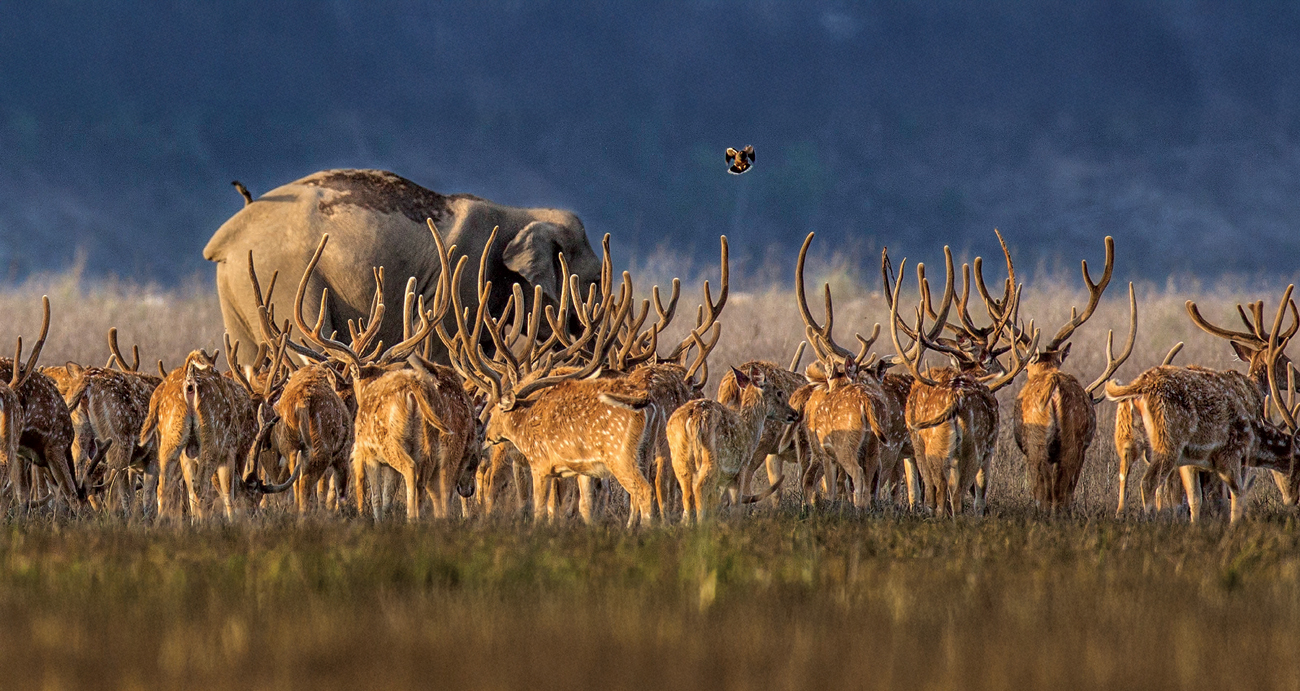
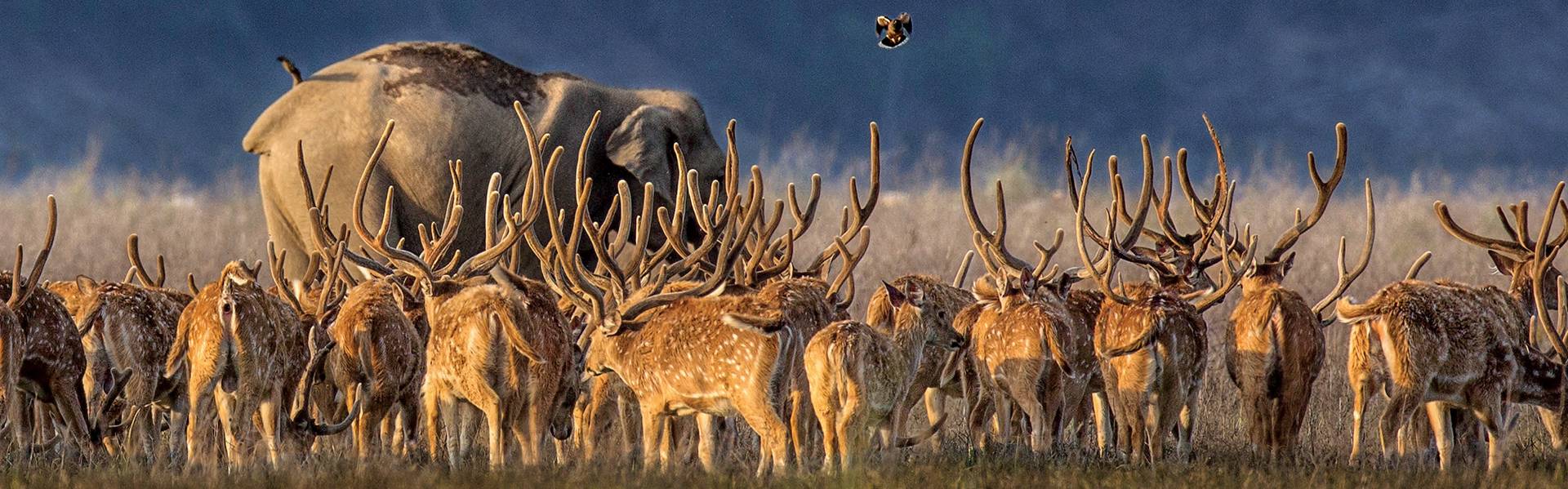
In elephant society, males typically leave their mother’s herd around the age of 10, setting off on independent journeys. Some remain solitary, while others form loose associations with fellow males. These lone giants lead self-reliant lives and are well-equipped to defend themselves against predators, except humans. Photo: Rajesh Bedi.
For over five decades, we brothers have documented India’s wildlife through photography and films, contributing to scientific understanding and nurturing a love for nature among new generations. Our work, honoured with global awards, pays tribute to our father’s legacy and the enduring wonder of the natural world.”
Suffice it to say that the book does great justice to their father’s massive contribution to wildlife conservation at a time when conserving wild species was considered a peculiar idea by those in control of India, who had created an aura around the manliness of shikar, in a subjugated nation that had venerated nature and its wards since the dawn of civilisation. We at Sanctuary Asia strongly recommend that this book be acquired by libraries and institutions of learning across India.
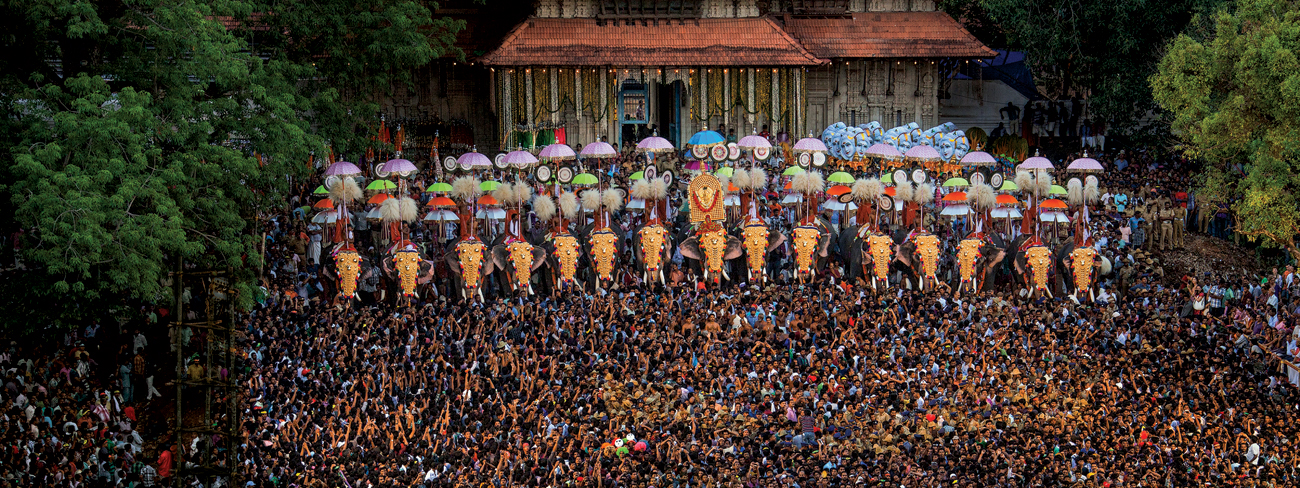
The highlight of Pooram is undoubtedly the Kudamattam ritual, typically held in the evening when the temple grounds, roofs, and adjacent balonies are thronged by approximately one million spectators. Photo: Rajesh Bedi.
“In Corbett, home to substantial resident populations of both elephants and tigers, interactions between the two are likely to become more frequent. However, tigers have been reported killing elephant calves and scavenging on carcasses.
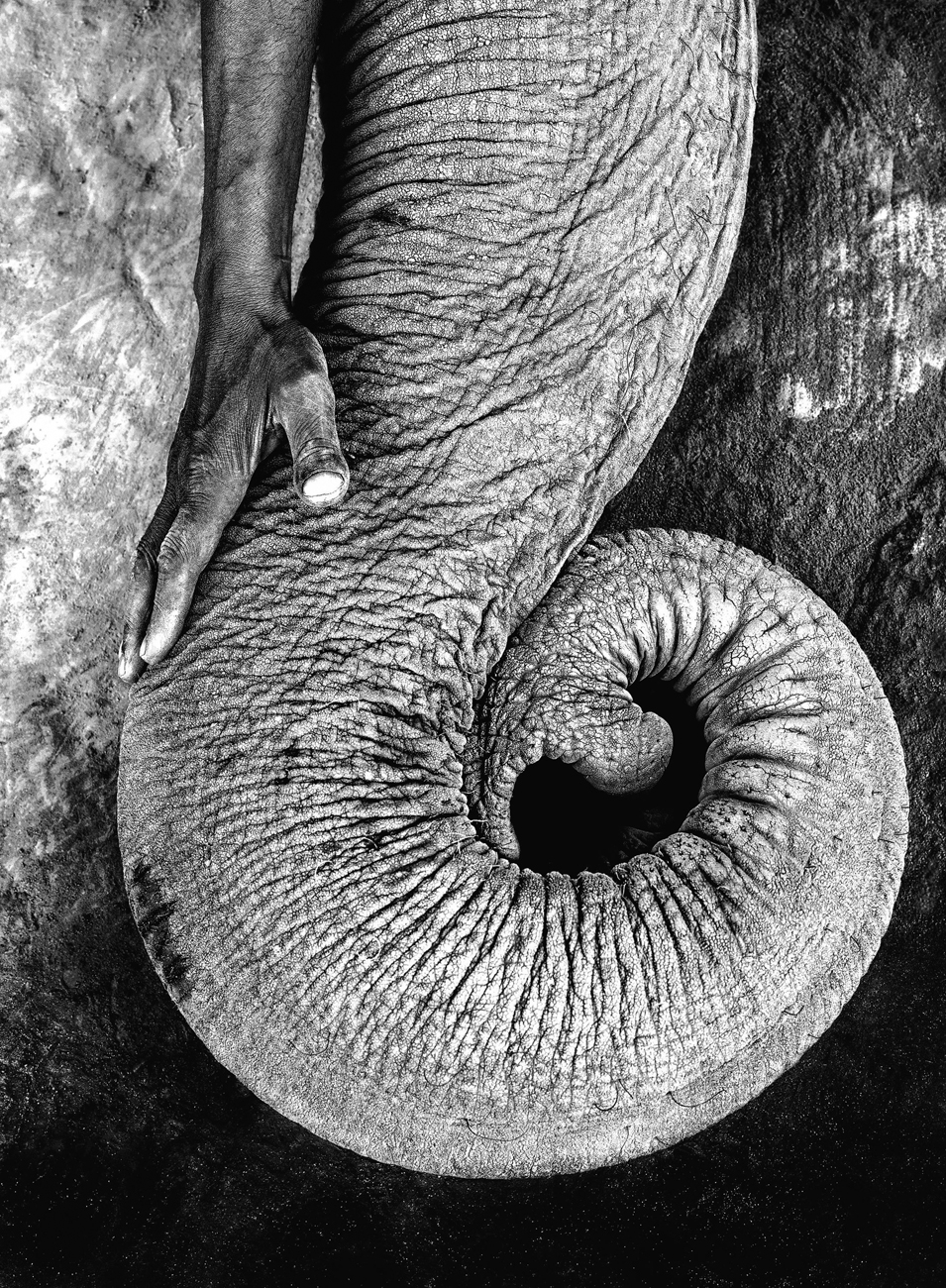
The mahout gently strokes his elephant’s trunk, reaffirming the bond of trust and affection between them. Today, elephants need many helping hands to ensure their survival in the wild. Photo: Rajesh Bedi.
A few years earlier, we were greeted by the golden light of late afternoon on an evening safari along Sambhar Road – an undulating route that runs alongside the Ramganga River. This stretch, known for dramatic sightings, was especially enchanting that day. As we cruised along the riverbank, we spotted a familiar presence: an old tusker partially submerged in the cool waters. At ease, he stood with just his belly visible above the surface, his tusks gleaming in the sunlight. Having photographed him before, we waited patiently, hoping the light would turn more dramatic.
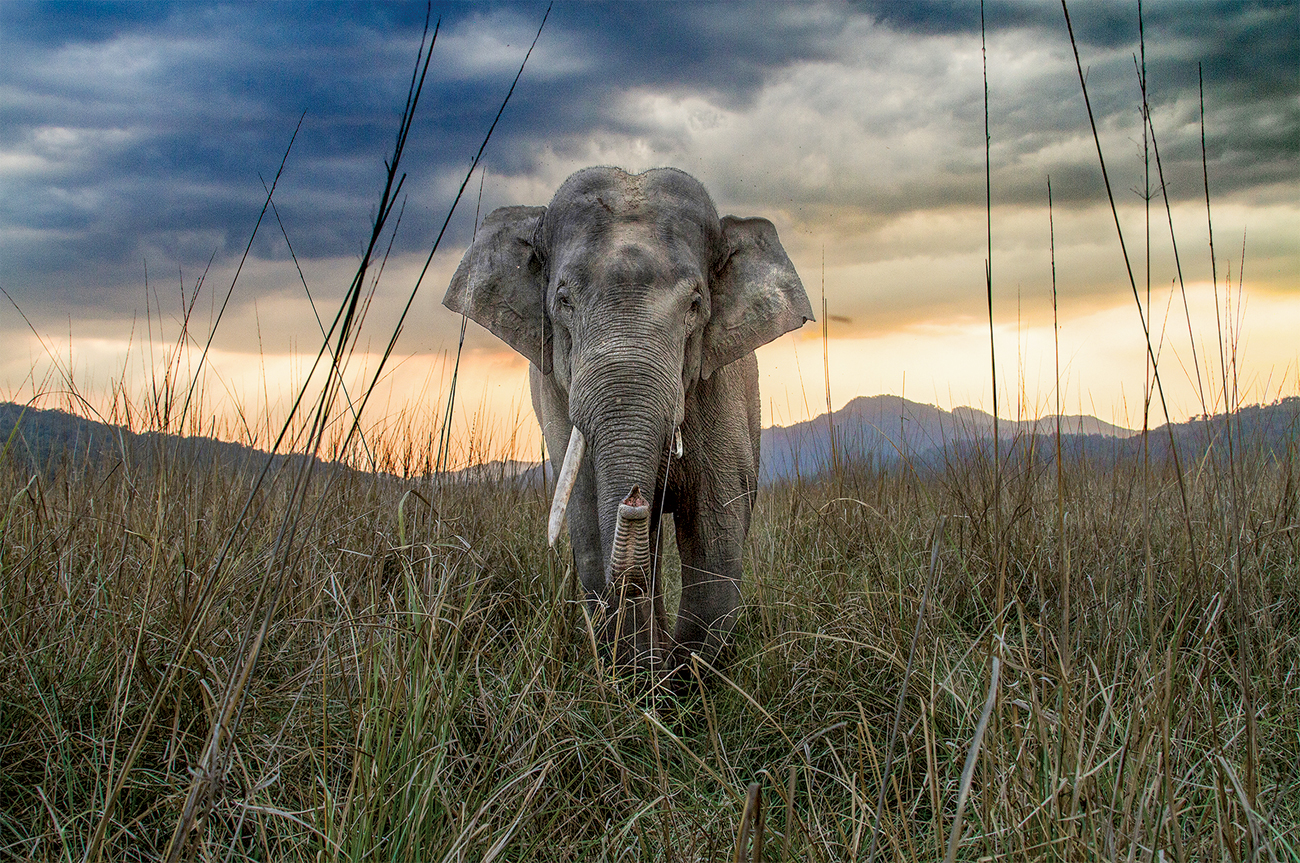
Elephants, like humans, possess unique personalities — and this one-tusked Ganesh, or Ek Dant, was no exception. One day, we waited patiently along a path it often frequented with a calm demeanor, it approached our jeep, pausing to assess our presence and gauge any potential threat. I quickly moved to the ground, capturing the enchanting ambience through a wide-angle lens — a moment of pure delight. Photo: Rajesh Bedi.
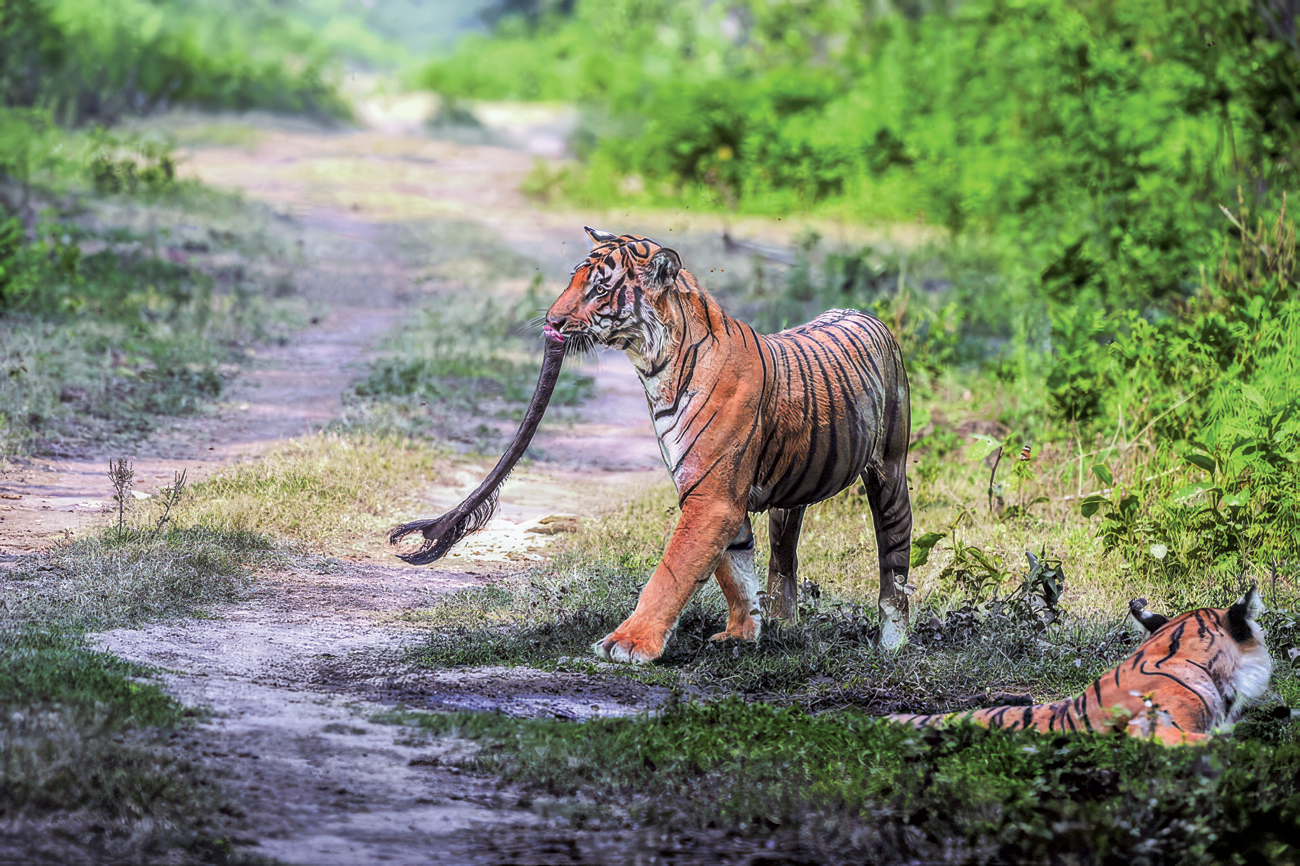
Tigers, though solitary and supreme predators with finely tuned hunting strategies, are not above scavenging. Opportunistic by nature, they may steal kills from other carnivores or feed on carcasses when available. In April 2022, a tigress was observed feeding on the naturally deceased carcass of an elephant in Corbett National Park — an unusual but not unheard-of behaviour in the wild. Photo: Dr. Samir Sinha.

It is typically the privilege of a large dominant bull to mate and chase away any younger taskers in the vicinity. The male escorts the female in estrus for a couple of days, mating several times a day as the pair remains together during this period. Photo: Rajesh Bedi.
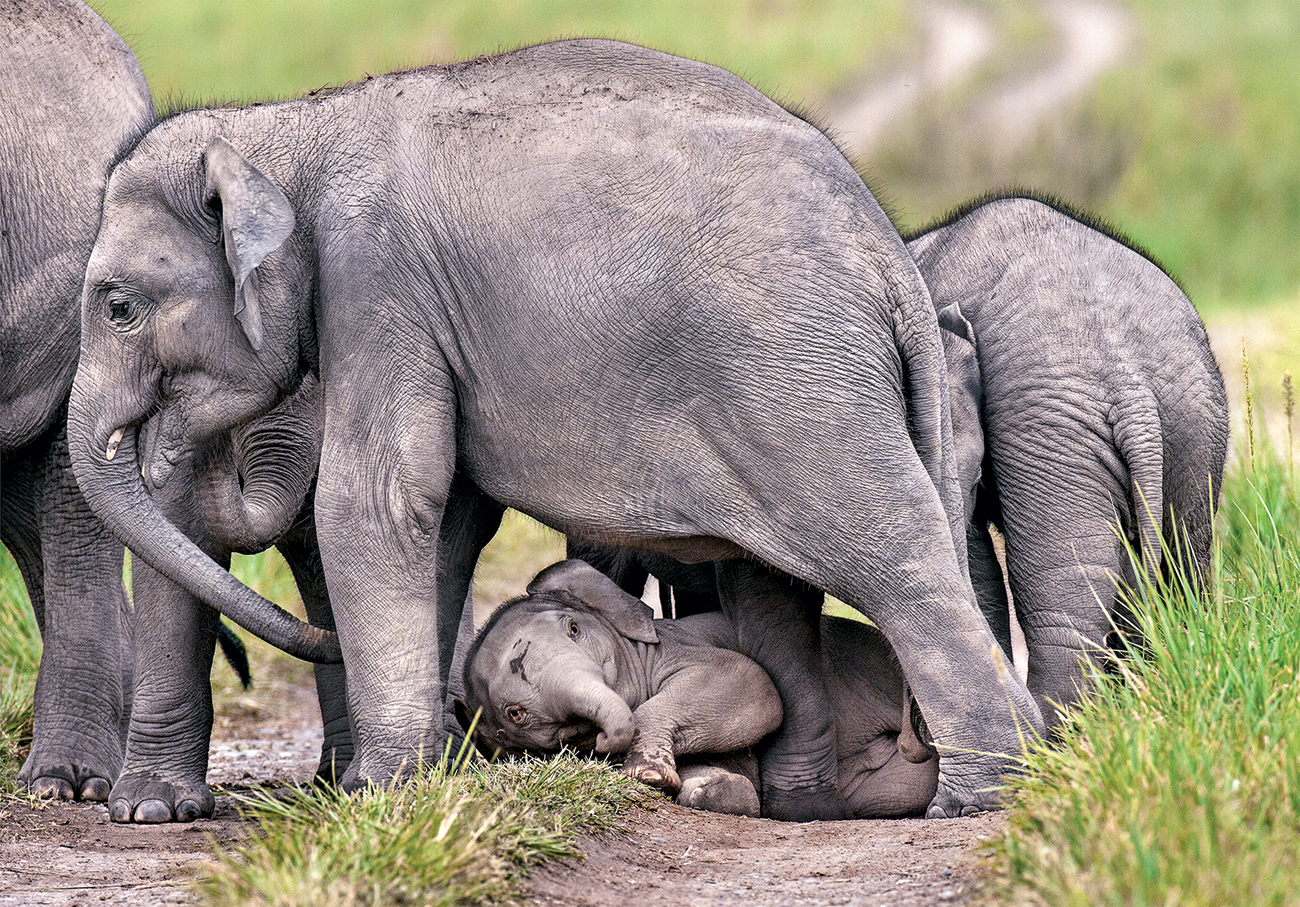
An exhausted baby elephant, resembling the beloved figure of young Ganesh, pauses for a moment’s respite. At the same time, elders stand guard, watchful and protective, until the herd prepares to continue their journey. Photo: Rajesh Bedi.
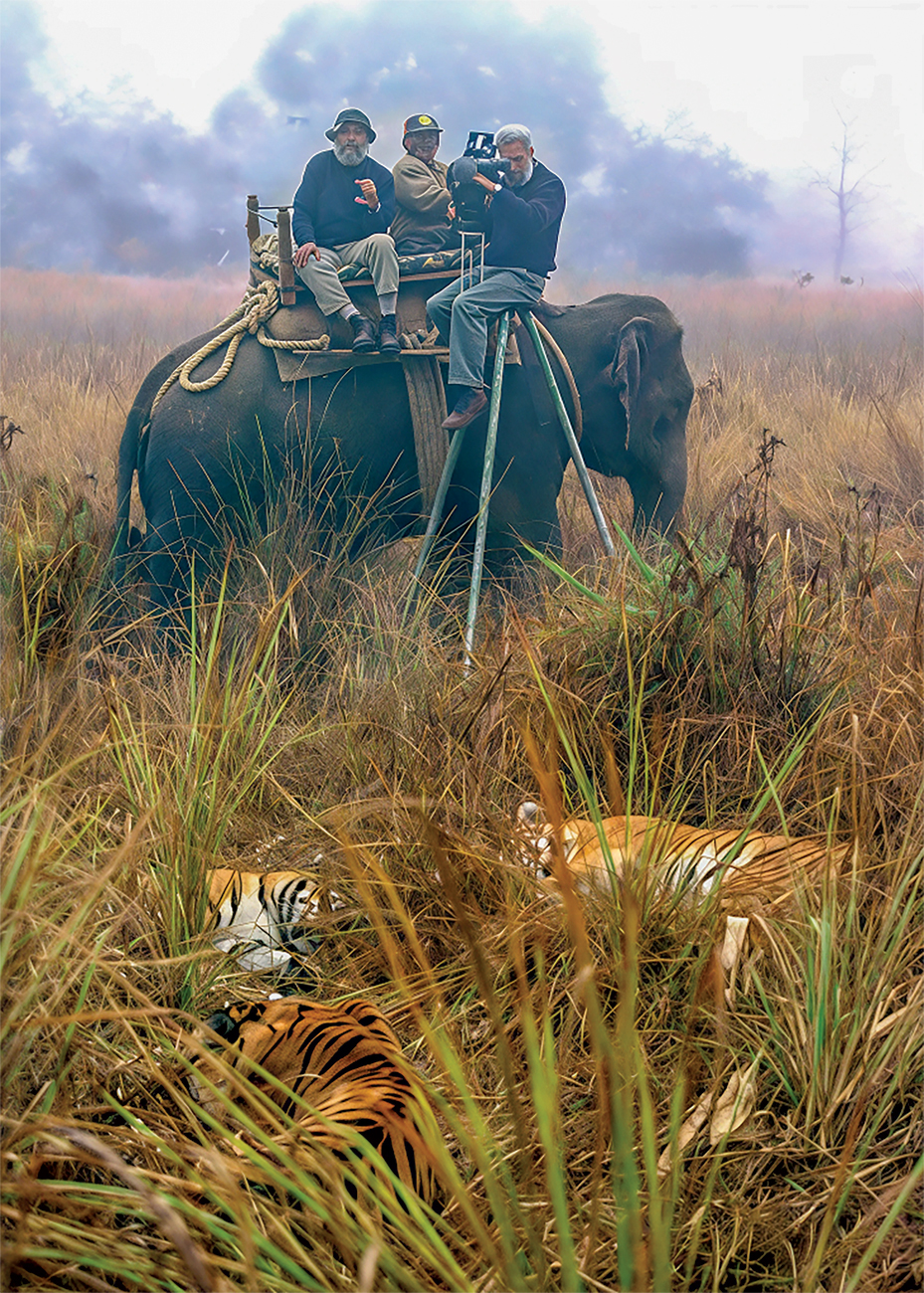
Naresh and Rajesh Bedi – the Bedi brothers – using an ‘elephant tripod’ to observe and record a rare event: two male tigers courting a young, uncooperative female. A tense confrontation unfolds as a powerful younger male challenges an older territorial tiger. Despite the danger, the elephant platform enabled hours of close observation of this exceptional behaviour. Photo: Rajesh Bedi.
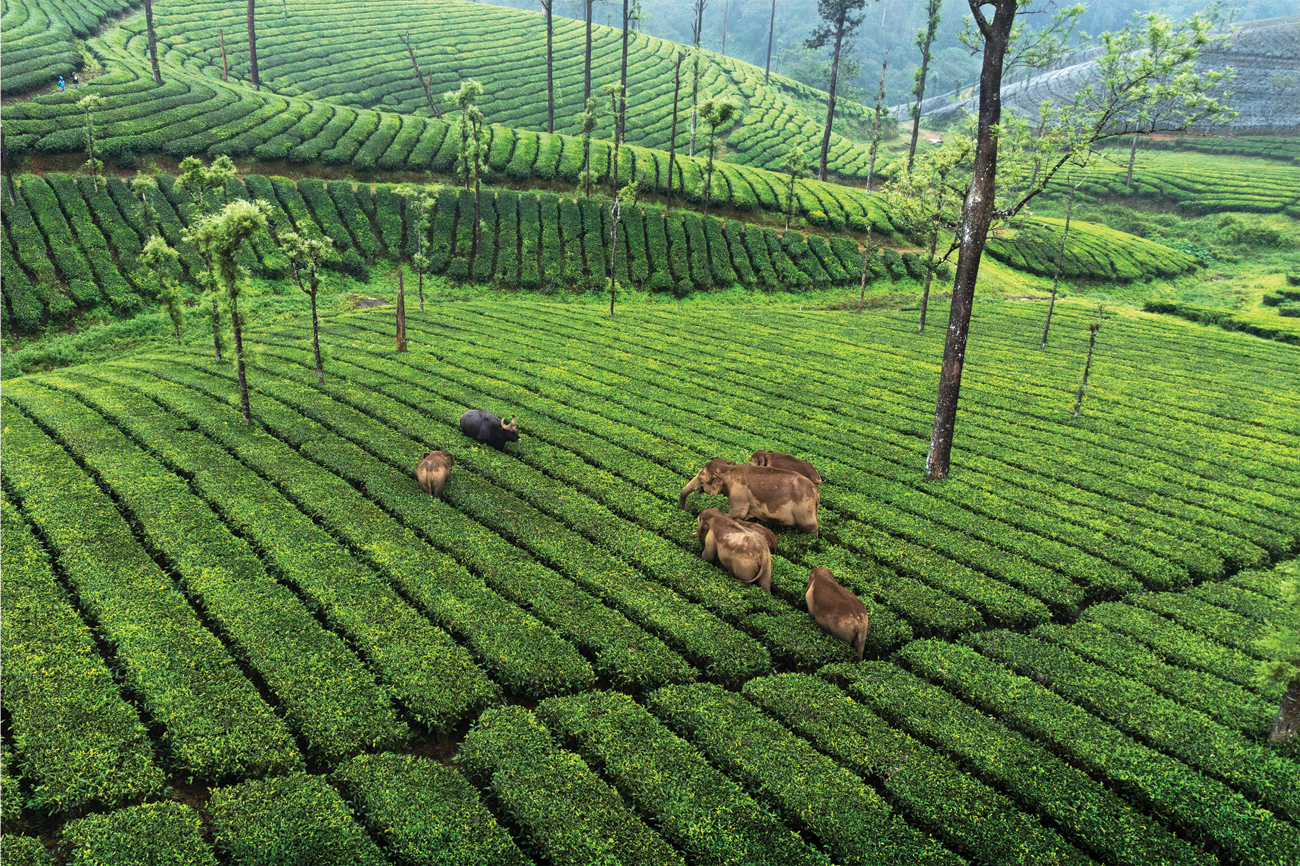
During the British Raj in Southern India, many tea and coffee estates emerged after felling the pristine forest, encroaching on the elephants’ migratory routes. Photo: Rajesh Bedi.
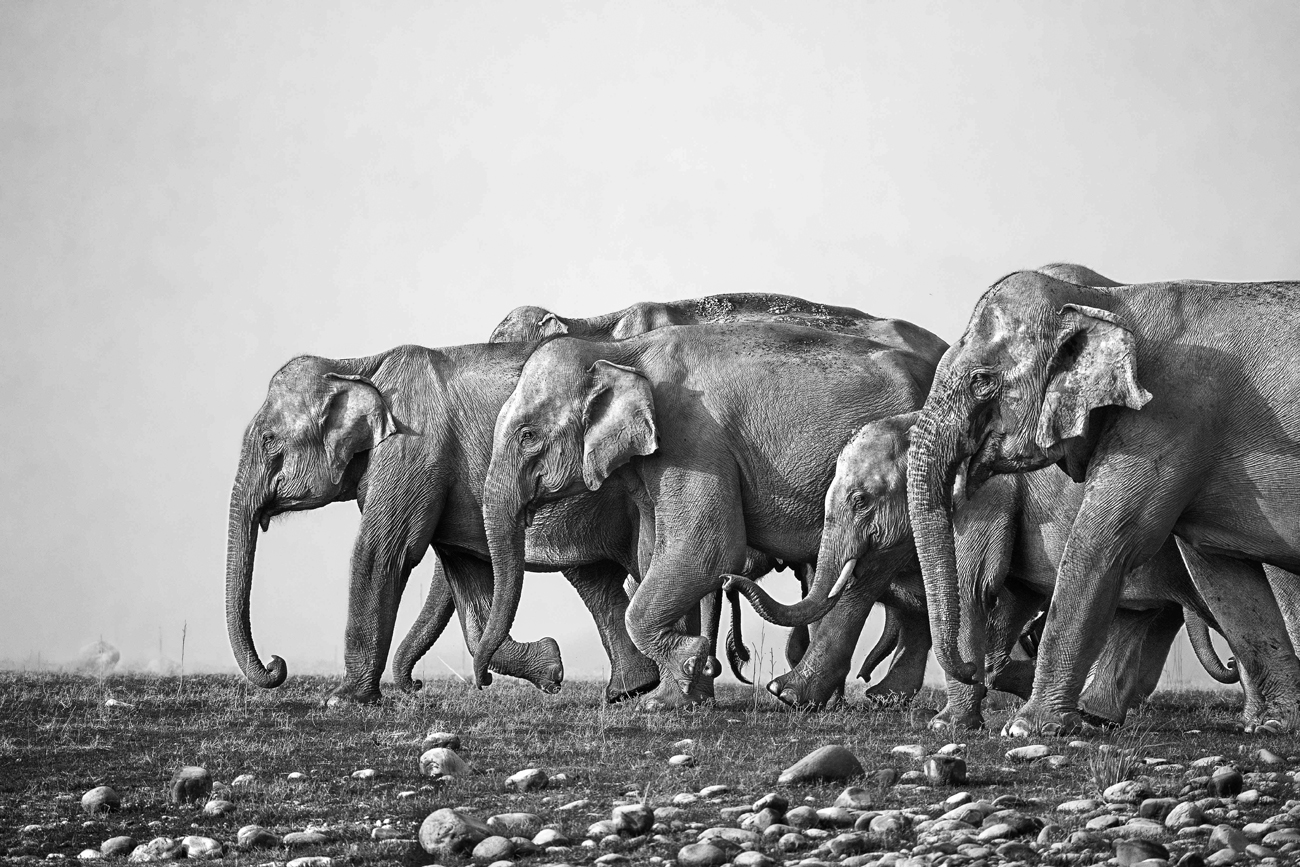
An elephant herd on the move. Drawing on generations of memory, the matriarch leads her herd to safer feeding grounds. Yet these ancient migrations are now fraught with danger, increasingly disrupted by human-dominated and fragmented habitats. Photo: Rajesh Bedi.
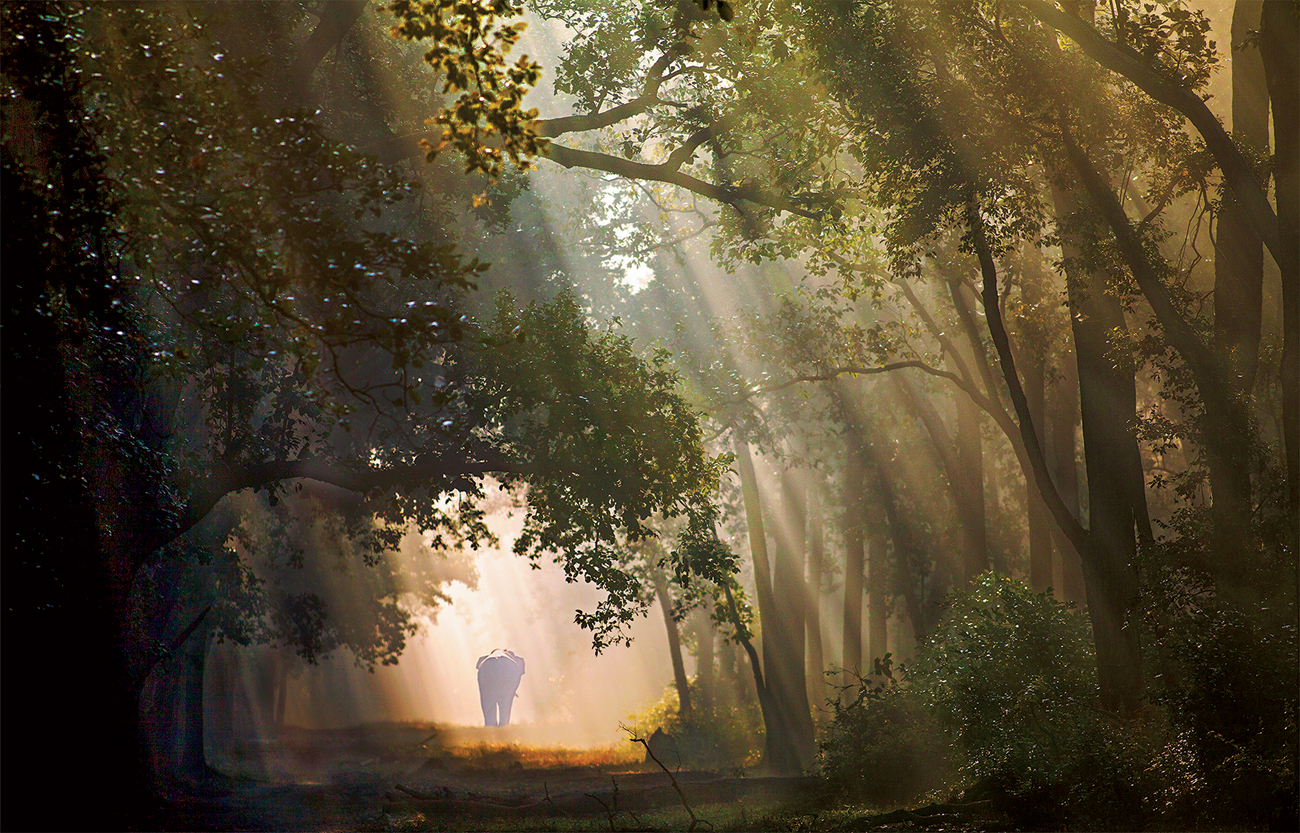
Amidst the breathtaking beauty of Corbett’s Sal forests. I chanced upon this mesmerising scene. The soft flow of early winter morning light filtering through the lush canopy and mist creates a truly magical atmosphere. Photo: Rajesh Bedi.

In the clear river water, the elephant’s soles reveal their ridged, grooved texture, designed to cushion weight, grip the ground, and provide steady footing. Photo: Rajesh Bedi.
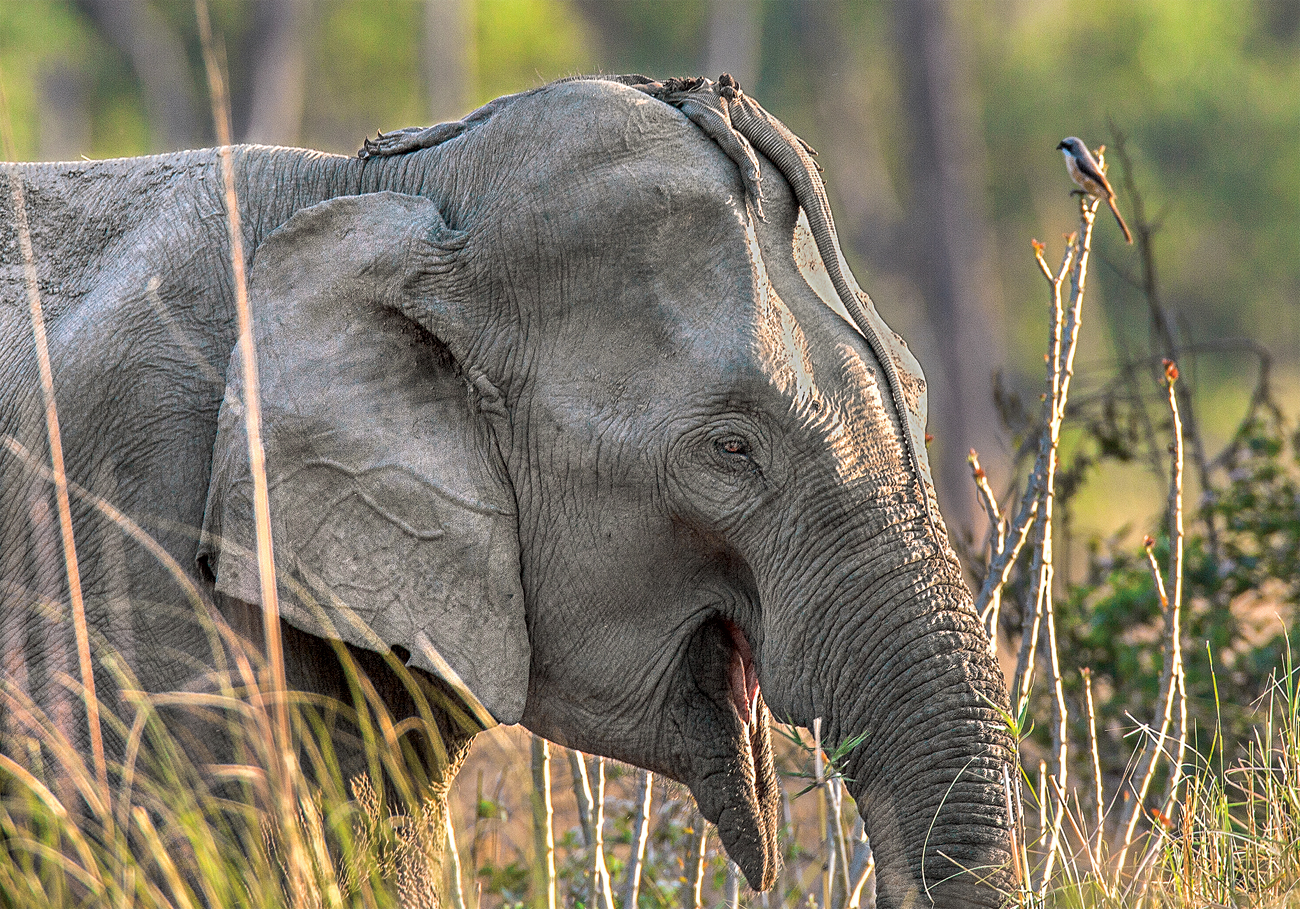
In the nineties at Corbett Park, Madhuri, an elephant named after a film star, displayed unusual behaviour – playfully carrying a tortoise or a monitor lizard on her head. One twilight, I watched her linger with the lifeless, decomposing body of a lizard – a curious and mysterious image – before she vanished into the grasslands. Photo: Rajesh Bedi.
Suddenly, sharp alarm calls from chital and langurs broke the calm. Moments later, Paro – a well-known tigress – emerged from the underbrush, her form sleek and confident as she prowled the riverbank.” – Pg 78
“The entire episode underscored the delicate and dynamic balance that defines Corbett’s ecosystem. Elephants shape the landscape, opening paths and nourishing the soil, while tigers regulate prey populations. Though different in their roles, both are apex species – integral to the forest’s health and the survival of all who dwell within it.” – Pg 82
“Jim Corbett, the legendary hunter-turned-conservationist, once remarked that the most honourable way to hunt a tiger was on foot, engaging in a one-on-one battle of nerve and cunning. However, this approach is far from practical when attempting to photograph tigers with a camera.
Tigers roam vast territories and rarely return to the same location, making it exceedingly difficult for photographers to anticipate their movements. Much of a tiger’s activity unfolds behind a dense curtain of tall grass or deep within thick undergrowth, where tracking them on foot is impractical and highly dangerous.
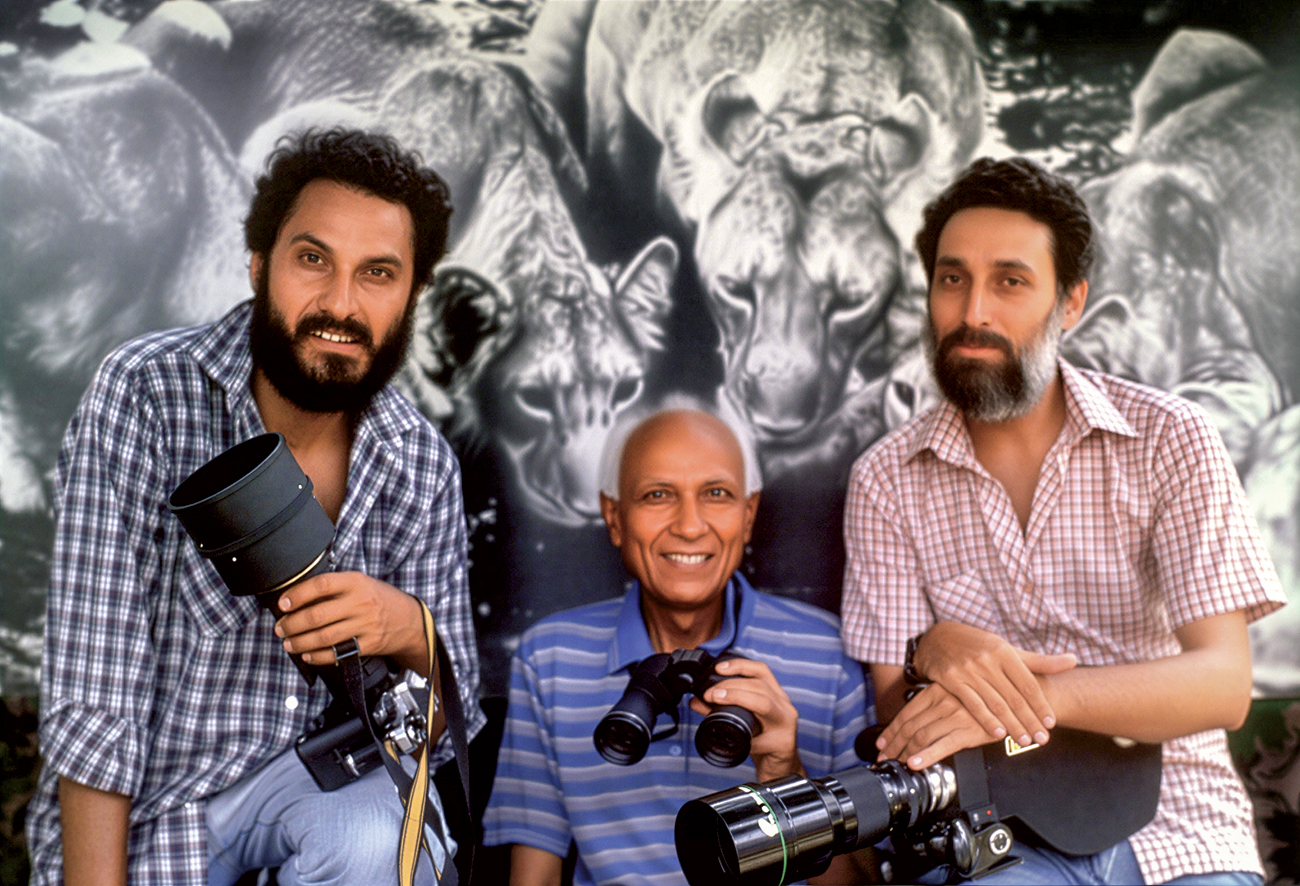
Late Dr. Ramesh Bedi with his sons, Rajesh Bedi (left) and Naresh Bedi (right). Our journeys and achievements rest on our father’s foresight – a visionary naturalist and scholar of Indian medicinal plants who opened the jungle to us. Photo Courtesy: Rajesh Bedi.
Fortunately, trained elephants offer a safer and far more effective means of approaching these elusive big cats. Tigers – and other forest inhabitants – are accustomed to the presence of elephants, which can navigate dense vegetation, marshy swamps, steep inclines, and rocky nallahs: terrains impassable even for the most rugged 4x4 vehicles. Despite their gentle nature, elephants command immense size and strength; few predators dare to challenge them.
Yet tigers, like humans, possess distinct personalities. Some allow an elephant rider to approach within 20 metres, while others react with hostility. One massive male tiger in Kanha National Park, nicknamed Hauva (“Terror”) by forest rangers, was notorious for his aggression.” – Our Elephant Tripod

Elephant - The Divine Mystery,By Rajesh Bedi
Large Format, Hardcover, 40.64 x 30.48 cm., 273 pages, 264 images
Available on Amazon, Price: Rs. 12,500