Meet Neha Panchamiya
First published in Sanctuary Asia,
Vol. 46
No. 2,
February 2026
If a wild animal is in distress in Pune, Nashik, or the surrounding regions of western Maharashtra, whether it is a bird, reptile, or mammal ranging from owls and snakes to sambar or leopards, the instant and most reliable recommendation is RESQ Charitable Trust! The force behind RESQ CT is the incredible Neha Panchamiya, the Founder and President, who has built a committed, expert team of veterinarians, rescuers, and countless passionate volunteers. In 2020, when a lost gaur ran pell-mell through the streets, passing by her house, Senior Editor Shatakshi Gawade witnessed an out-of-control crowd, a terrified animal, and deftly acting Neha and team RESQ CT. As human-wildlife interactions take the spotlight, she dives into this incredible wildlife rescuer’s journey and work.
What were your formative years like, and what inspired you to establish the RESQ Charitable Trust in 2007?
I grew up in suburban Mumbai, far from anything resembling the wilderness. Animals fascinated me from a young age, but nature remained something I admired from a distance. That changed when I went to boarding school in the Sahyadris near Bhimashankar, Junnar Division, run by the Krishnamurti Foundation India. Life shifted from city lanes to forests and hills. It was also where I learnt that living alongside wildlife is not an abstract idea. Leopards regularly passed through the Junnar region, including our school campus. Those early experiences anchored my lifelong fascination with how wildlife negotiates human spaces.
At 15, I wanted to be a veterinarian. But my uncle, a strong influence in my early life, convinced me that I should pursue something that would help humans, so I eventually studied nutrition and completed my Masters in the U.K. When I returned to India for what was meant to be a short break, I repeatedly came across injured animals on the streets of Pune. There was no system in place, and every call I made for help went unanswered. Eventually, I realised that I could either keep wondering why nothing was being done, or I could begin doing something myself.
At 23, I began volunteering with a vet who taught me the basics of rescue and first aid. One injured animal led to another, and what started as a personal response slowly grew into RESQ Charitable Trust. It did not begin with a grand blueprint; it grew out of urgency, compassion, and the belief that if a system does not exist, you build it.
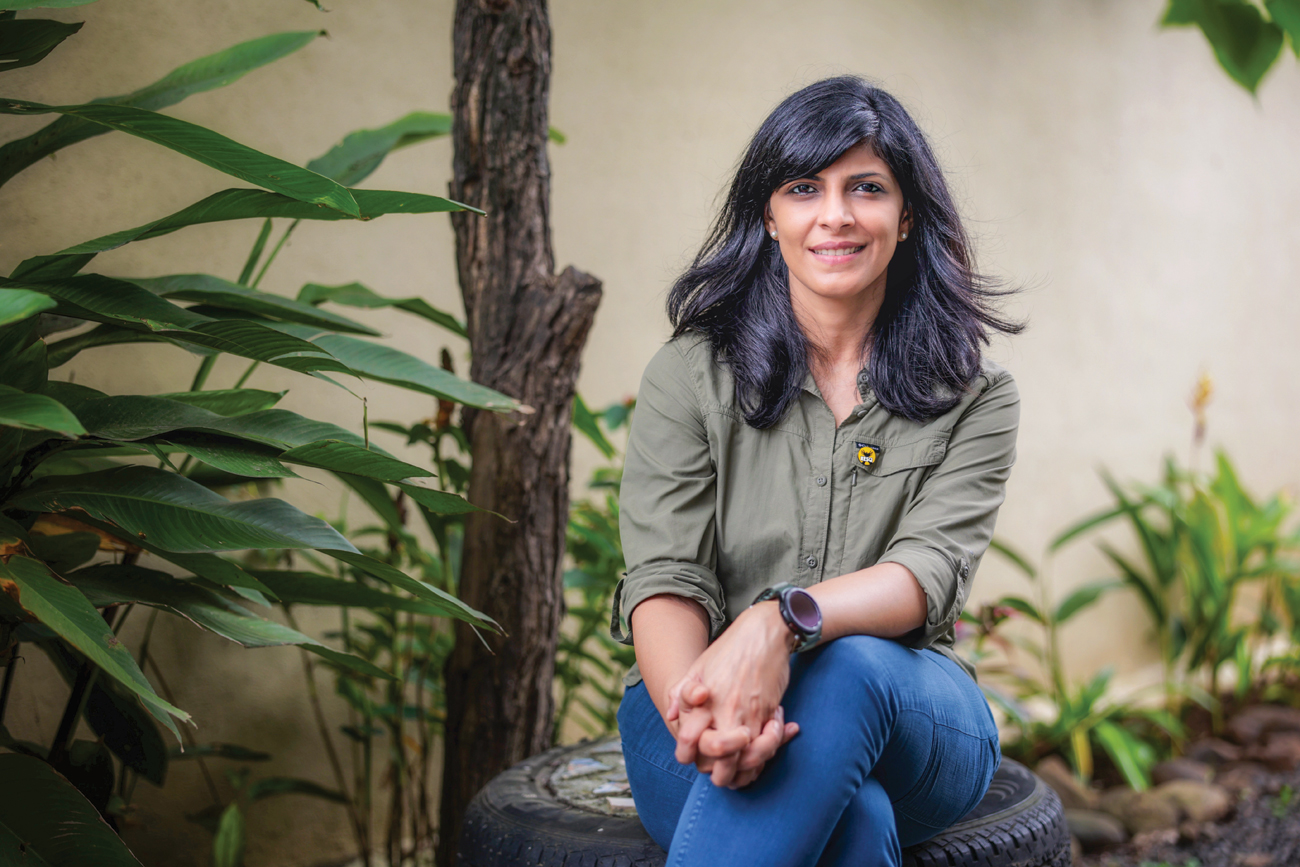
Neha Panchamiya began volunteering with a veterinarian when she was 23, learning the basics of rescue and first aid. One injured animal led to another, and what started as a personal response slowly grew into RESQ Charitable Trust. Photo Courtesy: Neha Panchamiya.
Tell us more about RESQ CT and what a typical day looks like for you and your team.
RESQ Charitable Trust works closely with the Maharashtra Forest Department to address the full spectrum of wildlife emergencies and human-wildlife interactions. We respond to thousands of calls each year across varied landscapes, provide veterinary care, and design rehabilitation pathways that allow animals to return to their natural habitat. Alongside this, we support coexistence through conflict mitigation, conservation education, community outreach, training, and capacity building.
We run Wildlife Transit Treatment Centres in Pune and Nashik, and have managed cases of more than 250 species of birds, mammals, and reptiles. In the past year alone, our teams responded to 9,000+ wildlife emergencies.
Our organisation functions through a strong leadership structure. Field operations are led by Tuhin Satarkar, Nachiket Utpat, and Kiran Rahalkar in Pune, and by Abhijeet Mahale in Nashik. On the administrative and governance side, Fiyana Elavia, Shreyas Dudhgaonkar, and Tanya Rao Gabriel manage finance, compliance, CSR, and systems, supported by an excellent medical and rehabilitation team.
A typical day at RESQ is rarely typical. The field team may be tracking a leopard through sugarcane fields, responding to one inside a city or airport, disentangling an owl from manja (kite string), or rescuing a sambar from a well. Some days bring mass casualty events, such as tree-felling incidents that send dozens of birds to our centres in hours.
At the centres, veterinarians and rehabilitators move through medical rounds, diagnostics, rehabilitation planning, behaviour monitoring, and welfare assessments. Outreach teams conduct awareness sessions in conflict-prone areas. My own day moves between field coordination, discussions with the Forest Department, reviewing medical and rehabilitation plans, writing policy notes, and ensuring that our long-term programmes remain aligned with the needs of the current landscape.
That is quite the spread! I’m sure you must work in coordination with several people and entities. Who are your partners, and what strategy or technology supports your rescue work?
RESQ’s work is deeply collaborative. We operate under formal agreements with the Maharashtra Forest Department to run Transit Treatment Centres, support wildlife operations, and strengthen conservation education and field capacity. Every rescue, rehabilitation, or conflict response is carried out under their authorisation.
We work closely with the Police Department, Municipal Corporations, the Animal Husbandry Department, and district administrations whenever coordination, enforcement, or logistics are required. Wildlife management is never a single-agency task, and our partnerships reflect that.
Our work is made possible through the support and contributions of our CSR partners, philanthropic donors, and foundations that invest in wildlife welfare and coexistence programmes. Their commitment enables us to strengthen field capacity, upgrade medical infrastructure, and scale systems that improve outcomes across landscapes.
We also collaborate with specialist wildlife and veterinary organisations internationally. These partnerships bring in advanced expertise, training exchanges, and technical support during complex cases or high caseload periods, helping us continually refine our methods and align with global best practices.
Our strategy is science-led. We rely on field tracking, behavioural monitoring and use specialised species-appropriate rescue equipment and handling tools to reduce stress and increase safety for both animals and responders. We are a data-driven organisation, and our systems track behaviour, anthropogenic hazards, disease surveillance, and operational efficiency, ensuring that every case strengthens the next.
Why are negative human-leopard interactions increasing?
The first step is separating perception from measurable data. Whether attacks have actually increased can only be confirmed through long-term Forest Department records. What has undoubtedly increased is visibility. Smartphones, CCTVs, and social media now capture movements that would have gone unseen earlier.
Landscapes have changed significantly. Areas that were once sparsely populated now have new housing, expanding agriculture, and infrastructure. Increased human presence in these areas will naturally increase interactions. In the peri-urban belt around Pune, sugarcane fields create excellent cover and movement corridors for leopards. Human-created attractants, such as waste systems that support large populations of free-roaming dogs, draw leopards closer. The perceived rise in conflict is therefore shaped by visibility, land-use change, and attractants created by our own activity.
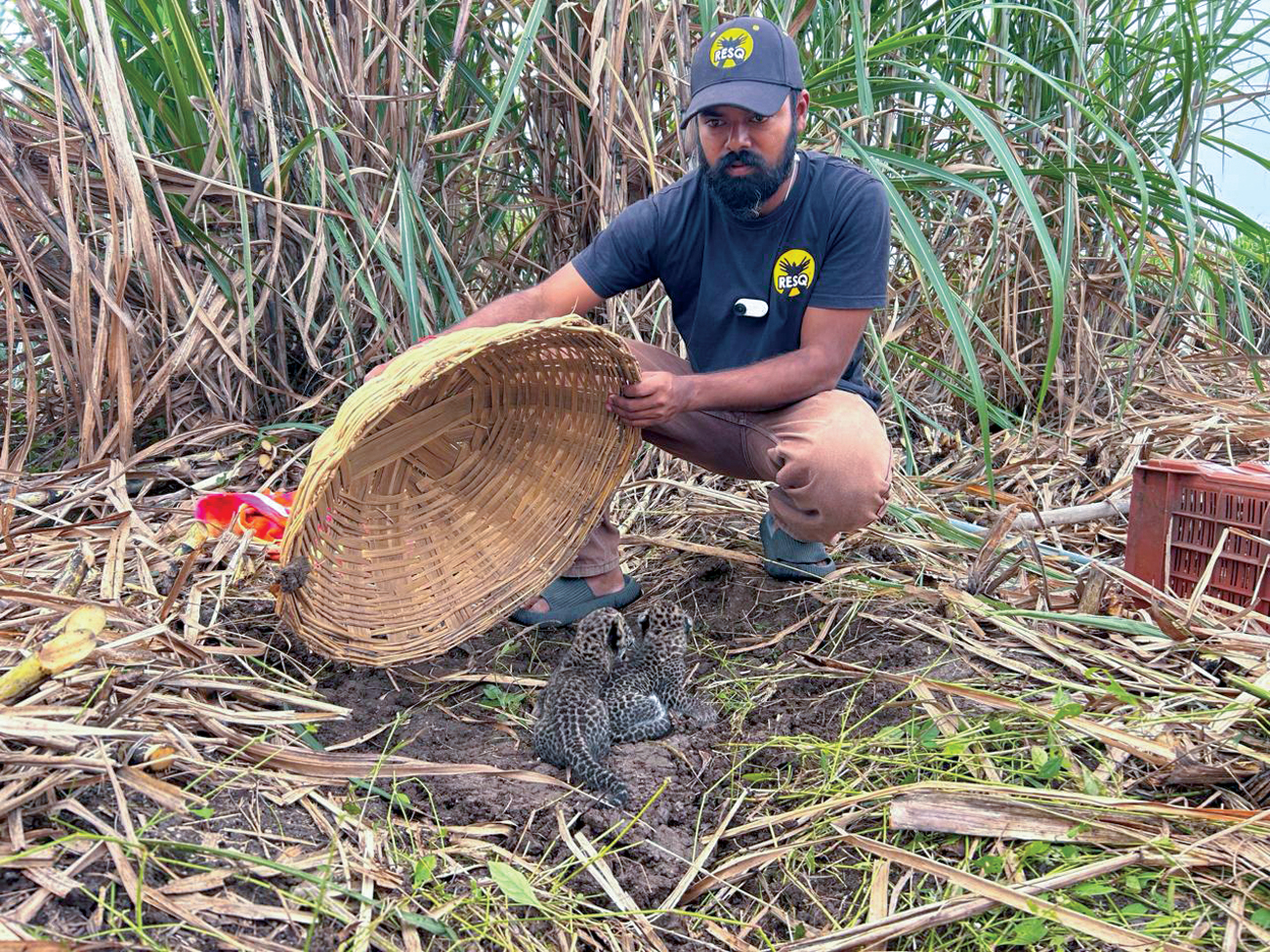
Alarmed by the noise of a tractor in the field, the mother leopard abandoned her few-week-old cubs. The RESQ CT team collaborated with farmers and the Forest Department to reunite the family. Photo Courtesy: Resq-ct.
What happens during a human–leopard conflict situation?
Human-leopard conflict situations are complex, fast evolving, and rarely resemble what popular imagination makes of them. The first task is verification, because conflicts often begin with misinformation rather than the leopard.
Once presence is confirmed, the Maharashtra Forest Department leads the operation. Our teams support through tracking, monitoring, behavioural assessment, containment planning, veterinary support, and safe capture if required. Priorities remain consistent: prevent harm to people, prevent harm to the animal, and avoid unnecessary escalation.
Capture is considered only when absolutely necessary. Even then, immobilisation is a careful veterinary decision. Conflict response is not a battle-ground confrontation. It is a strategic process of reducing stress, preventing panic, and restoring separation between humans and wildlife.
How does conflict differ across urban, peri-urban, and rural areas?
In dense cities, conflict is driven by panic. Crowds gather quickly, often escalating situations that could have remained simple sightings.
In peri-urban areas, the challenge is entitlement and visibility. People want homes with nature nearby, but not the wildlife that comes with it. A single sighting becomes grounds for demands for removal.
In rural landscapes, reactions are shaped by lived experience. People generally remain calm until there is a direct loss of livestock or human injury.
The leopard stays consistent across landscapes i.e. a highly adaptable cat. It is people, expectations, and surroundings that differ.
How do you verify reports in the age of AI and fake news, and what should the public do?
Verification is essential. Our helpline team speaks to the reporter, analyses source photos or videos, reviews movement history, and only then deploys field responders if needed. Genuine reports hold up to questioning, hoaxes do not.
An unverified video can trigger panic or crowds. The public should pause before forwarding anything. If they receive a video that seems alarming, they should inform the Forest Department. During a real sighting, remain calm, move away, inform the Forest Department, and discourage filming or crowding. Responsible communication is increasingly important for both public safety and wildlife welfare.
What do you think of the proposal to remove leopards from Schedule I of the Wildlife Protection Act?
Schedule I status is not symbolic. It provides the highest level of legal protection to a species that continues to navigate increasing habitat fragmentation, human expansion, and rising anthropogenic pressures. Diluting this protection would weaken safeguards that are essential for a wide-ranging carnivore that coexists with people across large parts of India.
Leopards do not generically require population-level removal. What they need are landscape-level solutions: better waste systems, careful land-use planning, and community-led mitigation.
What are the solutions to this conflict? Is there a model India can follow?
There is no ‘single’ or generic solution applicable to human-wildlife conflict across all landscapes. Conflict can be managed but not eliminated. Some pockets of Maharashtra experience unusually high leopard density alongside dense human habitation. These require long-term, tailored strategies. India cannot copy-paste international approaches either. Our land-use patterns, population density, ecological context, and socio-political challenges are unique.
Short-term, publicly pleasing actions may offer relief but do little to address root causes. Sustainable solutions require multisectoral planning: better waste systems, land-use practices that account for wildlife, stronger community engagement, and support mechanisms for affected families.
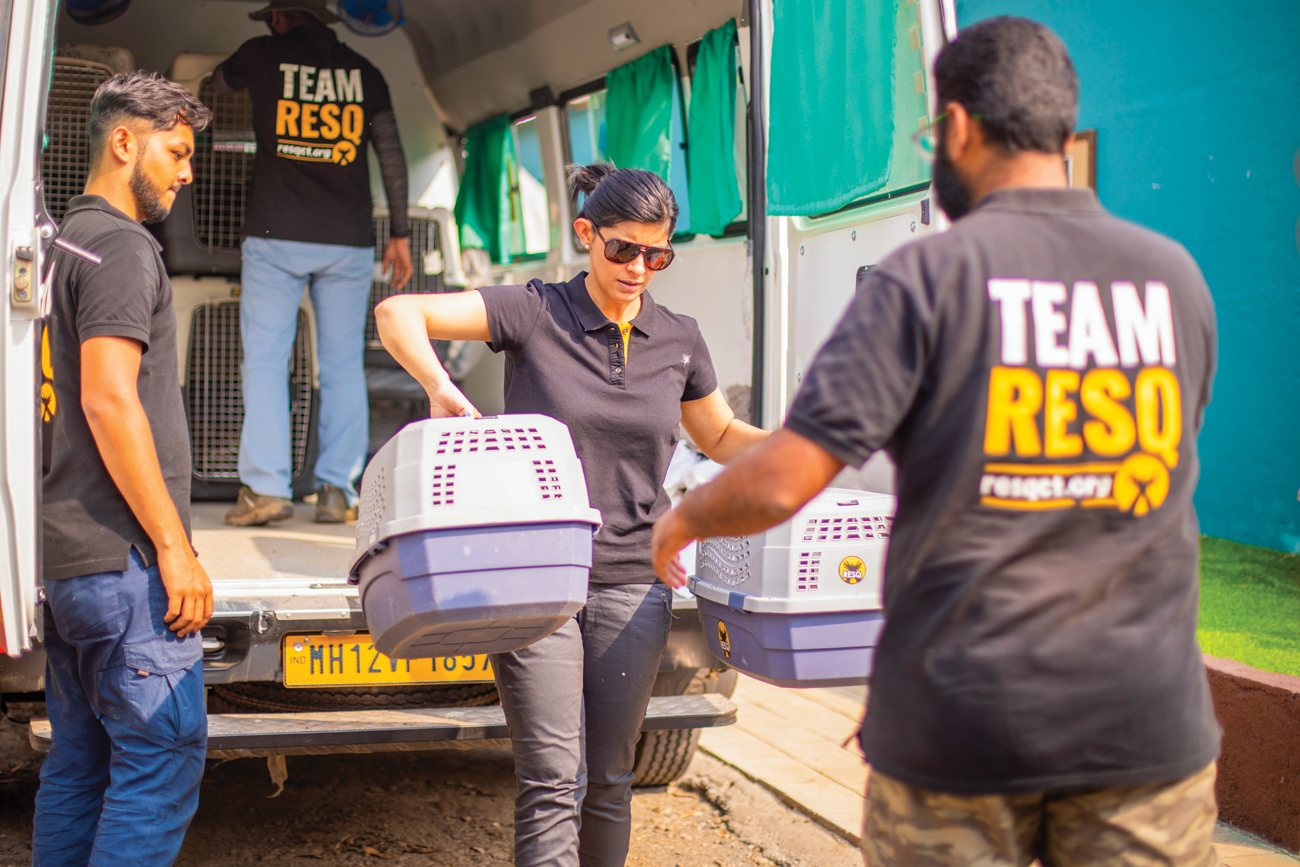
With over 18 years of experience, Neha began her work in the domestic animal sphere and progressed into extensive wildlife rescue and rehabilitation. This has placed her in a unique position to recognise and understand the complexities of both urban and rural ecosystems without bias. She is dedicated to human welfare by committing a considerable portion of RESQ CT’s efforts towards improving public health and safety as well as mitigating human-animal conflict. Photo Courtesy: Neha Panchamiya.
What about the conflict between stray dogs and wildlife?
India’s free-roaming dog issue is a public health, welfare, and ecological challenge. From a wildlife perspective, unmanaged dog populations are significant predators and competitors. They hunt ungulates, ground-nesting birds, reptiles, and small mammals. They also serve as prey for leopards, drawing big cats closer to human settlements.
I love dogs, but they are domesticated animals meant to be under human supervision or responsible community care. The dogs we see on streets today are there because systems have failed them. Their survival behaviour, however natural, causes severe ecological impact.
Solutions must differ by landscape. In cities, drivers include waste management and irresponsible ownership. In eco-sensitive areas, preventing pack formation, and reducing pressure on native wildlife is essential.
Do people often confuse animal rights with species rights?
Absolutely, and it happens quite often. There is a growing confusion between animal rights and species conservation, and while both are important, they are not the same. Animal rights focuses on the welfare of an individual animal. Species rights, or conservation, looks at what is necessary for the survival of an entire population or ecosystem. In many situations, the action that benefits one individual animal may directly harm the larger species or the ecosystem it belongs to.
Our responsibility is to balance both. We must ensure that individual animals are treated humanely, but we also need to make decisions that safeguard species, habitats, and communities. Sometimes that means having difficult conversations and explaining why the most compassionate choice for one animal may not be the best choice for the ecosystem as a whole.
What is the most difficult part of your work, and what is your favourite part?
The most difficult part of the work is sometimes the weight of responsibility, and it is something the entire team carries together. Wildlife often reaches us in critical condition, and the emotional toll of treating severely injured or traumatised animals is immense. Many situations have no perfect outcome, only the least harmful one. We balance human safety, animal welfare, ecology, and public expectation, in real time, 365 days a year. Another challenge is finding long-term support for wildlife work. It is unfamiliar to many, and its urgency is easy to underestimate.
My favourite part is watching an animal recover and return to the wild. That moment never loses its impact. Equally meaningful is watching the team show up for work that is physically and mentally demanding, relentlessly unpredictable, and most times, absolutely thankless. It is a privilege to be surrounded by people who choose this work not because it is easy, but because it matters.
What is your message to young adults who want to help?
Begin with understanding. Wildlife work needs curiosity, patience, and willingness to learn. Rescue and rehabilitation work is not heroic or a fairy tale – it is about science, discipline, teamwork, and quiet consistency.
You can contribute by learning natural history, volunteering, supporting research, joining citizen science initiatives, or helping with community awareness. Conservation needs veterinarians, ecologists, communicators, lawyers, technologists, and artists. There is room for everyone.
Real wildlife work is difficult, but deeply meaningful. And you do not always need a conservation career to help. Responsible waste management, discouraging the wildlife pet trade, reporting sightings accurately, supporting good policy, and engaging more thoughtfully with nature all make a difference. You can begin today!