Night Riders: Ocean Migration
First published in Sanctuary Cub,
Vol. 46
No. 3,
March 2026
An unimaginably large number of small animals travel upwards through the water right after sunset, and return to the cold, dark depths before sunrise. Scientists call this movement that occurs across the oceans ‘Diel Vertical Migration’. The Habitats Trust.
If you stand on the beach at sunset, the ocean looks calm. The waves roll in slowly as the sky changes from orange to deep blue. It feels as if the ocean is settling down for the night. But the truth is, far below the surface, in water so deep that sunlight barely reaches the bottom, millions of tiny creatures are on the move! As the light fades, they begin to rise in what is considered the largest daily movement of living creatures on Earth.
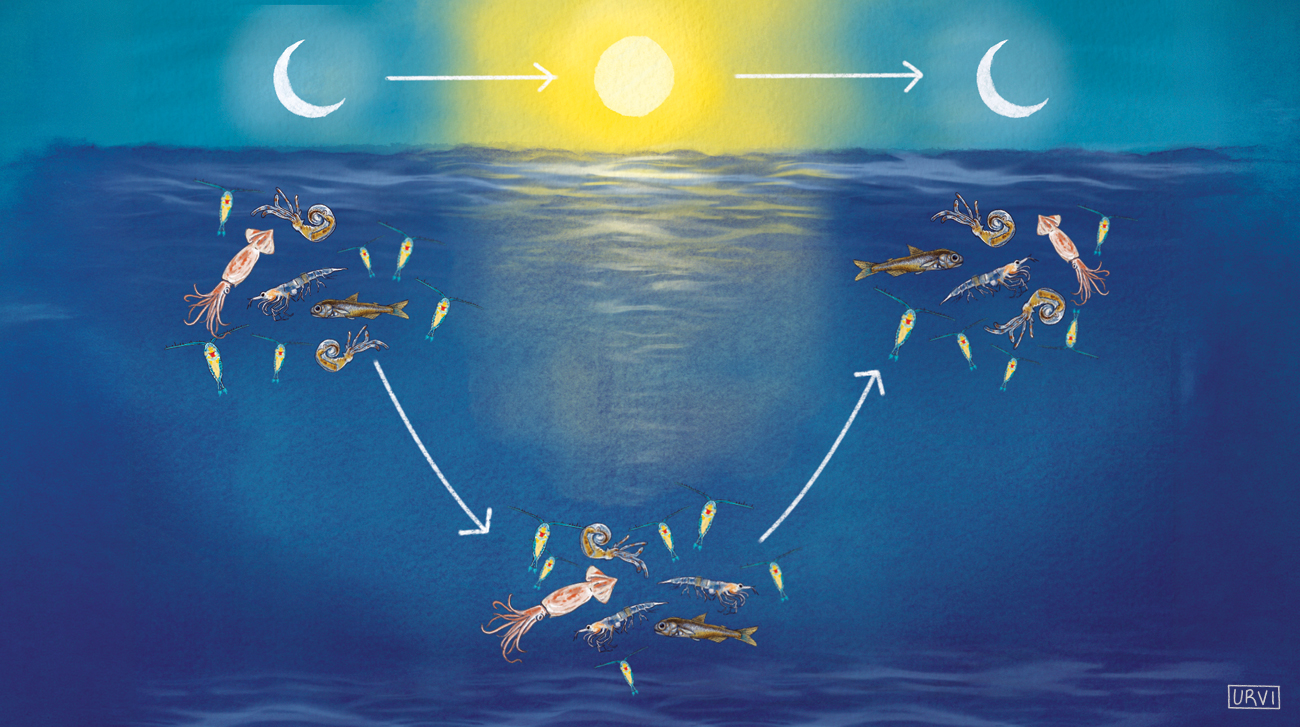
The Earth’s largest daily migration occurs nightly, unseen, beneath oceans worldwide. Photo: Urvi Shah.
Moving In The Dark
Every day, from dusk to dawn, an enormous vertical journey takes place across the world’s deep oceans (and even in freshwater bodies). An unimaginably large number of small animals travel upwards through the water right after sunset, and return to the cold, dark depths before sunrise. Scientists call this remarkable movement Diel Vertical Migration (DVM). ‘Diel’ means daily, and ‘vertical migration’ simply means travelling up and down. French naturalist Georges Cuvier first described the DVM in 1817. Sonar equipment on ships in the 1940s showed what looked like a second seafloor rising at night and sinking during the day. Scientists realised it was not the ocean floor at all, but thick layers of living organisms travelling together.
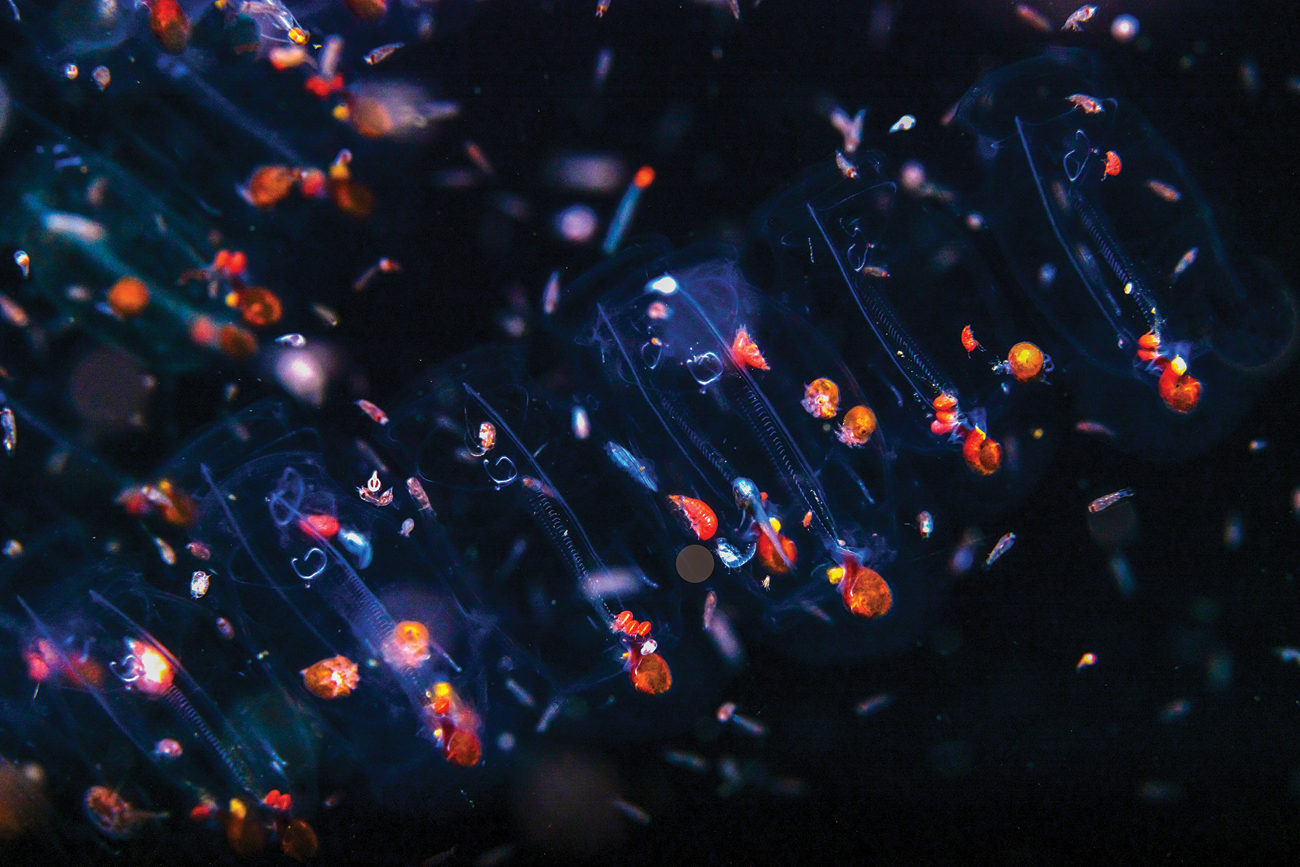
Smaller beings in the DVM, such as juvenile fish, hide from predators inside salps. Photo: Samya Sengupta/Sanctuary Photolibrary.
The DVM mostly happens across the oceans of the world in their midwater region, sometimes called the twilight zone because sunlight here is always very faint, even at midday. One may think of such a zone as empty, but it is actually bustling with life.
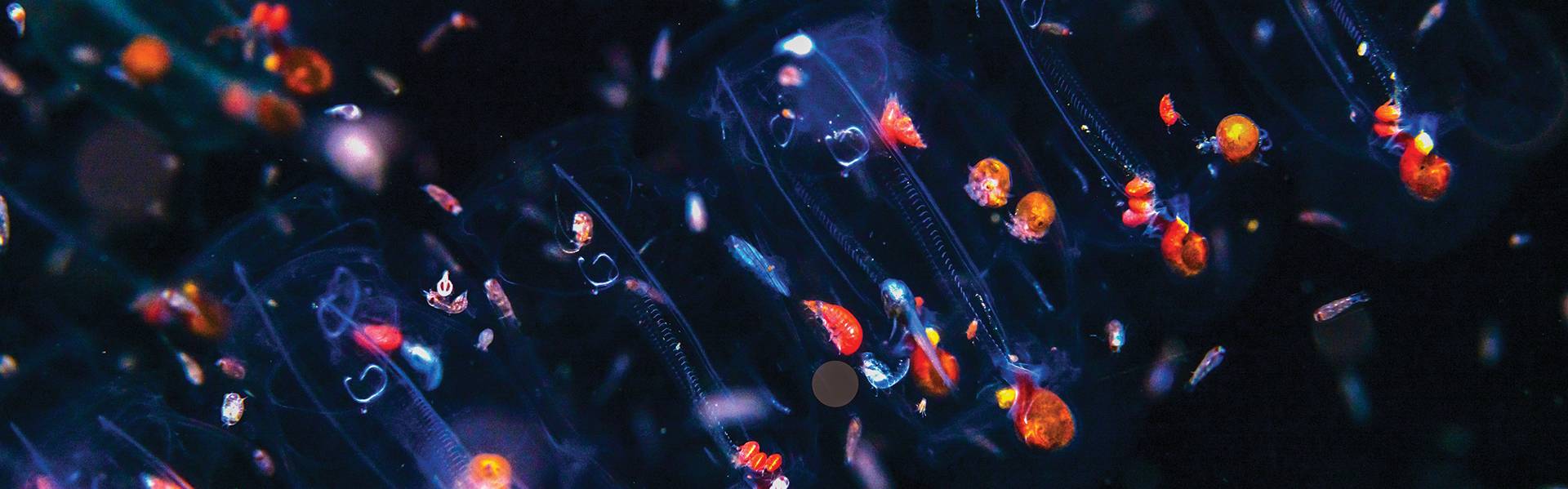
During the day, many small ocean beings stay hundreds of metres below the surface. It is darker there and much harder for predators to spot them. The main creatures that lead the DVM are zooplankton – a diverse community of tiny animals that drift in ocean currents. They include small shrimp-like copepods, tiny jellyfish, the larvae of fish and other sea creatures, and other microscopic animals. Seen individually, each of these seems too tiny to count. But together, they are gargantuan in biomass and a favourite food of many marine predators.
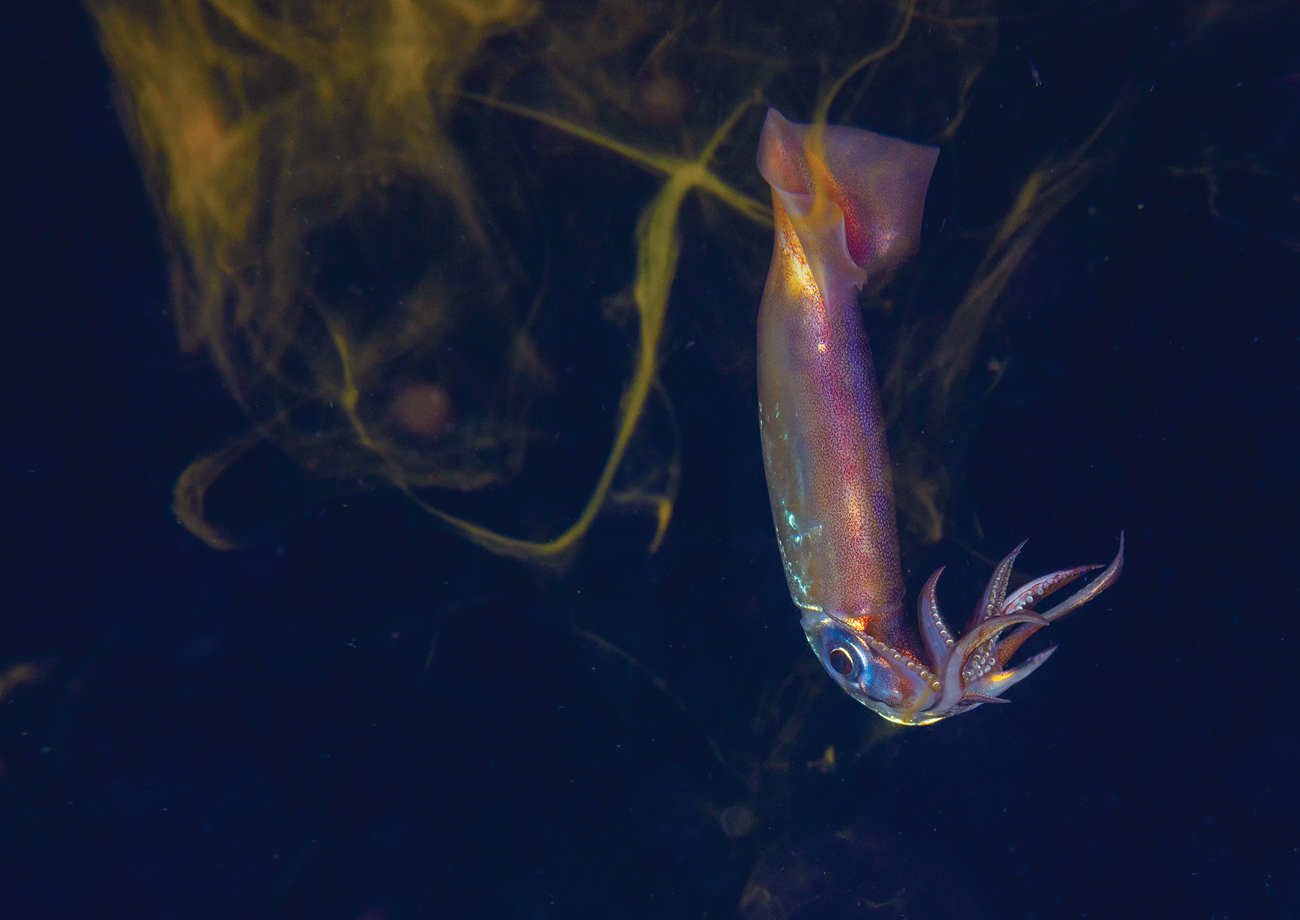
Squids rise from deep waters to hunt fish and shrimp. Photo: Sandipan Dutta/Sanctuary Photolibrary.
The Food Chain
Billions, and perhaps trillions, of small drifting animals rise together each night, forming a vast, moving layer that stretches across entire ocean basins. Why do they do this? Because of food! Zooplankton feed on phytoplankton, microscopic plants and plant-like organisms that grow in the sunlit upper waters, where they photosynthesise. But zooplankton can’t always stick around the phytoplankton neighbourhood, because being in well-lit water makes them easy prey for predators that hunt by sight.
To avoid being eaten, zooplankton stay in deeper, darker waters during the daytime, where predators cannot easily see them. When night falls, in the safety of darkness, they ascend to feed on phytoplankton, having a feast through the night. Before the sun rises again, they return to deeper waters.
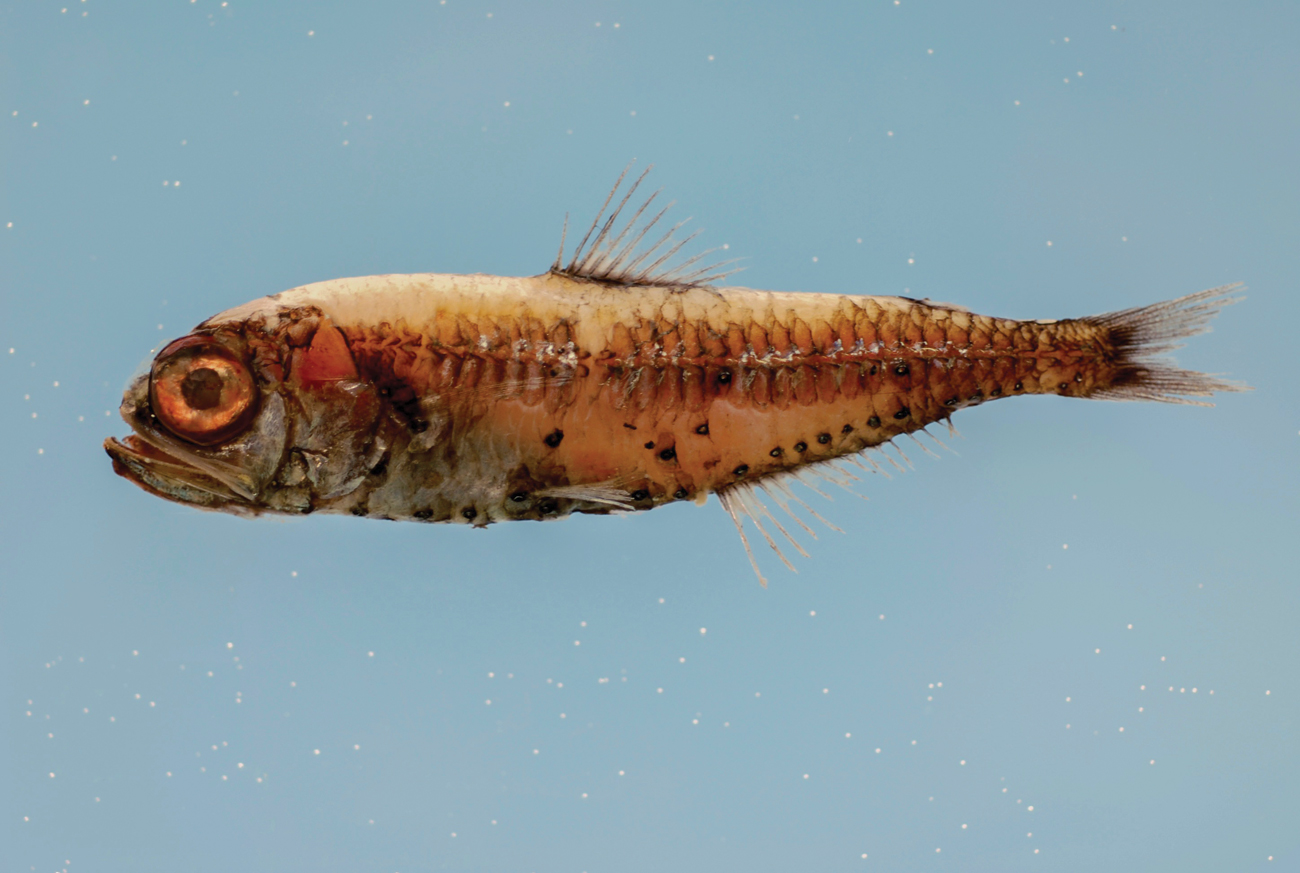
Bluntsnout lanternfish Myctophum obtusirostre in the Gulf of Mexico. Photo: NOAAi/CC-BY-2.0.
But they are not alone. As the zooplankton rise, other animals follow. Small fish move upward to feed on them. Shrimps drift higher too. Squids swim up from deeper water to hunt both fish and shrimp. Larger predators take advantage of this nighttime gathering as well. What begins with tiny drifting animals turns into an active food chain. It is like a slow, silent elevator in the ocean, carrying life upward after sunset and back down before dawn.
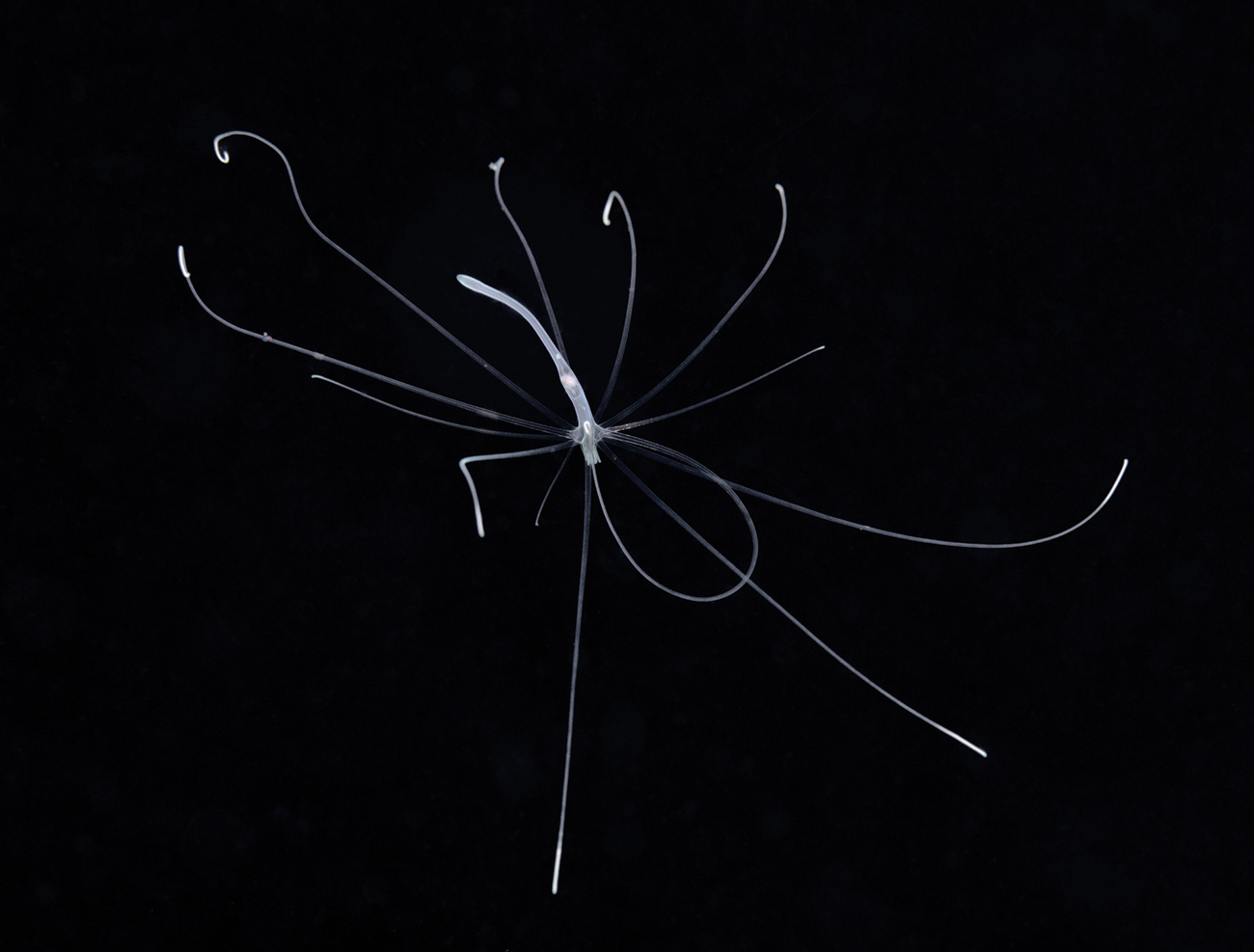
Tube anemone larvae drift in the open ocean, using vertical migration to feed. Photo: Sandipan Dutta/Sanctuary Photolibrary.
Ripple Effect
This nightly journey is not only about survival. It also helps the planet. When zooplankton eat near the surface and later return to deeper waters, they carry carbon with them. Over time, this helps store carbon in the deep ocean. Even the smallest creatures can play a role in keeping Earth’s climate steady.
Key Species in DVM
~ Lanternfish: A small midwater fish that feeds on zooplankton and copepods.
~ Midwater shrimps: These shrimps rise each night to feed on plankton.
~ Purpleback flying squid: A fast hunter that follows lanternfish and shrimps.
~ Yellowfin tuna: Feeds on lanternfish and squid when their nightly movement brings prey closer to the surface.
Unlike the great migrations we see on land, the DVM mostly remains hidden, even though it is the largest migration on Earth when measured by biomass. When scientists calculate the total weight of all the tiny creatures involved, it outweighs the combined mass of many of the world’s most famous animal migrations.
With contributions from Abhishek Jamalabad and Sri Chakra Pranav. The Habitats Trust (THT) focuses on addressing some of the most pressing developmental challenges arising from biodiversity loss, the climate crisis and global water scarcity.