On the Precipice
First published in Sanctuary Asia,
Vol. 46
No. 10,
October 2026
By Shatakshi Gawade
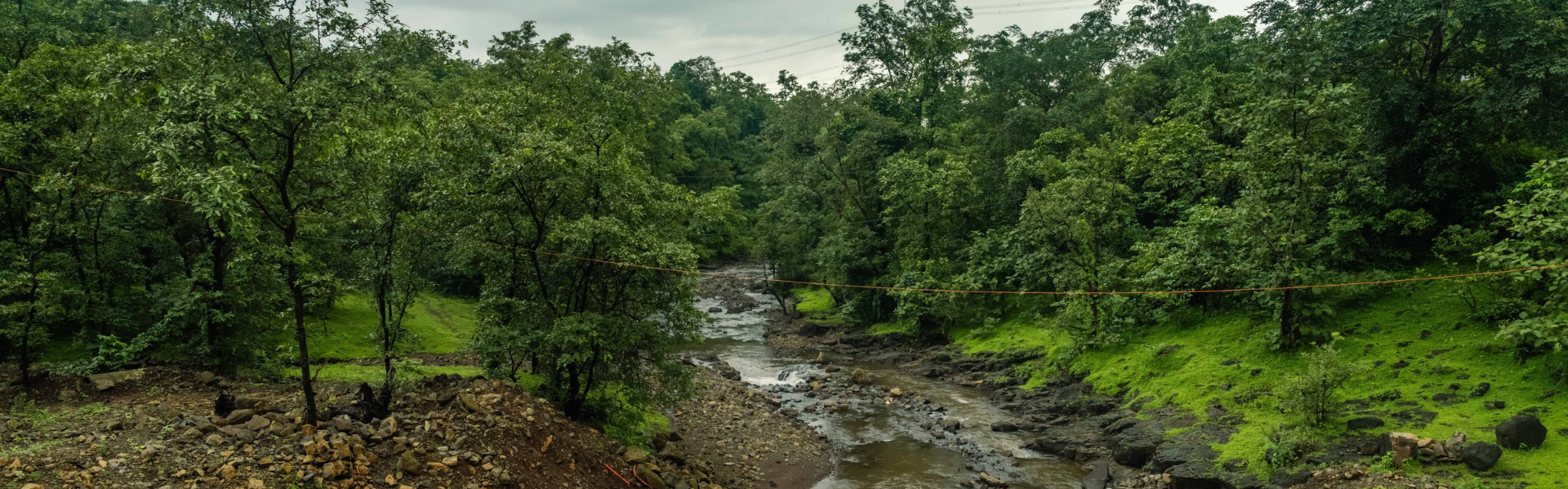
Moisture-laden winds rushed over the Western Ghats escarpment, buffeting my brave pink umbrella as I peered into the rolling clouds below. Adoshi village’s emerald green plateau dropped off sharply, engulfed by the dense forest in Bhorande village. This was the first pair of villages on my agenda, the other pair was Khubi and Thitabi Tarf. With its seasonal wetlands, mud flats, and forest patches, Khubi is just 25 km. away. Leaning over the village’s escarpment a few days later, the clouds had cleared enough for a breathtaking view of the Thitabi Tarf forest nestled at the foot of the Ghats.
Adoshi and Khubi (in Junnar taluka, Pune district), and Bhorande and Thitabi Tarf (in Murbad taluka, Thane district), are home to Indigenous communities such as the Mahadeo Koli, Thakar, and Katkari. Identified as Eco-Sensitive Areas (ESAs) under the Dr. K. Kasturirangan Committee’s recommendations, these Sahyadri villages form part of the Western Ghats – one of the world's eight ‘hottest hotspots’ for biodiversity. The village lands are the definition of pristine – and the projects coming up in this biodiverse region are the definition of a ‘green vs. green’ conflict.
Fine Print
A report from the Maharashtra Statewide Conference in March 2026 highlighted that as of December 2025, 23 pumped storage projects (PSPs) of about 32.5 GW capacity had been proposed across the state. Think of a PSP like a massive battery, which has an upper reservoir and a lower reservoir connected by pipes. Excess RE is used to pump water to the upper reservoir during low-demand hours, and water is released down to generate electricity when needed. Though marketed as green energy infrastructure, their ecological impacts on river flows, forest connectivity, and tribal livelihoods have sparked severe concern among locals and experts alike.
While India's National Electricity Plan projects a need for about 21,940 MW of new PSP capacity by 2032, K.J. Joy, Senior Fellow at SOPPECOM has one simple question: Do we even need so much pumped storage capacity? “As of December 2023, the total capacity of projects undergoing environmental-clearance processes was approximately 122,000 MW – about five times the stated requirement,” he shared quizzically.
Two PSPs are planned in Junnar and Thane districts as part of Maharashtra's ambitious target to reach 100 GW renewable energy (RE) capacity and 100 GWh energy storage by 2035-36. The upper reservoir of the 1,500 MW Malshej Ghat Bhorande PSP by Adani Renewable Energy Fifty Two Limited (a subsidiary of Adani Green Energy Limited) is on the Adoshi plateau (in Ajanawale village). The lower reservoir is in Bhorande village. With an investment of Rs. 7,048 crore, the capacity addition of this PSP is targeted for 2030-31. The Environment Impact Assessment report for the project has been released.
A second PSP is planned in the same two talukas – the Malshej Ghat PSP, a 700 MW project by THDC India Limited (THDCIL); according to the THDCIL site, the Detailed Project Report (DPR) is currently being made. This project is pegged at Rs. 5,054 crore, and is slated to be completed by 2034-35. The upper reservoir is at Khubi, the lower reservoir is at Thitabi Tarf. These numbers aside, the problems with the PSPs are in the field, where countless species reside, rivers emerge, and Indigenous People spend lives connected directly with the Ob, O¨Jb, O_rZ (water, forest and land). Thousands have come together in opposition in the past few months.
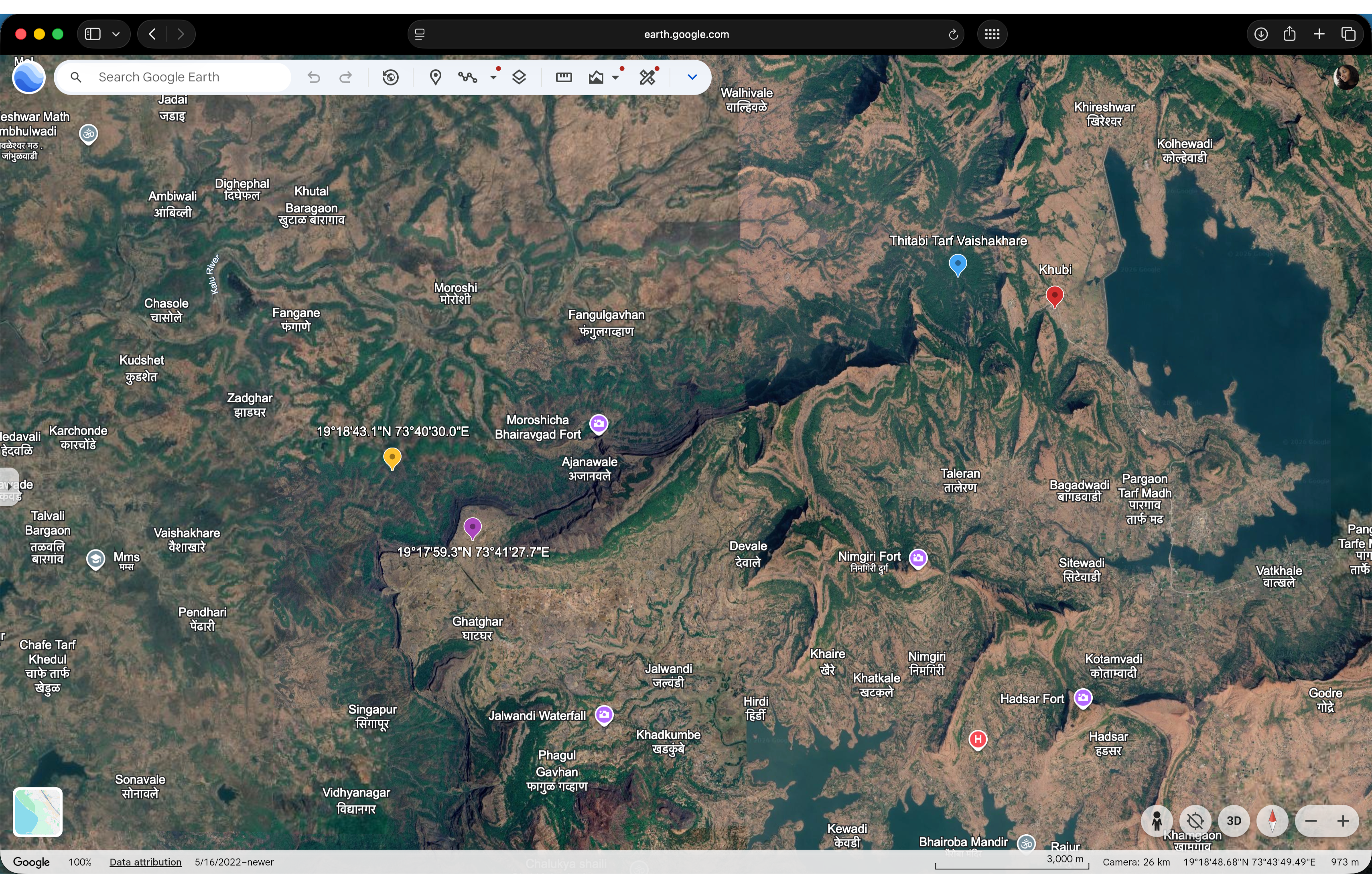
The two proposed pumped storage projects in the Western Ghats, in Junnar and Murbad taluka, are represented by the markers – purple: Adoshi, yellow: Bhorande, red: Khubi, and blue: Thitabi Tarf. Image: Google Earth.
A People’s Movement
People from the affected villages and the rest of Junnar have formed the Sahyadri Vachva Sangharsh Samiti (Save Sahyadri Movement Committee) to protect their land, culture, and biodiversity. Bhimabai Kokane and Kishor Lande, residents of the 40-home Adoshi, are among the strong voices for the plateau. “We never want to leave our home,” Kokane, a sprightly 39-year-old mother of two, told me emphatically, while Lande added, “Our land, streams, and pure air are enough for us.” Kokane shared the most pressing concern: Environmental Impact Assessment (EIA) survey permissions were never obtained from locals. It was only when Adoshi residents noticed strangers taking measurements on their land, their suspicions were aroused and they practically chased the men away, shared the visibly agitated woman.
Despite this, a public hearing was scheduled on August 21, 2026 following the EIA report’s release for the Malshej Ghat Bhorande PSP in May 2026. After learning about the date, the protests and agitations grew stronger. Ultimately, the Maharashtra Pollution Control Board (MPCB) postponed the public hearing when over 500 people from Junnar gathered to protest outside their office in Pune, on August 17. Suresh Wajage, a Junnar resident, ended his nine-day hunger strike only when the letter stating the same was issued.
Kiran Lohokare, Member of the Forest Right Committee, Pune Division, who has been at the forefront of the process to gather information and raise objections, shared four main objections to the project. One, according to the Panchayats (Extension to Scheduled Areas) Act, 1996, Gram Sabha approval must be sought but has not been obtained. Two, the area is a Fifth Schedule Area, where tribal land cannot be acquired. Three, forest rights have not been given as per the Forest Rights Act 2006, so the tribals cannot be displaced. And four, no procedures have been identified as per the Land Acquisition, Rehabilitation and Resettlement Act, 2013. He adds that repeated followups for documents proving that permissions were obtained for the EIA survey have not been shared by the Pune District administration.
In Khubi too, around December 2025, residents realised a project was in the offing when they saw a geological survey in progress on their land. Spots where land samples were collected are now marked with ominous red flags that flap in the midst of the dense ecosystem. Vijay Kathe, Khubi’s Sarpanch, is clear: “We do not want this project. This is our ancestral property, and we depend on the water, forest and land for all our needs – whether it is rice or millets from farming, and vegetables, medicinal plants, honey, or other forest produce. We consider nature to be our God.”
Portions of Khubi’s land were acquired in the 1990s for the Pimpalgaon dam, but remained unutilised. Under the Right to Fair Compensation and Transparency in Land Acquisition, Rehabilitation and Resettlement Act 2013, unutilised acquired land should revert to original owners after five years, making tribal occupants legitimate landholders. The Akhil Bhartiya Kisan Sabha, a Junnar-based organisation, and the Khubi Gram Sabha have emphasised that a period of 25 years has passed since the land’s acquisition, and its Adivasis are certainly not ‘encroachers’.
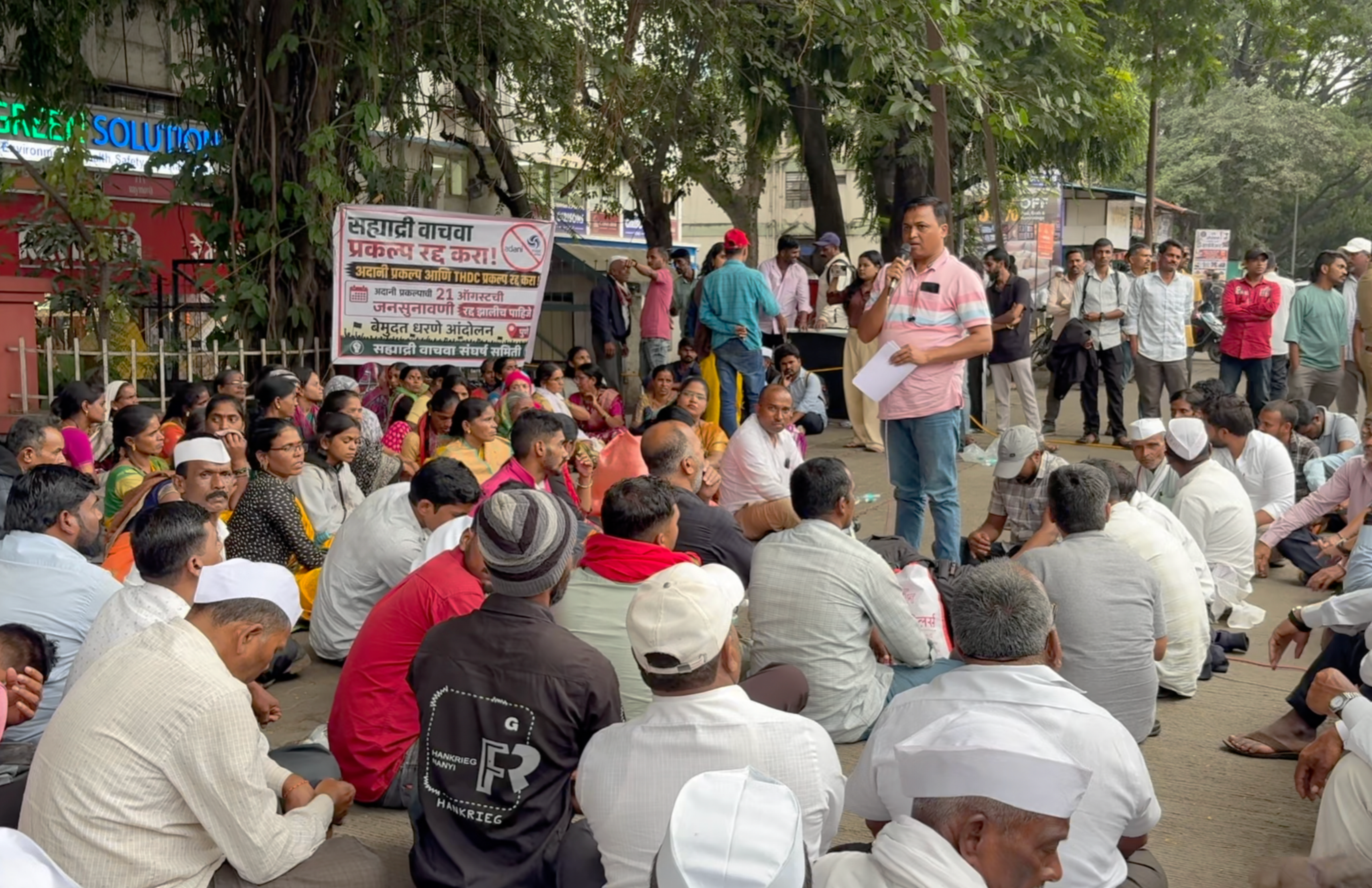
Kiran Lohokare talks to the over 500 people from Junnar gathered to protest the Malshej Ghat Bhorande pumped storage project outside the Maharashtra Pollution Control Board office in Pune on August 17, 2026. Photo: Shatakshi Gawade.
Dubious Siting
Adoshi village is contiguous with the high-altitude Naneghat Plateau (NP), which harbours 45 Indian endemic plant taxa. In 2014, IUCN Global Assessors for Threatened Plants and senior researchers who specialise in biodiversity conservation, Dr. Savita S. Rahangdale and Dr. Sanjaykumar R. Rahangdale, recorded 249 taxa on NP and 360 taxa on the adjacent Durgawadi Plateau. As the project looms over Adoshi, the study’s suggestion for micro-level inventories of smaller areas becomes imperative.
We may not even realise what we are losing. For instance, the Rahangdale duo reported six threatened, endemic taxa including the pteridophyte – Isoetes dixitei, Ophioglossum jaykrishnae and Ophioglossum gujaratens – on the Adoshi and Ajnawale plateaus, and three Ceropegia species of flowering plants on the hill slopes barely 200 m. from Adoshi. Dr. Sanjaykumar, who dubbed the EIA ‘vague’, shared that it ignores known endemic species!
Meanwhile, the Khubi site lies on a critical wildlife corridor connecting Harishchandragadh and Bhimashankar Wildlife Sanctuaries, supporting flamingos, leopards, sambar, and barking deer. “Endemic flora and fauna will be genetically isolated without the corridor, and seed dispersal of endemics such as Garcinia talbotii, Maesa indica, and Eleagnus conferta will be jeopardised, while the destruction of mudflats will destroy homes of endemic plant pollinators (microdiptera flies, fireflies and butterflies),” Dr. Sanjaykumar adds. The nearby Adrai sacred grove shelters endemics such as the Critically Endangered herb Ceropegia anantii. Reservoir development activities, such as roads and frequent trampling by people, will degrade these habitats.
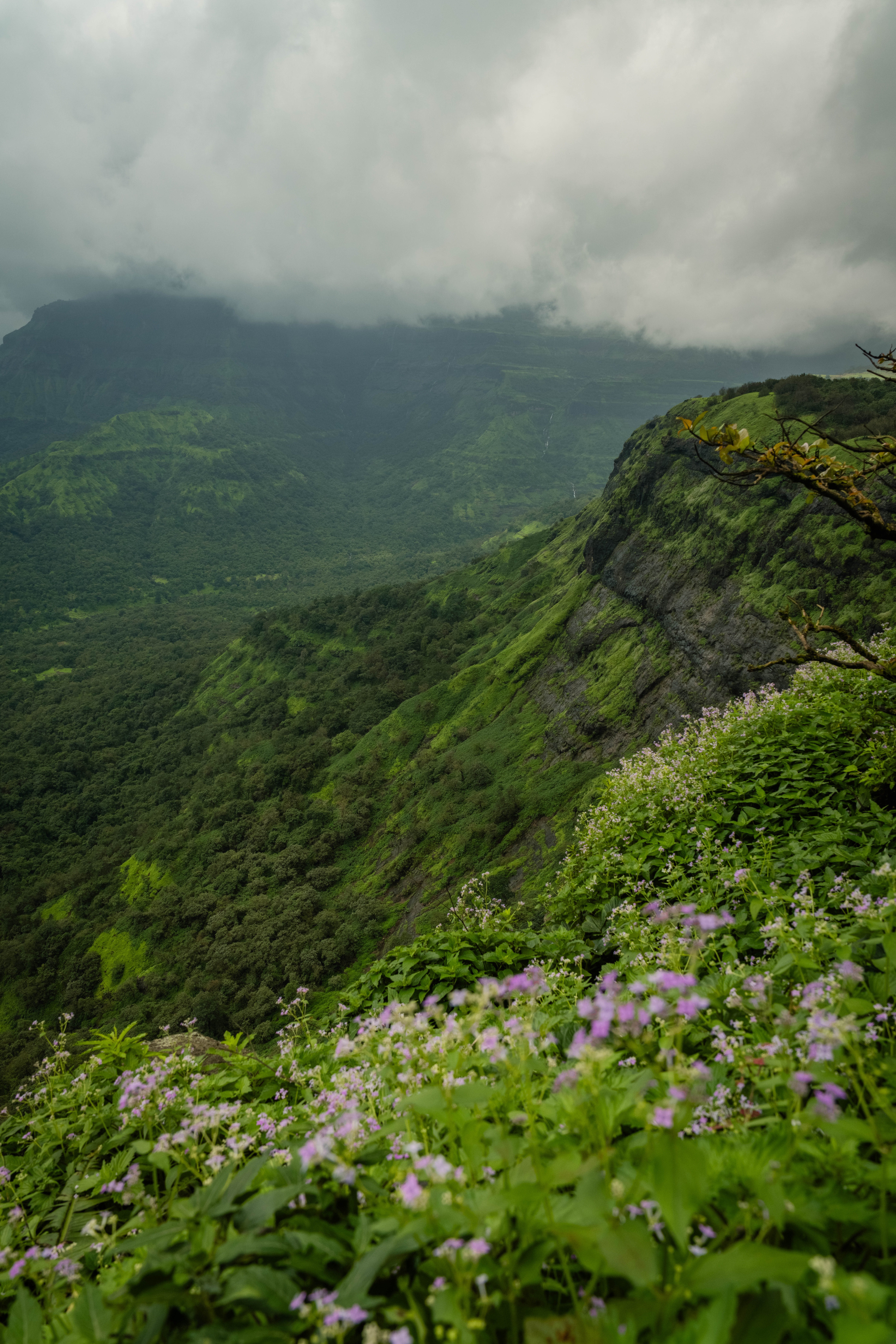
The upper reservoir of THDC India Limited pumped storage project is planned at Khubi village, which is a critical wildlife corridor connecting Harishchandragadh and Bhimashankar Wildlife Sanctuaries, supporting flamingos, leopards, sambar, and barking deer. Photo: Apurv Jadhav.
The EIA notes that, the total capital and recurring project cost for implementing the Environmental Management Plan (EMP) is an estimated Rs. 5,063.83 lakh. Additionally, the cost allocated for Forest Management, including Compensatory Afforestation and Net Present Value (NPV), is estimated at Rs. 1,473.34 lakh. Dismissing the possibility of replantation or afforestation at alternate sites, he said, “It can never restore lost biodiversity or connectivity.”
According to the EIA, initial one-time filling for the Malshej Ghat Bhorande PSP will need 9.88 MCM of water, and annual refilling, owing to evaporation losses, of about 1.14 MCM is proposed. While the Kukadi river is close to the upper reservoir location, water for this PSP is going to be lifted from the Kalu river that flows in the Konkan region below. “This is essentially inter-basin river transfer. How will this transfer impact both the basins, and the ecosystems they support?” asked Lohokare. "The project cannot proceed without a scientific study.
Jehu Pandian Nadar, a zoologist and fish researcher, found that the EIA document cites fish information for the river by the same name in Ahmednagar district which is dammed, while Thane district's Kalu river flows without obstructions.
Following a successful public and legal battle, the damming of the Kalu river has been stayed by the Supreme Court, with concerted efforts led by Advocate Indavi Tulpule of Shramik Mukti Sanghatana, an over 40-year-old labour organisation in Murbad. Avinash Harad, former Wildlife Warden of Thane District, worries that since the Kalu is a nonperennial river, drying up in the summer, the dam that has been held off for almost 16 years could be revived under the pretext of supporting the PSP. He is certain that diversion of water for the PSP will directly impact the fish in the Kalu, one of the rare ‘wild’ rivers in the region, and thus Katkari families, a designated Particularly Vulnerable Tribal Group (PVTG).
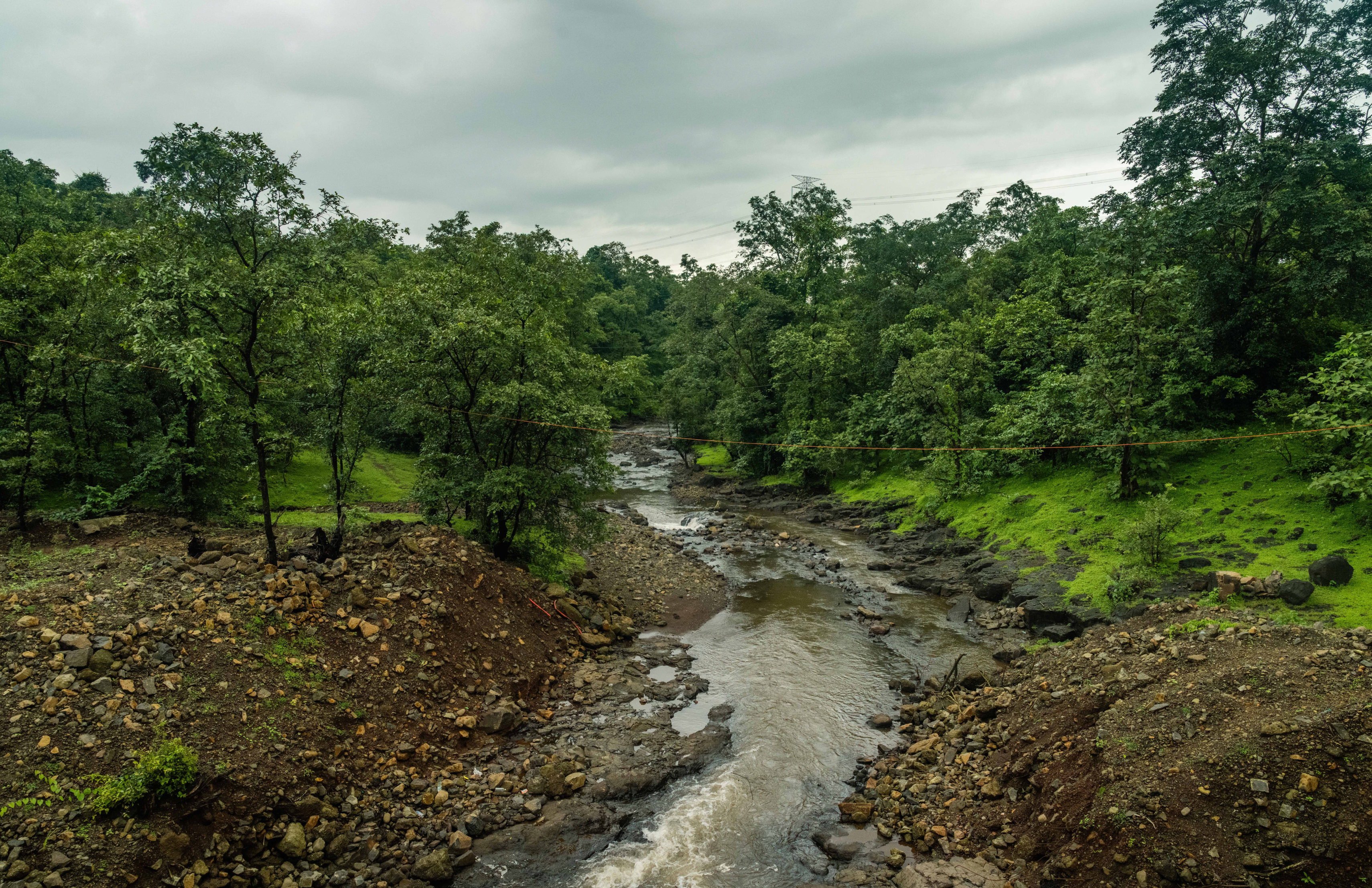
The west-flowing Kalu river, a tributary of the Ulhas river, has been historically important in the Konkan region of Thane district, as a source water for drinking and agriculture on ancestral tribal land, and fishing. Photo: Apurv Jadhav.
A December 2025 study found that half the Kalu watershed is densely forested, while the other half is dedicated to cultivation. The Murbad Taluka Biodiversity Project on iNaturalist has recorded over 5,500 observations of more than 1,600 species, from countless insects including butterflies, mammals such as rusty spotted cat, striped Hyena, leopards, nilgai, and four-horned antelope, to towering trees, and birds such as the Malabar Trogon (Murbad is the northernmost extent of this resident bird) and the migratory Siberian Stonechat.
The process for forming the Naneghat Conservation Reserve (CR) was initiated in 2021, but has since stalled; Harad’s Ashwamedh Pratishthan was on the committee involved in the reserve’s formation. Wildlife is protected in a CR, as are land and pastoral rights for local communities, he Harad, and asks, "How has land that would have been a CR been allocated for a PSP?" Additionally, historic forts such as Bhairavgad and Harishchandragad near the project sites attract trekkers and followers of Shivaji Maharaj. Access to these forts could face challenges and the cultural and historic value will be impacted.
Ganpat Mengal, a Thakar tribal, stands strong for Bhorande’s forests, where his community has lived for generations. The lower reservoir is proposed on the land he has Individual Forest Rights (IFR) to, and a few metres away he has Community Forest Rights (CFR); this CFR was awarded by the Governor in 2019. Obtaining these rights is challenging. Data shared by the Minister of Tribal Affairs in the Lok Sabha shows that as of June 30, 2026, 54,01,561 claims have been filed, of which 25,42,359 have been approved (titles distributed), and 18,13,232 have been rejected. Mengal is clear too: “We don’t want the PSP. We studied it, and it will only harm us." Meanwhile, Tulpule added, “There is clear violation of Constitutional and legal rights for self governance of tribal Gram Sabhas in Scheduled Areas, which mandate consultation and informed consent before land acquisition, forest land diversion, destruction of biodiversity.”
Whose Sahyadri is it?
Early this year, Chief Minister Devendra Fadnavis had ordered “faster, time-bound action on agreements for pumped storage hydro-power projects”.
Lohokare worries that if even one project is permitted, it will open the gate to other such projects. NGO Manthan founder Shripad Dharmadhikari urged for a comprehensive cumulative impact assessment of all proposed PSPs before approvals proceed.
The Sahyadri Vachva Sangharsh Samiti is now preparing legal action, mobilising across 65 affected villages. Khubi resident Avinash Supe summarised the conflict: “Amhala prashna padlay, Sahyadri Adani chi ka Sahyadri Adivasyanchi (Does the Sahyadri belong to Adani or the Adivasis)? This is a fight for all of Maharashtra to protect our water catchments and rivers.”
Note: The Pune and Thane District Collectors, Adani Green Energy Limited, THDC India Limited, MPCB, and Maharashtra Forest Department did not respond to requests for comments. The web version will be updated in case comments are received in the future.
Shatakshi Gawade is the Senior Editor at Sanctuary Asia. This story has been supported by Earth Journalism Network’s fellowship on 'Text and Video Reports on Renewable Energy in India for 2026'.