Paying Guests
First published in Sanctuary Cub,
Vol. 46
No. 3,
March 2026
Migratory species can appear anywhere, carrying with them vital ecosystem services that benefit us all. Let’s welcome these travellers and protect them! By Sahir Doshi.
Tracking Flights
One winter morning in Mumbai, I saw three goofy birds on a floating log, looking like lost sailors, just like the penguins from the ‘Madagascar’ movie. It was only when I noticed the small band on one of the bird’s legs that I realised this was no goof.
It was a Common Redshank, a wading bird with an epic migration, that is being studied by the Bombay Natural History Society (BNHS). Scientists put harmless bands on birds’ legs to track their movements across countries. This same individual had been last seen summering in Siberia! It was now enjoying the winter warmth of Mumbai at Bhandup Pumping Station (BPS), a sewage treatment plant whose mangroves and mudflats are home to nearly as many, if not more, bird species as Madagascar – the country, not the movie!
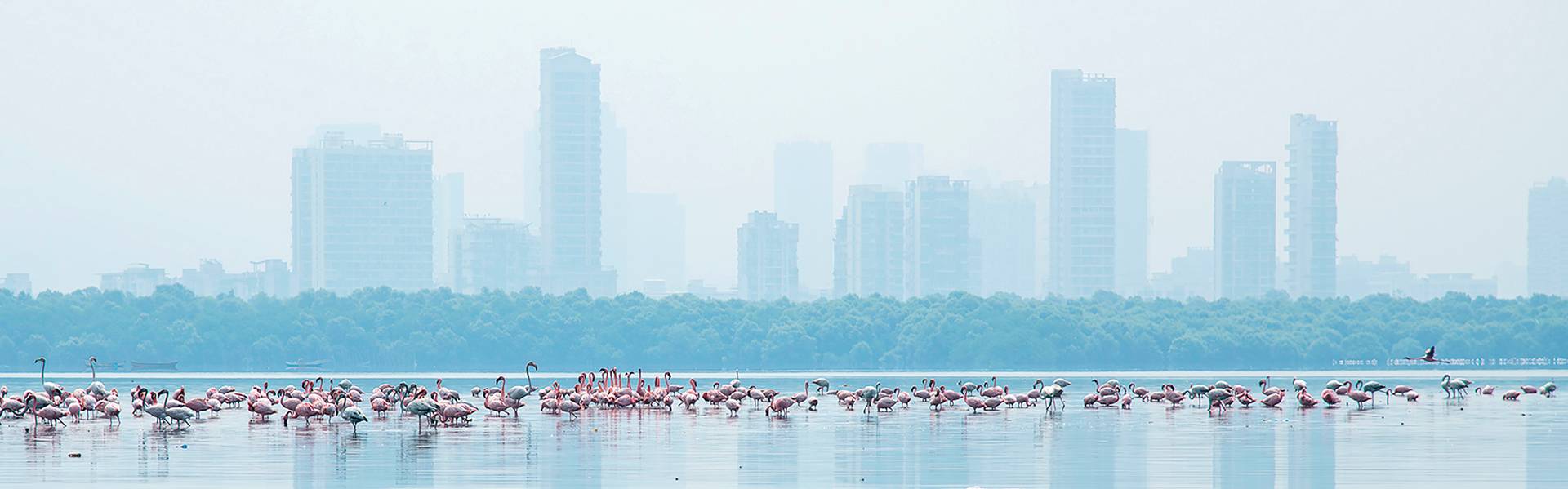
BPS is like a secret wild airport connecting Mumbai to the Central Asian Flyway, one of the world’s busiest bird migration routes. It even attracts the famous flock of flying falooda – over 100,000 flamingoes!
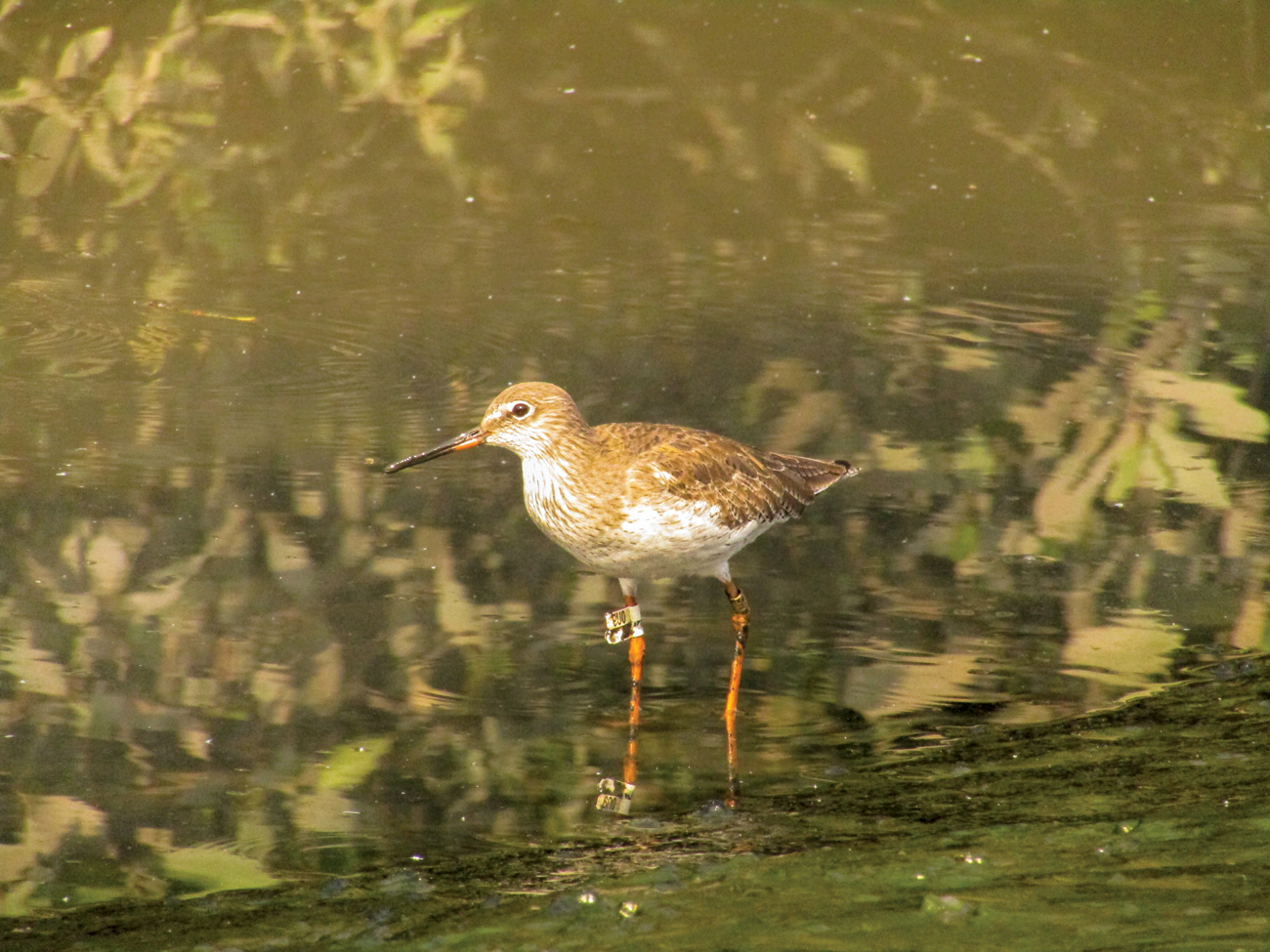
A wader, the Common Redshank’s epic migration is being studied by the Bombay Natural History Society. Photo: Chris Rodrigues/Sanctuary Photolibrary.
Big City Hospitality
Birds, like humans, have always been on the move. If you live in a city, chances are that your ancestors came from somewhere else, searching for a better life. Birds migrate for similar reasons – to feed, breed, and raise chicks. Their paths are even older than ours. Cities are hubs for human migration because they’re centres of opportunity. If they also protect ancient wilderness, they can certainly keep welcoming non-human migrants as well.
Sometimes, birds can suffer from cities springing up on their flyways. Many seagulls, for example, spend summer in Siberia, eating nutritious fish. But when they come to Indian cities for winter, they end up eating garbage, which wrecks their bodies. This isn’t just bad for the migrants. It is also a loss for our cities, because these species provide special seasonal services.
The best example isn’t a bird, but a bug! The globe skimmer dragonfly migrates to India’s cities all the way from East Africa every monsoon. It flies 50 million times its body length without a break. That’s like you circling the globe... twice, nonstop!
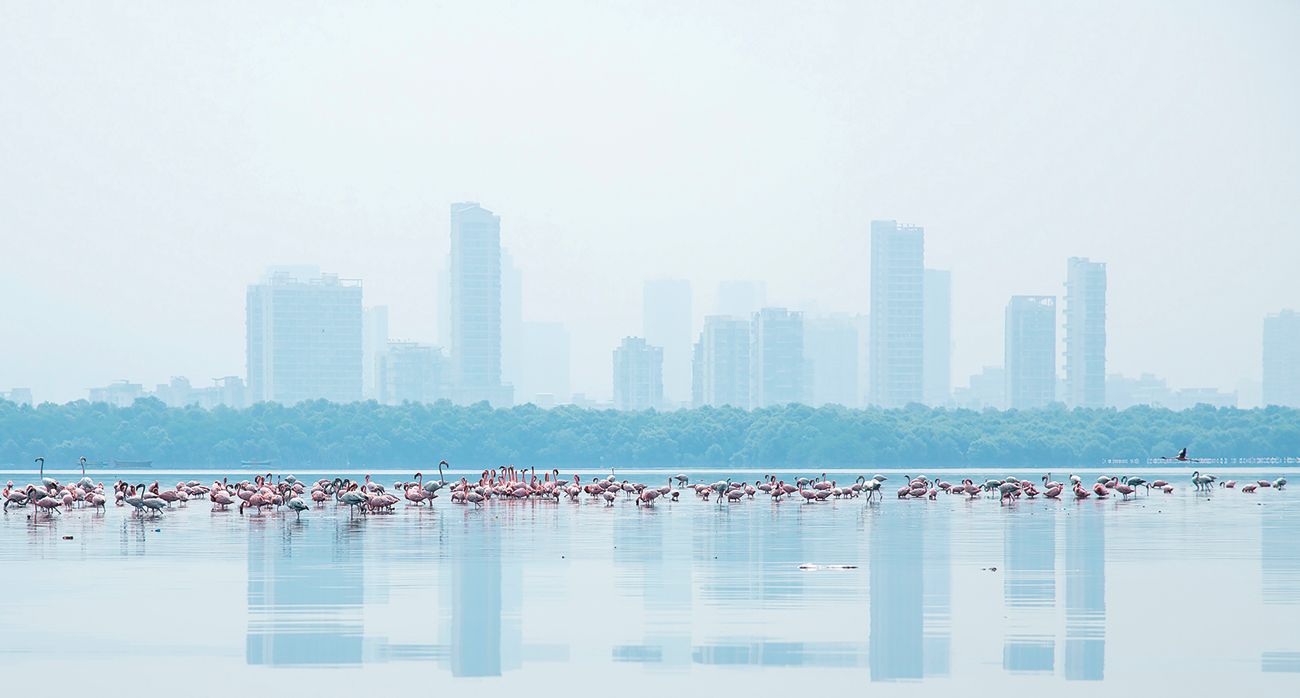
Over 100,000 flamingoes arrive in Mumbai in winter, some of whom come from as far as East Africa. Photo: Sunil Nair/Sanctuary Photolibrary.
When it arrives, it eats mosquitoes, which, if left unchecked, could spread diseases such as malaria. A mosquito-eating animal that appears during the rains, when we need it most? Not all heroes wear capes!
Sahir Doshi is a wildlife content creator, nature educator, rapper, and a past Kids for Tigers ambassador. He explores the Mumbai city shorelines in search of cool finds.