Rewilding Tourism
First published in Sanctuary Asia,
Vol. 46
No. 2,
February 2026
Celebrating People and Places That Give Back to Nature - A Report
As one walked into Bikaner House in New Delhi for the 8th Annual TOFT Wildlife & Nature Tourism Awards, it would immediately be clear that this was not just another awards ceremony. The room was alive with conversations – between forest guards and lodge owners, naturalists and photographers, community leaders and tourism officials – all bound by a shared belief that tourism, when done right, can heal landscapes and uplift lives.
This year’s theme, ‘Rewilding Tourism: Sustaining Nature, Empowering Communities’, felt especially apt. Over the course of the evening, story after story reinforced the idea that responsible travel is no longer a niche aspiration; it is becoming a powerful conservation tool across India and the subcontinent.
Since their inception in 2010, the TOFT Wildlife & Nature Tourism Awards have grown steadily in influence, offering meaningful recognition to individuals and organisations that place conservation at the heart of their work. The 2025 finalists and winners demonstrated how thoughtful tourism, rooted in local culture, science, and community participation, can help repair damaged habitats, reduce pressure on wildlife, and create dignified livelihoods in rural landscapes.
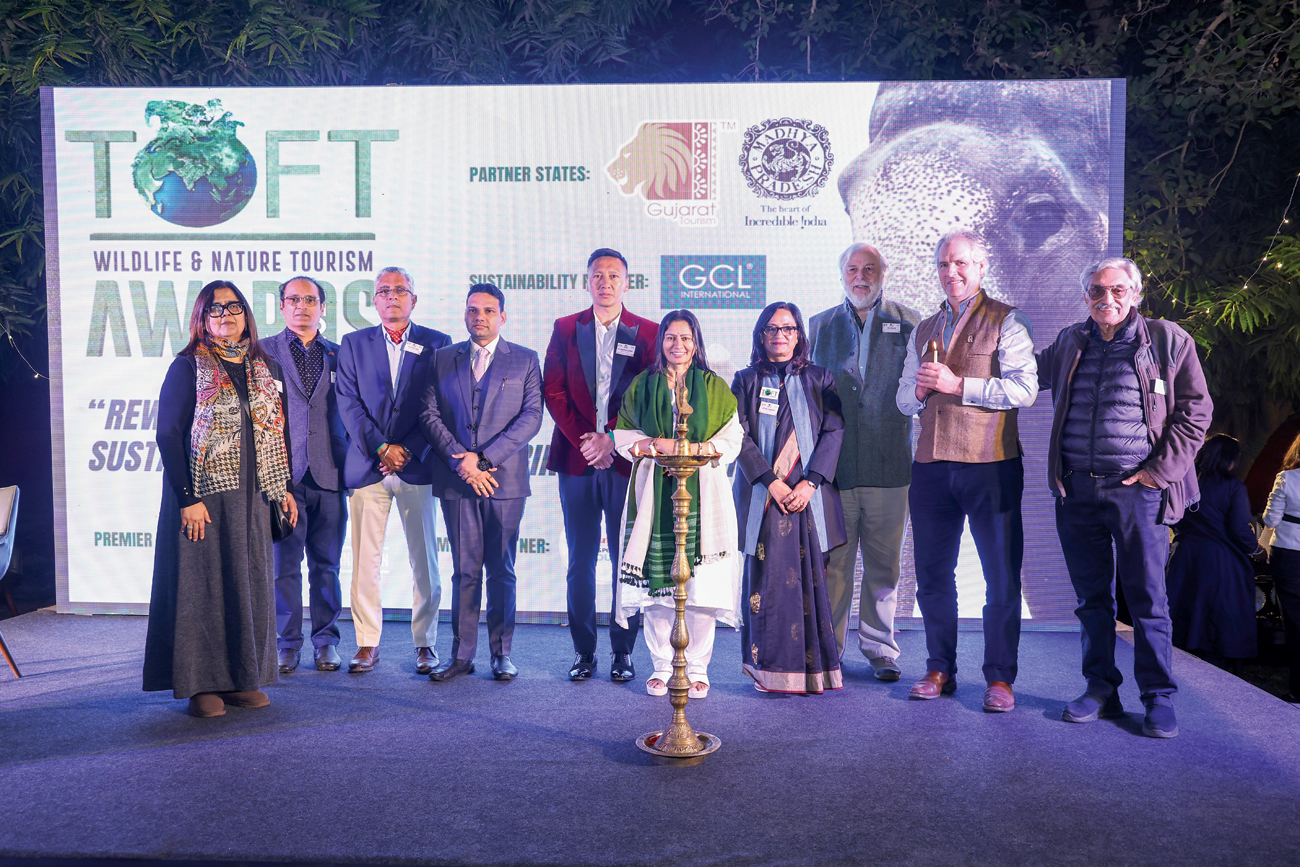
The 2025 TOFT Nature & Tourism Awards. Photo Courtesy: TOFT.
The keynote address by Bittu Sahgal, Editor of Sanctuary Asia and Founder of the Sanctuary Nature Foundation, anchored the evening in both urgency and hope. Drawing on over four decades of experience, he spoke of forests, wildlife, and frontline communities as inseparable life-support systems. A moving tribute to the late Valmik Thapar reminded the audience that conservation is built on continuity of ideas, courage, and commitment across generations. Sahgal also cautioned that climate instability now poses one of the gravest threats to both people and wildlife, urging tourism stakeholders to champion models that restore ecosystems and reconnect younger generations with nature.
Throughout the evening, individual stories gave life to these ideas. From Reeshna Pardhi, who represents a powerful transformation from a hunting tradition to conservation leadership in Panna, to Shahanaz Suleman Baig, Maharashtra’s first woman guide breaking gender barriers in Tadoba, the awards highlighted how tourism can catalyse social change. Doma Paudel, Nepal’s first female nature guide, stood as a symbol of perseverance and coexistence, while forest guard Rajesh Kumar Patel exemplified the quiet, daily dedication required to keep forests safe.
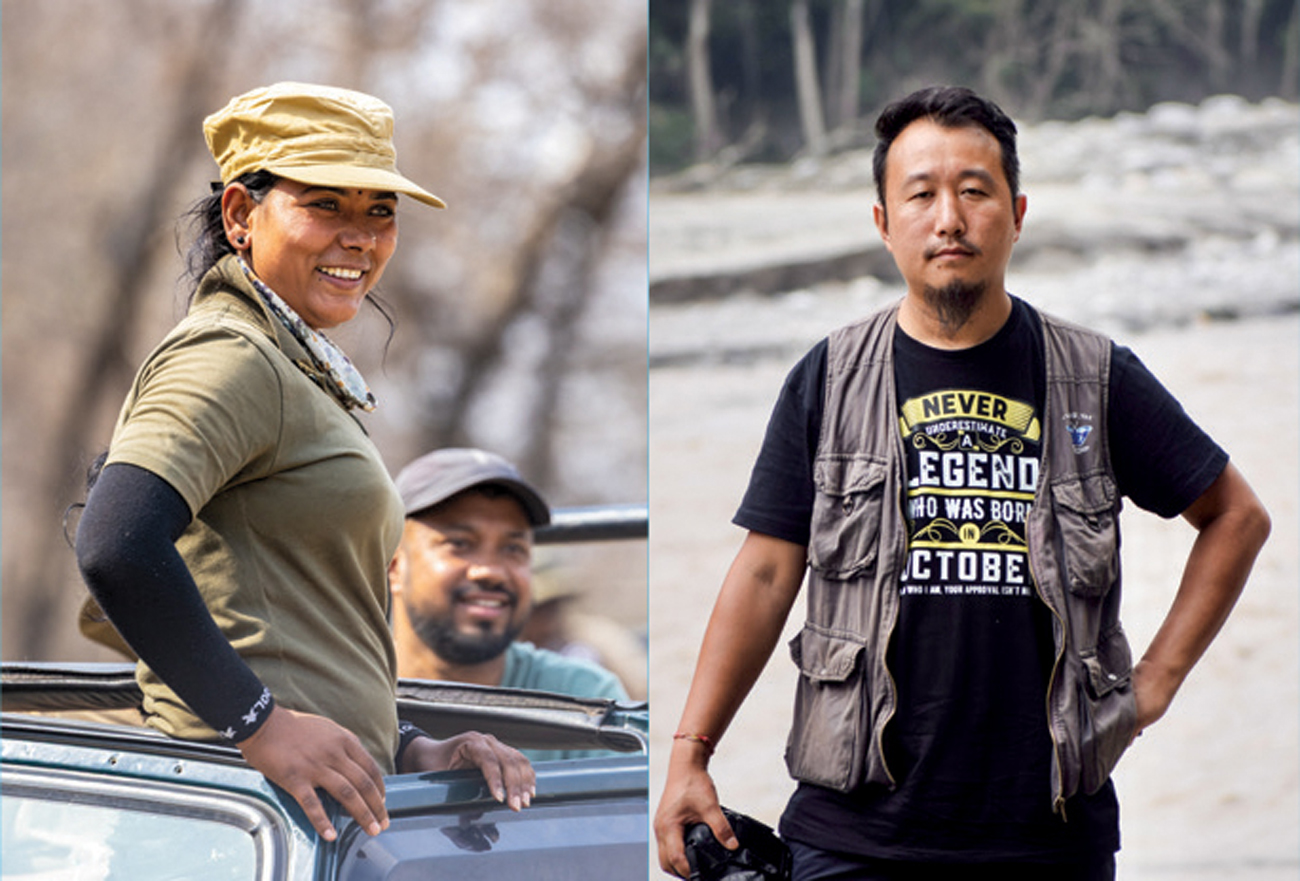
The 2025 TOFT Nature & Tourism Awards celebrated leaders such as Reeshna Pardhi and Sonam Wangchuk Lepcha in responsible travel, for work that supports nature-positive tourism, communities, and conservation.
Equally compelling were the places being honoured. Eco-lodges such as Spice Village in Thekkady and Denwa Backwater Escape in Satpura demonstrated how architecture, local material, and community partnerships can create immersive, low-impact experiences. Community initiatives such as the Godwar Raika Camel Breeders illustrated how ancestral knowledge and pastoral traditions can sustain both landscapes and livelihoods.
As the awards drew to a close, the message was unmistakable. The future of wildlife tourism will be shaped not by volume, but by values, by choices that prioritise long-term ecological health over short-term gains. The winners and finalists of the 2025 TOFT Awards offered living proof that when tourism is rooted in respect, responsibility, and reciprocity, it can help rewild landscapes and reimagine conservation itself.
TOFT Wildlife & Nature Tourism Awards 2025 Winners & Runners-Up
John Wakefield Memorial Award – Most Inspirational Eco Lodge
PUG Outstanding Category
* Winner: Spice Village, Thekkady, Kerala
* Runner-up: Svasara Jungle Lodge, Tadoba, Maharashtra
PUG Quality Category
* Winner: Denwa Backwater Escape, Satpura, Madhya Pradesh
* Runner-up: Brij Pola Jawai, Rajasthan
FOOTPRINT Category (Non-Wildlife)
* Winner (Quality): After the Rains, Wayanad, Kerala
* Winner (Outstanding): Hotel Barahi, Kathmandu, Nepal
Lodge Naturalist of the Year 2025 (Sponsored by Jungle Camps India)
* Joint Winners: Shubham Alave (Bori Safari Lodge, Madhya Pradesh)
Shaik Shaheen (Waghoba Eco Lodge, Tadoba, Maharashtra)
* Joint Runners-up: Tek Mahato (Barahi Jungle Lodge, Nepal), Namrata Bhandari (Baghvan, Taj Safari, Madhya Pradesh)
Wildlife Promotion Company of the Year
* Winner: Abercrombie & Kent India Pvt. Ltd.
International Wildlife Tour Operator of the Year
* Winner: Holidays in Rural India (UK)
Wildlife Harmony Homestay Award
* Winner: Svanir Wilderness Ecostay, Odisha
Billy Arjan Singh Memorial Award – Wildlife Guide of the Year (Sponsored by Pugdundee Safaris)
* North India: Harish Sharma – Keoladeo National Park, Rajasthan
* Central India: Reeshna Pardhi – Panna National Park, Madhya Pradesh
* West India: Shahanaz Suleman Baig – Tadoba-Andhari Tiger Reserve, Maharashtra
* East India: Bitupan Kalita – Kaziranga National Park, Assam
Champion of the Forest 2025 (Sponsored by Jehan Numa Wilderness)
* Winner: Rajesh Kumar Patel – Satpura Tiger Reserve, Madhya Pradesh
* Runner-up: Dr. Akhilesh Mishra – Pench National Park, Madhya Pradesh
Conservationist of the Year 2025 (Sponsored by All For Nature)
* Winner: Doma Paudel – Chitwan, Nepal
* Joint Runners-up: Manoj Gogoi – Kaziranga, Assam; Muzammil Hussain – Kargil, Ladakh
Climate Guardian of the Year 2025 (Sponsored by Machaan Lodges & Resorts & Bagh Tola)
* Winner: Indian School of Nature (ISN), Uttar Pradesh
Most Inspirational ‘Rising Star’ Eco Lodge
* Winner: Kathoni – Kaziranga, Assam
Wildlife Tourism Community Initiative of the Year (Sponsored by Holidays in Rural India)
* Winner: Godwar Raika Camel Breeders (Camel Charisma), Rajasthan
* Runner-up: ChigDil – Rumbak Homestays, Ladakh
Wildlife and Tourism Initiative of the Year (Sponsored by Travel Inn India Pvt. Ltd.)
* Winner: Sonam Wangchuk Lepcha – Dzongu, Sikkim
* Runner-up: The Brahmaputra Drift – Karnataka
Sustainable Homestay Award 2025 (Sponsored by Limban Resort)
* Winner: SAGG Eco Village – Ganderbal, Kashmir
* Runner-up: Kurambik Eco Homestay – Domkhar Valley, Ladakh
Wildlife Conservation Photography Award 2025 (Sponsored by Sudhir Shivaram Photography)
* Winner: Erwin Agnel D’Rose – Madhya Pradesh
* Runner-up: Akshita Jain – Madhya Pradesh
Wildlife Conservation Documentary Award 2025 (Sponsored by The Wander Plan)
* Joint Winners: Roar of the Tiger – Tushar Bhojwani,
A Harmless Snake Trapped in Illegal Trade and Superstitions – Shatabdi Chakrabarti
Kailash Sankhala Visitor-Friendly National Park of the Year
* Winner: Satpura Tiger Reserve, Madhya Pradesh
Sanctuary Asia Award - Best State for Sustainable Wildlife Tourism
* Winner: Sikkim