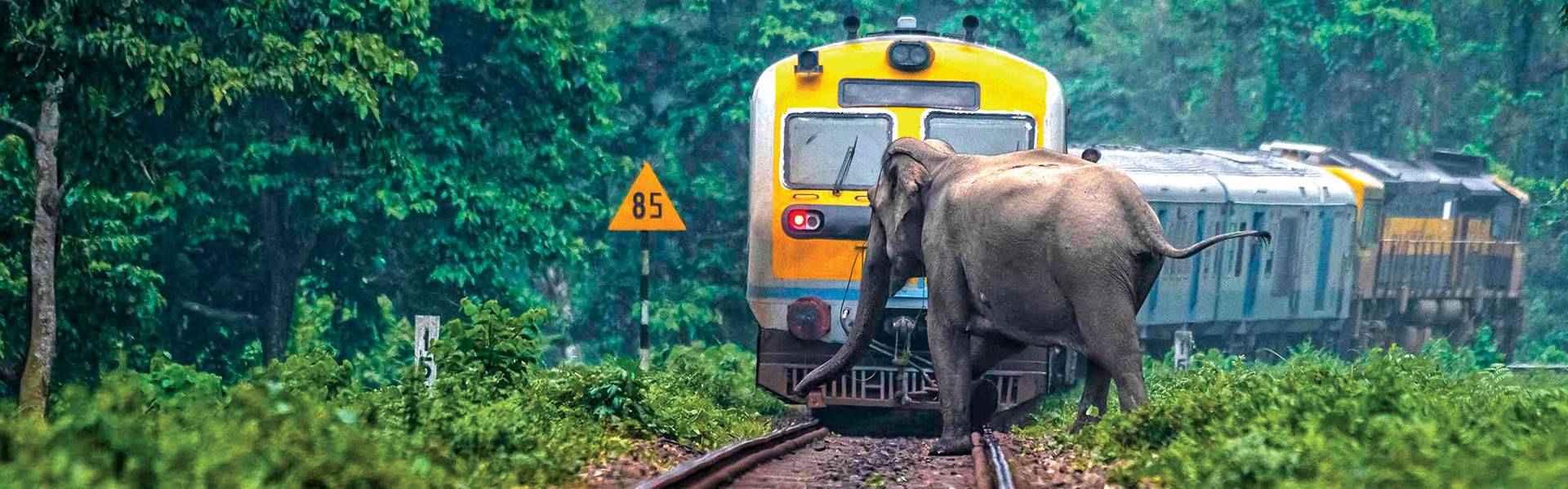
An Elephant Herd, A Train, And A Race Against Time
First published in Sanctuary Asia,
Vol. 46
No. 10,
October 2026
By Somreet Bhattacharya and Sushanta Kashyap Borthakur
The proactive action by the Assam Forest Department and Indian Railways, supported by AI-enabled cameras and optical fibre technology, helped avert a potential mishap involving a herd of about 80 elephants crossing a railway track through Assam's Lumding Reserve Forest on August 19, 2026. The Rajdhani Express from New Delhi to Dibrugarh was stopped within a few minutes after the alert was raised to allow the herd to pass. This was made possible through a timely and precise response, backed by months of groundwork by the Forest and Railway Departments and NGOs.
In the wee hours of August 19, 2026, forest guards on a routine patrol along the railway tracks near Hawaipur in Assam's Hojai district spotted a large herd of elephants and began monitoring its movements. Sensing that the pachyderms could be moving towards the railway track, the forest staff immediately asked their colleagues to scan the AI-enabled cameras, which were installed in the area as part of a pilot project by WWF-India. The cameras confirmed the elephant movement, showing the 80-strong herd crossing the forest and heading towards the railway track.
Simultaneously, railway officials at the nearby station had sent an alert that the Rajdhani Express was approaching at high speed. Inputs from forest staff and local villagers, along with footage from the AI-enabled cameras, were combined to establish the elephants' likely route across the railway line and estimate the time it would take the Rajdhani Express to reach that point. Once the elephant crossing point was identified, the forest guards rushed to the location to physically confirm the elephants' movements and immediately alerted the railway authorities.
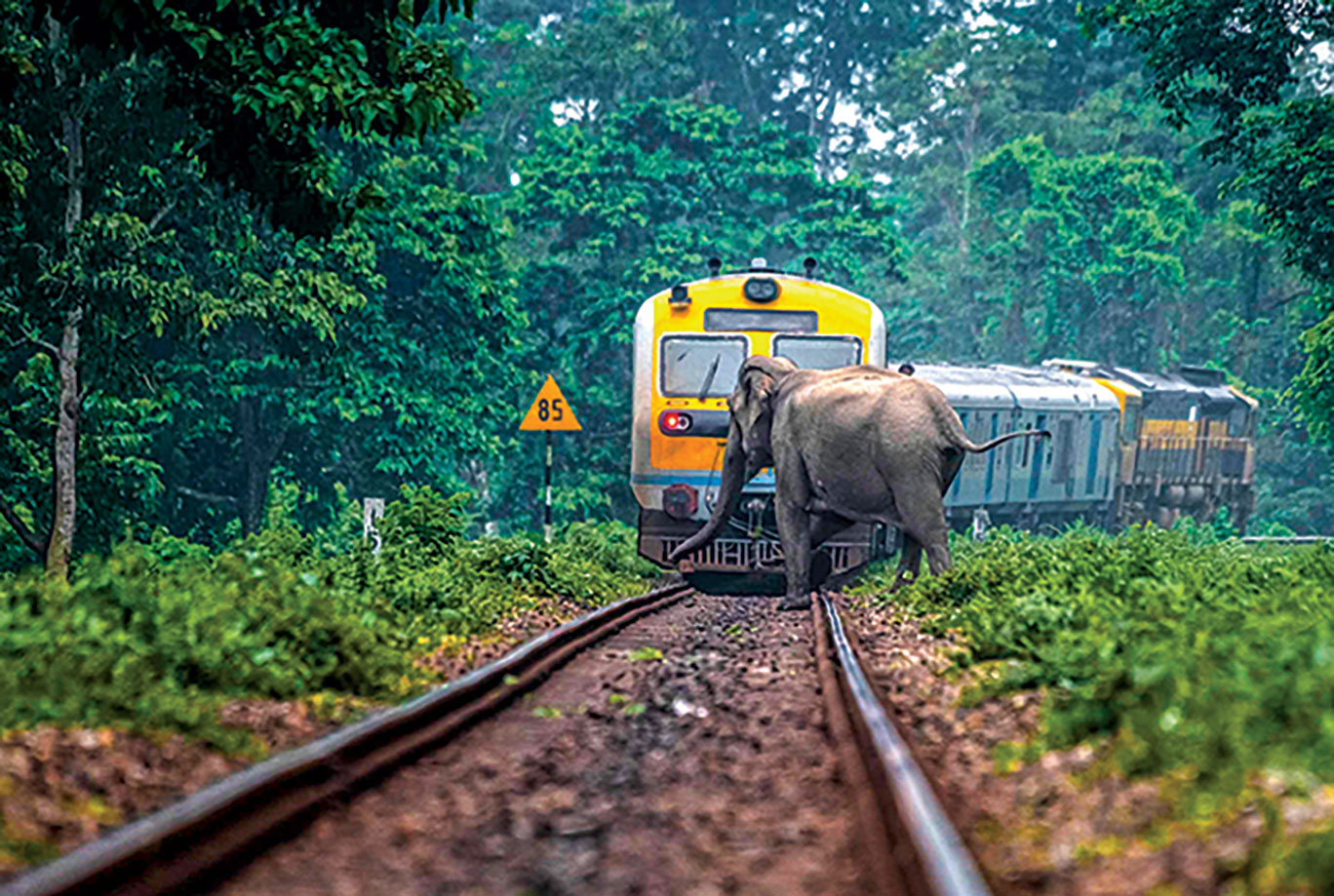
Assam is home to India's second-largest wild elephant population, and its railway lines cut through wildlife corridors that elephants have used for generations – long before the tracks were laid. Photo: Rupak Ghosh Dastidar/Sanctuary Photolibrary.
"The challenge was to match the herd's speed with that of the train so that the loco pilot got enough time to apply the brakes and stop at a safe distance without scaring the animals and causing further chaos," said Manik Chandra Boruah, AFS, Forest Range Officer, Lanka Range, Nagaon South Division, Assam.
The seamless coordination between the railway authorities and the Forest Department, supported by technology, alerted the loco pilot of the Rajdhani Express, giving him time to halt the train. The elephant herd, led by matriarchs, with calves pressed against their mothers' legs, was able to safely cross the track in a few minutes. The train stayed put until the Forest Department confirmed that the last elephant in the long column had crossed into the forest; only then did the railway control room clear the train to move.
Aritra Kshettry, lead for elephant conservation at WWF-India, explains, "The extensive network of railway tracks running through Assam's elephant habitats poses a very high risk of accidents. However, a new system based on optical sensors and AI-enabled cameras is being piloted to complement the on-ground efforts of the Assam Forest Department and Indian Railways to prevent train-elephant collisions. Currently, 13 units are operational along a highly vulnerable stretch in the Lumding Reserve Forest, where seven elephants had lost their lives in December 2025. Less than a year later, on August 19, 2026, owing to joint action by the Forest Department and Indian Railways, and the use of technology, a recurrence of this unfortunate incident was averted".
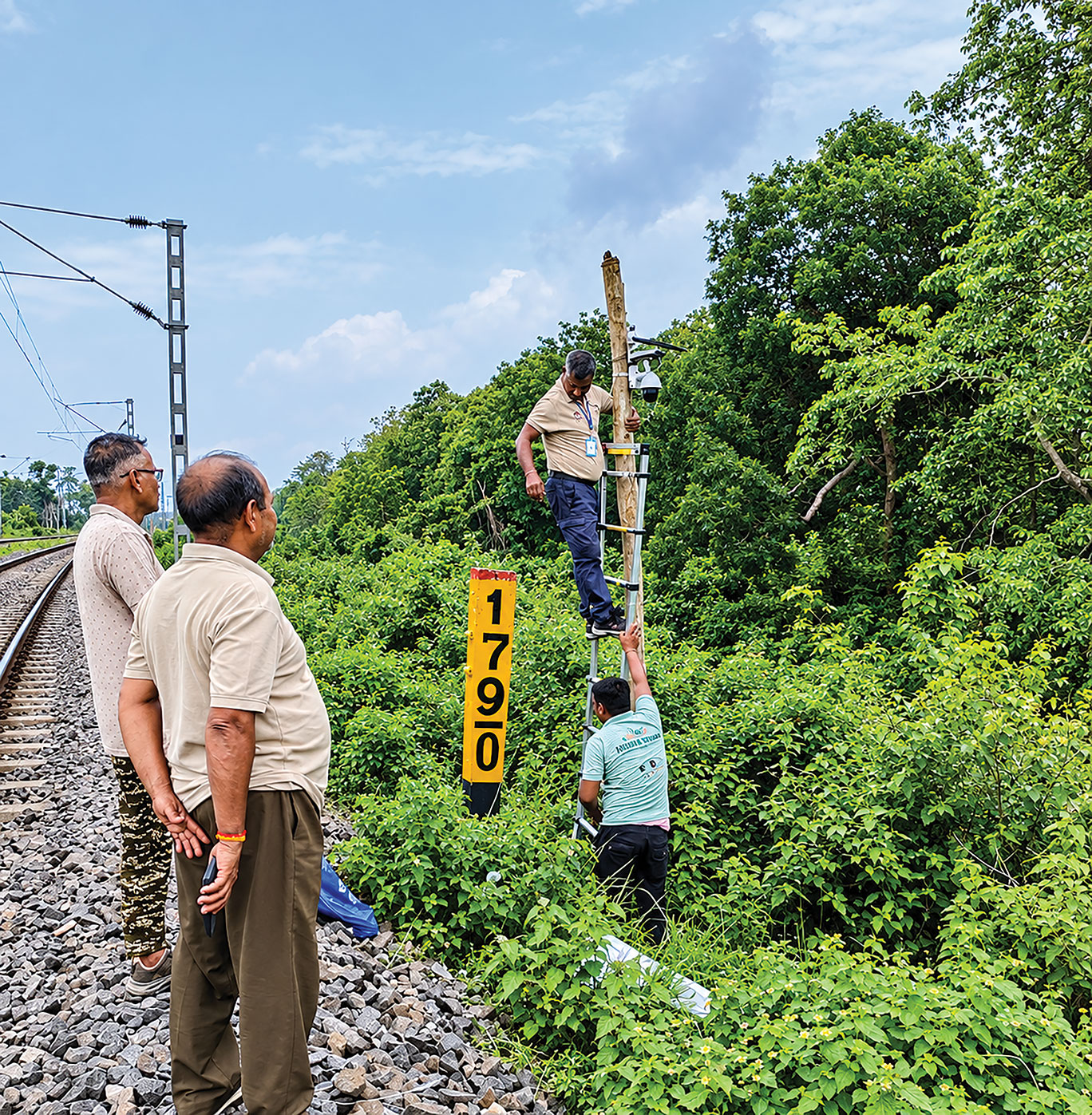
A new system based on optical sensors and AI-enabled cameras is being piloted to complement the on-ground efforts of the Assam Forest Department and Indian Railways to prevent train-elephant collisions. Photo Courtesy: Somreet Bhattacharya.
An Early-Warning System
Assam is home to India's second-largest wild elephant population, and its railway lines cut through wildlife corridors that elephants have used for generations – long before the tracks were laid. According to the Wildlife Institute of India's Human-Wildlife Conflict report, between 2000 and 2023, at least 67 wild elephants died in train accidents across Assam, mostly during the foggy winter months, when visibility is low and herds descend from the hills.
Following the tragic train accident that claimed the lives of seven elephants in December 2025, WWF-India and the Assam Forest Department have been working to establish robust early-warning systems and a coordination mechanism across vulnerable locations in Nagaon, Nagaon South, and Hamren.
The teams have been monitoring elephant movement through Assam's forested habitats to update existing records, with the findings mapped and shared with railway authorities. Thirteen early warning units, comprising AI-enabled cameras and ground sensors that detect elephants approaching human settlements and linear infrastructure such as railway lines and highways, have been installed along vulnerable stretches identified by the latest elephant movement survey. Frontline forest staff has also been equipped with rain gear, torches and light-signal batons to support operations on the ground. Information sharing and regular dialogue between the Forest Department and Indian Railways have further strengthened coordination.
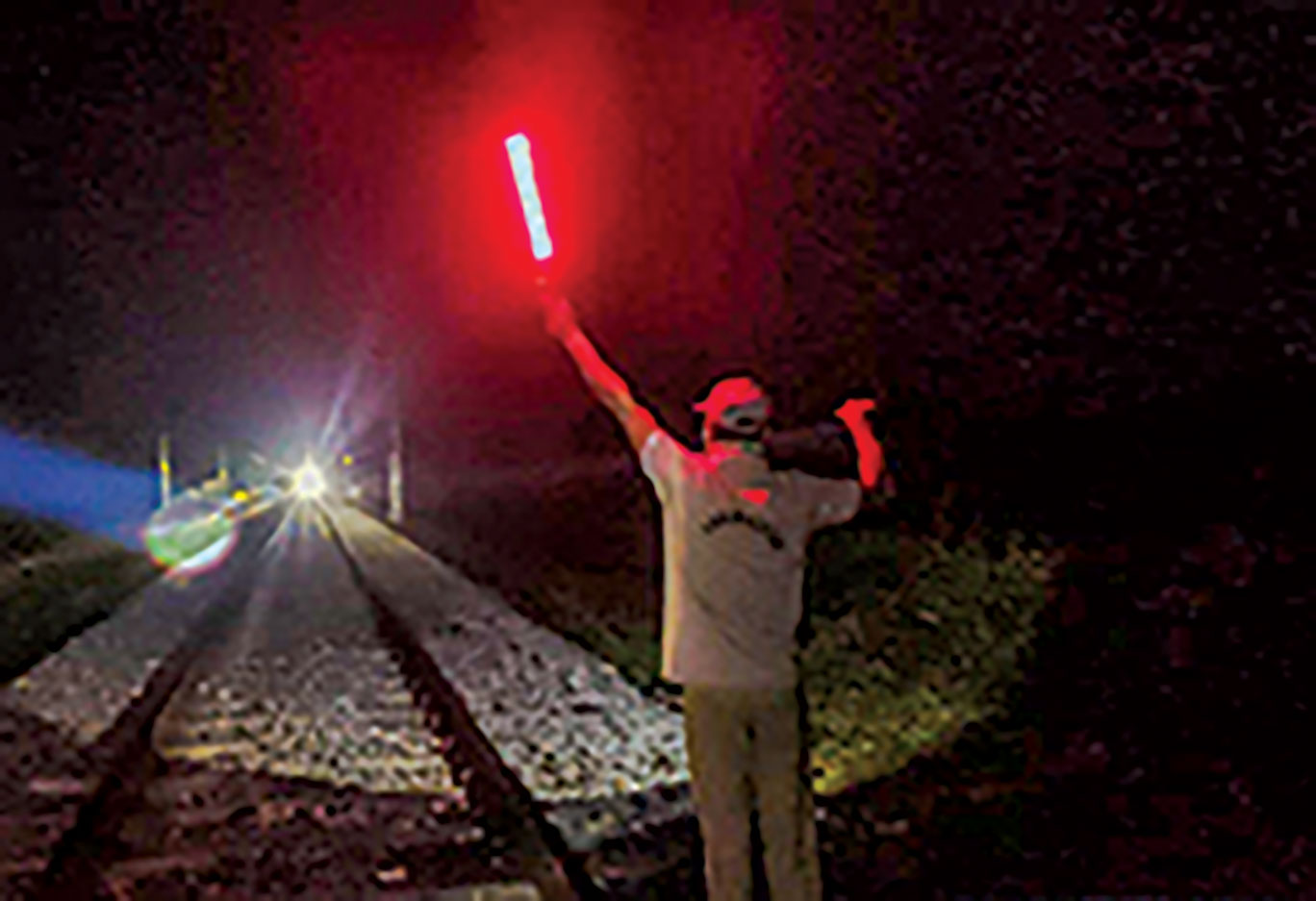
Frontline staff man the location and immediately alert the railway authorities. Photo Courtesy: Somreet Bhattacharya.
Over the last few years, the Northeast Frontier Railway (NFR) has collaborated with the Forest Department by adjusting real-time communication channels and physical infrastructure to prevent elephant-train collisions. Railway personnel actively monitor high-risk wildlife corridors and coordinate directly with control rooms to trigger manual train halts or speed reductions when elephant herds approach. To scale up these efforts, the NFR has deployed an AI-powered Intrusion Detection System (IDS) that alerts locomotive pilots to nearby animals, along with acoustic deterrent devices that emit honeybee sounds to discourage elephants from approaching the tracks.
The Assam Forest Department and WWF-India have also developed a response protocol in which three personnel – a forest official, a community volunteer, and a railway official – track elephant and train movements as soon as the system raises an alert. However, challenges remain: fog and other weather conditions can delay the relay of alerts, and herds moving faster than the system predicts can reduce the window for intervention. The technology continues to be a work in progress, while boots on the ground remain indispensable.
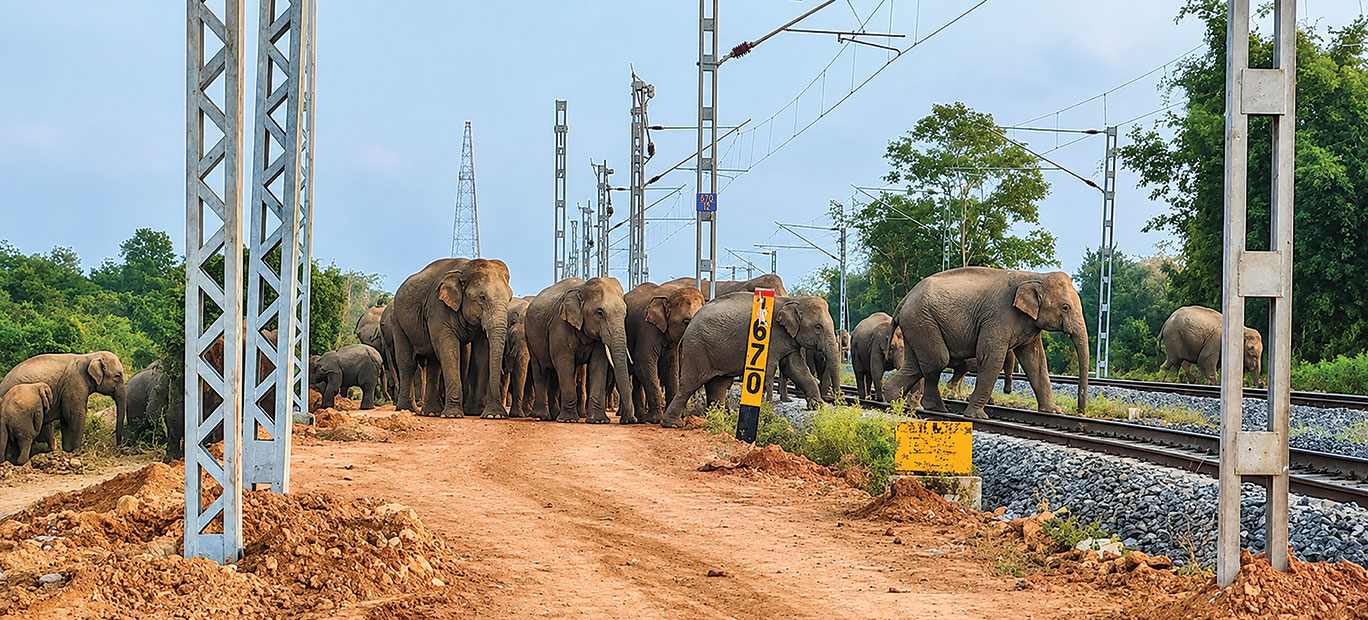
Over 31 days, an early warning system detected 54 elephant movements, including herds of up to 80 animals –sometimes with only minutes to spare, allowing them to safely cross the tracks. Photo Courtesy: Aritra Shetty.
Over 31 days from July 19 to August 19, 2026, this early warning system flagged 54 separate elephant movements, with herds ranging from eight to 80 animals. Some were detected with only minutes to spare.
These few minutes were all it took to stop the train and allow the 80 elephants to cross the railway line safely, but making that possible required months of preparation, coordination and investment in technology. The successful intervention in Assam shows how collaboration between the Forest Department, Indian Railways, and local communities can prevent tragic accidents. With systems such as these providing timely warnings and trained personnel responding swiftly, technology and teamwork are proving powerful tools for elephant conservation.
Somreet Bhattacharya is a Manager, Programme Communications at WWF-India. He is a journalist-turned conservation communicator passionate about storytelling. Sushanta Kashyap Borthakur is a Senior Project Officer – Community Engagement with WWF-India, working across the Brahmaputra Landscape in Assam. His work focuses on mitigating human-elephant conflict, community engagement, and wildlife conservation.